


November 2008

Given that Honolulu voters recently approved a $4B-plus rail system, an article from the San Francisco Chronicle about a new California law encouraging “local governments and builders to concentrate growth in urban areas orclose to public transportation hubs in an effort to reduceCalifornians’ use of cars and lower their greenhouse gas emissions” should be of some interest. In other words, development is “encouraged” in urban areas in “multifamily urban properties” (apartments).

One of the more interesting issues is whether people want to live in these areas, or whether — like so many other things such as mass transit — it is a case of “good for others, but not for me.” The article quotes the attorney for California Major Builders Council

“Our industry very much supports the goal of building morehigh-density projects in blighted areas, doing redevelopment andtransit-oriented developments,” he said. “There is a demand for thistype of development

Continue Reading New California Law: You Shall Live Near Transit
Revisiting a decision from September 2007, the Ninth Circuit revised the opinion in Equities Lifestyle Prop., Inc., v. County of San Luis Obispo (No. 05-55406), a decision we originally analyzed here.  In the original decision, the Ninth Circuit affirmed the dismissal of a challenge to avoter-approved mobilehome “rent stabilization” (rent control) ordinance. The landowners sought rehearing or en banc review of the originalopinion, and although the court denied both, it withdrew the earlieropinion and issued a new one.

No change in result — the landowner still lost — but the court revised the opinion, deleting one section, and adding another. In the original opinion, the panel affirmed the dismissal of a challenge to avoter-approved mobilehome “rent stabilization” (rent control)ordinance.  The court ruled:

  • Standing: the county challenged the ability ofthe plaintiff to bring suit because it did not have “title ownership”of the mobilehome park.  The court held that


Continue Reading 9th Circuit Takes Belt and Suspenders Approach to Takings and Due Process Challenge to Cal. Rent Control Ordinance

On October 1, 2008, the U.S. Supreme Court agreed to review the Hawaii Supreme Court’s decision in Office of Hawaiian Affairs v. Housing and Community Dev. Corp. of Hawaii,117 Haw. 174, 177 P.3d 884 (Jan. 31, 2008).  That decision heldCongress’ “Apology Resolution” required the State of Hawaii to reach apolitical settlement with Native Hawaiians, and prohibited the Statefrom selling, exchanging, or transferring the ceded lands until thatpolitical resolution was accomplished. [Disclosure: I filed an amicusbrief in the case, supporting the state’s petition.]

The Honolulu Advertiser reported about a rally yesterday at the State Capitol urging the Lingle administration to “rescind its U.S. Supreme Court appeal of a state court ruling that bars the state from selling ceded lands until claims of Native Hawaiians are resolved.” “Groups oppose ceded-land appeal to U.S. Supreme Court.”  This is the “ceded lands” case, Hawaii v. Office of Hawaiian Affairs, No.

Continue Reading Too Late For “Never Mind” in the Ceded Lands Case

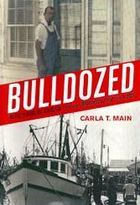
Bulldozed_home Thanks to Alan Ackerman for alerting us to the latest horrible development in the eminent domain cases out of Freeport, Texas.  Recall that in Western Seafood Co. v. United States,No 04-41196 (5th Cir., Oct. 11, 2006), the court held that aprivate-to-private transfer for economic development that wasaccomplished as part of a “carefully considered development plan”passed muster.

That wasn’t the end of the story, since Carla T. Main authored a fantastic book about the case and the Gore family, whose property was taken.  We reviewed “Bulldozed: ‘Kelo,’ Eminent Domain, and the American Lust for LandhereAnd we weren’t the only ones who liked it.

Now, according to this report, Ms. Main has been sued for defamation by the developer who was the subject of Bulldozed.  Also included in the suit is University of Chicago law professor and eminent domain scholar Richard Epstein

Continue Reading “No, I’m Spartacus!”

An opinion today from the California Fifth District Court of Appeals: Association of Irritated Residents v. San Joaquin Valley Unified Air Pollution Control Dist., No. F03956 (Nov. 11, 2008). The case involves whether a local air pollution control agency must “actively” assess the impacts of agriculture “volatile organic compounds” (aka cow waste) before adopting air pollution control rules.  The court held that it must.

But what really grabbed me was the plaintiff: “Association of Irritated Residents.”  (Oh, I get it: “AIR”).  Reminds me of those catchy names plaintiff’s groups often use (see, e.g., United States v. SCRAP (Students Challenging Regulatory Agency Procedures), 412 U.S. 669 (1972)), and the cheeky acronyms that float around the land use arena to describe motivation (e.g., NIMBY), which we discussed in this post.

But I think “Association of Irritated Residents” is the best. Pretty much one-size-fits-all.Continue Reading Best Plaintiff Group Name: Association of Irritated Residents

When four justices of the U.S. Supreme Court tell you that a case needs to be overruled, and district judges acknowledge the case “has led to a number of serious problems,” you know something is seriously wrong. Yes, we’re back to Williamson County.

In San Remo Hotel, L.P. v. City & County of San Francisco,545 U.S. 323 (2005) four Justices noted the ripeness rules of Williamson County Regional Planning Comm’n v. Hamilton Bank of Johnson City, 473 U.S. 172 (1985) produce absurd results and deny federalcourt review of federal constitutional rights. Chief Justice Rehnquistwrote:

Finally, Williamson County‘sstate-litigation rule has created some real anomalies, justifying ourrevisiting the issue… I joined the opinion of the Court in Williamson County.But further reflection and experience lead me to think that thejustifications for its state-litigation requirement are suspect, whileits impact on takings plaintiffs is dramatic… In an appropriate

Continue Reading New Cert Petition on Penn Central and (Yet Again) Williamson County

On Thursday, November 20, 2008 from 1:15 to 2:00 p.m., the Hawaii Chapter of the Federal Bar Association is sponsoring “Ninth Circuit Practice Tips,” featuring three judges of the U.S. Court of Appeals for the Ninth Circuit:

Hon. Mary M. Schroeder
Hon. Richard A Paez
Hon. N. Randy Smith

The court is in Honolulu this week to hear oral arguments, and these “visiting jurists will offer their thoughts on written and oral presentations. The discussion will be informal and questions will be taken.”  Location: U.S. Bankruptcy Courtroom, 1132 Bishop Street, 6th Floor.  Download notice here.Continue Reading Upcoming Event: “Ninth Circuit Practice Tips”

Check out today’s Honolulu Star-Bulletin for “Change in law gives panel new influence,” a story about the Intermediate Court of Appeals, which is now the court of first impression for appeals-of-right in the Hawaii state court system. Until 2006, when the jurisdictional statute was amended to transfer primary responsibility to the ICA, the Supreme Court of Hawaii heard virtually all of-right appeals, and delegated a limited number of cases to the ICA. 

The story explains the role of the ICA (it has six judges, and usually decides cases in panels of three), and contains short biographies of the current judges. It correctly notes the ICA is now the “workhorse” court which hears the first level of appeals, and the Supreme Court has become a (nearly) completely discretionary court, reviewing ICAdecisions by way of an “application for writ of certiorari” (go here for an example).

The one thing missing

Continue Reading Presenting: the Intermediate Court of Appeals of Hawaii (ICA)