2009

In WWBITV, Inc. v. Village of Rouses Point, No. 08-5112 (Dec. 9, 2009), the U.S. Court of Appeals for the Second Circuit held that a property owner whose building was demolished the day after it was badly damaged in a fire was not entitled to predeprivation notice.

After the building — an “old hotel” in up-up-upstate New York used for equipment storage — was damaged in a fire, the Village elders met the next morning and authorized demolition of the burned portion of the building. The property owners were not notified of the meeting or of the decision to demolish. That afternoon, the burned portions were demolished and the remainder followed several months later.

The only claim left standing after a motion to dismiss was the procedural due process claim that the Village owed the owners some kind of notice that their property was to be demolished.

Continue Reading Second Circuit: To Demolish Dangerous Property Without Notice, Don’t Delay

In its annual summary of the U.S. Supreme Court term, the Harvard Law Review addresses the Court’s most important decisions, and this year includes the “ceded lands” case, Hawaii v. Office of Hawaiian Affairs, 129 S. Ct. 1463 (2009). [Disclosure: we filed a brief in the case in support of the State, available here]. The case summaries are not attributed to a particular author, and are the product of the editorial board (student authors). The summary is available here (123 Harv. L. Rev. 302 (2009)).

The article argues that the Court should have given the Apology Resolution legal meaning, because doing otherwise “perpetuat[ed] an understanding of political rhetoric as meaningless and impotent.”

If Congress viewed an apology as an essentially impotent act that merely expresses goodwill, then it would be hard to explain the resistance that proposed apologies consistently face. In fact, only Japanese internment, the Hawaiian overthrow

Continue Reading Harvard Law Review On The “Ceded Lands” Case

Attacus

We promised in our earlier post on Mann v. Calumet City, No. 09-1681 (Dec. 7, 2009) that we were going to read the egg-sucking dog case, Hull v. Scruggs, 2 So.2d 543 (Miss. 1941). We have, and present it below in its full glory.

The rule of law in the case was summarized by Johnny Cash:

Dirty Old Egg-Sucking Dog

Well he’s not very handsome to look at
Oh he’s shaggy and he eats like a hog
And he’s always killin’ my chickens
That dirty old egg-suckin’ dog

Egg-suckin’ dog
I’m gonna stomp your head in the ground
If you don’t stay out of my hen house
You dirty old egg-suckin’ hound

Now if he don’t stop eatin’ my eggs up
Though I’m not a real bad guy
I’m going to get my rifle and send him
To that great chicken house in the sky

Egg-suckin’ dog

Continue Reading To Kill An Egg-Sucking Dog

Here’s an opinion from the U.S. Court of Appeals for the Seventh Circuit that’s worth reading, if only to see why we like reading Judge Posner’s writings:

  • It uses contractions (Judge Kozinski would approve). Slip op. at 11 (“The rule doesn’t apply to an order of civil contempt…”); slip op. at 5 (“No court thinks, however, that this means the state can’t regulate property—can’t for example enact building codes and zoning regulations even though such measures limit the property owner’s right to do what he wants with his property.”)
  • It makes interesting use of explanatory parentheticals for case citations. Slip op. at 5 (“Hull v. Scruggs, 2 So.2d 543 (Miss. 1941) (property owner can kill a trespassing dog that has irresistible urge to suck eggs).”). You know we’re going to go read that case. Update: we now have read the case.
  • It


Continue Reading Land Use Law Day At The Seventh Circuit: “Property Owner Can Kill A Trespassing Dog That Has Irresistible Urge To Suck Eggs”

On December 16, 2009, from 2 – 3 pm EST, ALI-ABA is presenting “The Aftermath of Atlantic Yards: Eminent Domain in New York,” a 1 hour program about the decision of the New York Court of Appeals in Goldstein v. New York State Urban Development Corp., No. 178 (Nov. 24, 2009):

The recent ruling by the New York State Court of Appeals ruled that itis lawful for the state to seize private land for use by privatedevelopers. The New York appeals-court ruled that the constitutionallows the state entity to seize the downtown Brooklyn land to improveblighted conditions. Land owners had argued that the area was notblighted, but instead a stable neighborhood. The decision is a blow toprivate land owners who have argued that they are defenseless when thegovernment deems their land necessary for eminent domain or the “publicgood.”

Join our panel of experts as they discuss the issues

Continue Reading Mark Your Calendars: ALI-ABA Program “The Aftermath of Atlantic Yards: Eminent Domain in New York”

Givings

Yesterday’s Tom Toles web only sketch from the Washington Post certainly captures one of the arguments made by Florida in Stop the Beach Renourishment, Inc. v. Florida Dep’t of Environmental Protection,No. 08-11 (cert. granted. June 15, 2009, the appeal heard last week by the U.S. Supreme Court.

The argument overlooks the fact that the littoral owners never wanted the “renourishment” and argued it wasn’t really necessary, and that in oral argument, most of the Justices indicated that any benefit to the littoral property should be taken into account in determining compensation and not liability. But the sketch brought a smile to our faces, nonetheless.Continue Reading The Fifth Amendment’s Givings Clause?

No, not that Sgt Pepper taught the band to play (that was 20 years ago).

On Tuesday, December 4, 1979, the U.S. Supreme Court issued its landmark decision in Kaiser Aetna v. United States, 444 U.S. 164 (1979). My Damon Key colleagues Charlie Bocken and Diane Hastert briefed and argued a challenge to over a century of seemingly adverse precedent, and with the result garnered one of the very first modern opinions finding a regulatory taking. Read the opinion here.

Hawaii residents know this as the case which kept Hawaii Kai Marina (aka Kuapa Pond) private, and lawyers who practice takings, property, or navigation law know this as the case in which the majority opinion, authored by Justice Rehnquist, held that the navigational servitude is not a blanket exception to the Takings Clause, and just because a waterway is subject to regulation does not mean it is open

Continue Reading It Was Thirty Years Ago Today…

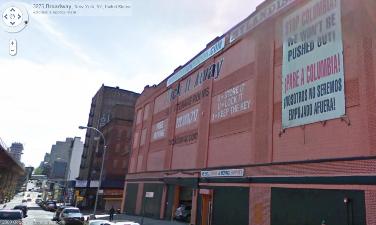
Tuckitaway Since the U.S. Supreme Court’s decision in Kelo v. City of New London, 545 U.S. 469 (2005), the focus in public use challenges to exercises of the eminent domain power has largely focused on state courts and state constitutional protections. 

The Kelo majority held that the Fifth Amendment was a “baseline,” and established a standard for reviewing takings below which no state law could go:

We emphasize that nothing in our opinion precludes any State fromplacing further restrictions on its exercise of the takings power.Indeed, many States already impose “public use” requirements that arestricter than the federal baseline. Some of these requirements havebeen established as a matter of state constitutional law, whileothers are expressed in state eminent domain statutes that carefullylimit the grounds upon which takings may be exercised. As thesubmissions of the parties and their amici make clear, the necessityand wisdom of using eminent domain to promote economic

Continue Reading Kelo, Pretext, And Blight In Eminent Domain: NY Appellate Division Unravels The Skein

Read this opinion: Kaur v. New York State Urban Dev. Corp., 2009 NY Slip Op 08976 (Dec. 3, 2009).

The New York Supreme Court, Appellate Division (First Department) struck down the attempted taking of land north of Columbia University in New York City because of the record reflected overwhelming private benefit:

In this case, the record overwhelmingly establishes that the truebeneficiary of the scheme to redevelop Manhattanville is not thecommunity that is supposedly blighted, but rather Columbia University,a private elite education institution. These remarkably astonishingconflicts with Kelo on virtually every level cannot be ignored, and render the taking in this case unconstitutional. 

We covered the case here and here. The NY Times report is here, and the Columbia U newspaper reports here.

More, after a chance to digest the opinion.Continue Reading New York Court Finds “True Beneficiary” Of Manhattanville Taking Is Columbia U., Not Public