2011

California, if you weren’t already aware, produces raisins. Lots of raisins. It accounts for 99.5% of the U.S. crop and 40% of the world crop.

Since the 1920’s, supply has exceeded demand by 30 to 50 percent. Since the 1940’s, the USDA has regulated the raisin industry to even out the fluctuation in supplies and prices by creating “annual reserve pools” that remove extra raisins from the market. Those regulations, in the form of “marketing orders,” require raisin “handlers” (those who process and pack agricultural goods for distribution) to set aside a certain percentage of raisins from the domestic open market, upon pain of civil and criminal penalties if they do not. The reserve raisins can only be sold for resale in export or secondary markets, with the proceeds used to pay for administration of the regulatory program (naturally), and any balance being distributed among raisin “producers.”

In Horne
Continue Reading 9th Cir: California Raisins Were Not Taken

Bulldozed_home Note to appellate practitioners: it’s not a good sign when an opinion’s treatment of your arguments starts with the phrase “[t]o the extent we are able to discern the arguments, we address them below.”

As that statement telegraphed, it didn’t go very well for the appellee in Main v. Royall, No. 05-09-1503-CV (July 25, 2011). In that case, the Texas Court of Appeals (Fifth District) held in a defamation suit that the author of a book about eminent domain is a member of the electronic or print media asserting a First Amendment claim, and was therefore entitled to appeal the interlocutory denial of a motion for summary judgment, and that the book for the most part was not defamatory as a matter of law.

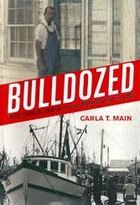
As we noted earlier herehere, and here, Carla Main, the author of Bulldozed: “Kelo,” Eminent Domain, and the American Lust for

Continue Reading Texas App To Developer: Eminent Domain Book Just Not That Into You

Goodtobeking As Mel Brooks once said, “It’s good to be the King.” That’s especially true in eminent domain law. Even when you’re not the King.

Exhibit A: the plaintiff in this federal condemnation action was a railroad, the Dakota, Minnesota & Eastern Railroad Corporation. It brought suit against 97.943 acres of land, more or less, in Wyoming. But really agains the owners of those acres, Mr. and Mrs. Simmons.

Did the railroad need the land? Not really. It admitted it couldn’t build the project in the foreseeable future. It filed the action on the eve of the date that Wyoming’s post-Kelo eminent domain reform statutes took effect, leading to the inference it was merely land banking.

So the property owners fought the condemnation. But after a two week trial, on the eve of the district court issuing its ruling, the railroad — perhaps sensing the handwriting on the

Continue Reading Despite “Complete Vindication” After “An Abuse Of The Condemnation Process,” No Costs

In Edwards v. City of Jonesboro, No. 10-2405 (July 14, 2011), the U.S. Court of Appeals for the Eighth Circuit held that a takings claim brought in federal court after the property owner prevailed on the same claim in state court was not barred by the Rooker-Feldman doctrine, but that the state court judgment was final and precluded relitigation of the owner’s federal claims.

Methane gas, released by decomposing waste in the the city’s landfill, invaded adjacent land, rendering it undevelopable, so the owner sued the city. He filed an action in state court; alleging violations of his rights under state law (inverse condemnation, trespass, violations of the state constitution, and the like), and under federal law (takings, etc). With his third amended complaint, however, he filed an England reservation, withholding his federal claims from resolution in state court.

After a trial, the state court ordered the city

Continue Reading 8th Cir: No Rooker-Feldman, But San Remo Hotel Precludes Federal Takings Claim

In a case we’ve been following, a San Francisco Bay Area municipality has filed a cert petition asking the U.S. Supreme Court to review the Ninth Circuit’s opinion in International Church of the Foursquare Gospel v. City of San Leandro, No. 09-15163 (Feb. 15, 2011). In that case, the Ninth Circuit held that the church had established enough to get to trial under RLUIPA’s “substantial burden” provision, and reversed the district court’s grant of summary judgment to the city.

The court held that there was a triable issue of fact regarding whether the city’s denial of the church‘s request for a an amendment to the zoning code and a conditional use permit to allow the construction of new facilities on industrial land imposed a substantial burden on the church’s religious exercise under RLUIPA. The court applied the “strict scrutiny” standard of review, and held that the city failed

Continue Reading New Cert Petition: What Standard Of Review For RLUIPA “Substantial Burden” Cases?

In some states, Hawaii included, the question of whether a taking is “for public use” is entitled to full resolution before addressing the question of just compensation. See, e.g., Haw. Rev. Stat. § 101-34 (public use challenges are entitled to immediate trial, and as-of-right interlocutory appeal). This makes sense since questions of value come into play only after final determination of whether the condemnor can take the property at all. [Sidebar: in Hawaii, eminent domain cases have calendar preference over all other civil actions, and the courts have a statutory obligation to hear and decide condemnation actions “quickly.”  Haw. Rev. Stat. § 101-9.]

But this is not a matter of statute in some jurisdictions, including North Carolina. Meaning that its up to the courts to determine whether the interlocutory issue of whether a trial court’s public use determination is immediately appealable. In Town of Apex v. Whitehurst

Continue Reading NC App: Public Use Challenge Is Immediately Appealable


It appears it is not enough for the lobbying arms of California cites and redevelopment agencies to sue the state claiming the state is grabbing “their” money, now at least one California city is in the business of producing You Tube videos complaining of the taking.

Putting aside for the moment whether the municipal poobahs of the City of Morgan Hill* have otherwise solved all the issues no doubt facing their fair city such that they can spend their days making and posting videos, the above piece — which ham-fistedly (and somewhat tastelessly) compares the California Legislature and Governor Jerry Brown to hostage-takers for the recent bills to either eliminate redevelopment agencies or allow them to continue to exist if they pay tribute to the state — we take note of the video’s final request: “[i]f you see the Governor or a State Legislator … Please ask them

Continue Reading You Stay Classy, California Redevelopment Agencies

We tend not to think of churches as “blighting” their neighborhoods. But what about a church in a downtown “entertainment” district, where the nearby businesses are bars, nightclubs, and liquor stores, and placing a church in the area might limit the availability of liquor licenses?

In a sort of reversal of the usual LULU (locally undersirable land uses) issue, in Centro Familiar Cristiano Buenas Nuevas v. City of Yuma, No. 09-15442 (July 12, 2011), the Ninth Circuit considered whether a municipality ran afoul of RLUIPA’s “equal terms” provision when it required a church to seek a conditional use permit before it could relocate to a downtown entertainment area, and then denied the permit because it might limit the liquor licenses that could be issued to nearby businesses.

Arizona law prohibits issuance of a liquor license to any new bar, nightclub, or liquor store within 300 feet of a church

Continue Reading 9th Circuit: Church’s Use Permit Requirement Violates RLUIPA Equal Terms

Yesterday, the California Redevelopment Association, the League of California Cities and two Bay Area municipalities filed an original jurisdiction petition for writ of mandate in the California Supreme Court asserting that the California Legislature’s recent bills to eliminate redevelopment agencies, or allow them to continue to exist if they pay tribute to the state, violate the California Constitution. According the press release accompanying the petition:

The central claim in the lawsuit is that AB 1X 26/27 violate Proposition 22, the constitutional amendment passed by 61 percent of California voters in November 2010, just eight months ago. Prop. 22 was passed by voters to “conclusively and completely prohibit State politicians in Sacramento from seizing, diverting, shifting, borrowing, transferring, suspending, or otherwise taking or interfering with” revenue dedicated to local government. The revenues protected by Prop. 22 specifically include the annual increments of property taxes allocated to California’s 400 redevelopment

Continue Reading Can’t Touch This: Cal Redevelopment Agencies Sue State

On this Monday we bring you these stories, all with an international flavor:

  • More from India, on Kelo-style takings issues: the Wall Street Journal reports that “India Grapples With Land Acquisition Rules” (“Indian government ministers are vowing to bring legislation to overhaul the country’s ancient land acquisition laws when Parliament begins again next month, and everyone agrees that’s a good thing. Unfortunately, that’s where agreement ends. The biggest dilemmas are over figuring out who should get compensated when land is taken, what constitutes a fair price, and, most difficult of all, when exactly the government should use its


Continue Reading International Monday