


February 2012

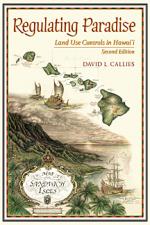
Regulatingparadise Professor Patricia E. Salkin (of the Law of the Land blog) has written this review of Professor David Callies’ Regulating Paradise: Land Use Controls in Hawaii (2d ed. 2010). The review is in the latest edition of the Urban Lawyer (43 Urb. Lawyer 1107 (2011)), the law review published by the ABA’s Section of State & Local Government Law.

Professor Salkin writes:

Unlike mainland states, the history of land ownership and regulation in Hawai’i—dating back to the mid 1800s—is unique and deeply rooted in centralized control both before and after the State became a territory. Callies explains how the State’s oft-studied 1961 land use law continued this trend, with zoning accomplished at the state level. He points out that from this strong tradition of centralized control, however, a new system of land use regulation has emerged with layers of county laws and the influence of myriad federal statutes and

Continue Reading Book Review: Callies, Regulating Paradise (2d ed. 2010)
Check this out: the Hawaii Legislature is considering two bills (HB1707 and SB2089) that will require “nonresident” property owners who rent their property for thirty days or less (transient vacation rentals) to use a licensed real estate broker to rent the property, and to employ a property manager to operate it. “Nonresident owner” is defined as an out-of-state owner or someone who lives “on a different island” from their rental property.

Not surprisingly, much of the testimony in favor of these measures has been submitted by the counties (these bills purportedly would make it easier to collect TVR taxes), and by property managers and real estate agents. 

Putting aside any questions of whether this is good policy or not, think there might be any problems with this? Continue Reading “Nonresident” Property Owners Must Employ Property Managers For TVRs?

Professor Richard Epstein, in his own inimitable and unequivocal style, opines on rent control and the Harmon cert petition in a Federalist Society podcast. A must-listen. Here’s the description:

In March 2011, the Second Circuit Court of Appeals issued summary judgment in Harmon v. Markus, a challenge to New York’s rent stabilization law by Mr. John Harmon, whose townhouse has been occupied for years by tenants paying rent equal to about 60% of market value. The Second Circuit ruled that “government regulation of the rental relationship does not constitute a physical taking” in light of the Supreme Court precedent, and that Mr. Harmon was therefore not entitled to just compensation. The Supreme Court has asked New York City and the tenants to file a response to the certiorari petition filed by Mr. Harmon. On this previously recorded conference call, Prof. Richard Epstein provides analysis of the case and

Continue Reading Federalist Society Podcast On New York Rent Control Takings Challenge With Professor Richard Epstein

In our law review article on Stop the Beach Renourishment, Inc. v. Fla. Dep’t of Environmental Protection, 103 S. Ct. 2592 (2010), we predicted that “the fractured opinions in the case will be a boon for academics who may continue the search for the ‘takings quark’ (if not woodchucks) in the pages of law journals.” Of Woodchucks and Prune Yards: A View of Judicial Takings From the Trenches, 35 Vt. L. Rev. 437 (2010).

It looks like our prediction is (thankfully) being borne out: earlier this week we posted a new article from the Stanford Law Review (here), and now comes another scholarly piece on the judicial takings issue, this time from the Cornell Law Review: Eduardo M. Penalver & Lior Jacob Strahilevitz, Judicial Takings or Due Process?, 97 Cornell L. Rev. 305 (2012) (pdf available here). Here’s the summary:

In Stop the Beach

Continue Reading New Article: Judicial Takings or Due Process? (Cornell Law Review)

Today’s post is authored by colleague Thor Hearne, who regularly represents property owners in the Court of Federal Claims, the Federal Circuit, and the Supreme Court. He recently joined us on the faculty of the ALI-ABA eminent domain program in San Diego, and spoke at the 2011 Brigham-Kanner Property Rights Conference in Beijing.

He’s familiar to our readers who have followed his success in “rails to trails” cases in the CFC. Thor reports on the latest developments in those cases below.

———————————————————————————————————-

Last week, Senior Judge Loren A. Smith of the Court of Federal Claims issued his opinion in the Trails Act taking case, Buford v. United States, __ Fed. Cl. ___ (Slip Op. February 7, 2012), 2012 WL 401607. Judge Smith’s decision was the 16th decision from this Court in the past year finding the government liable for taking citizens’ land underlying an abandoned railroad

Continue Reading Guest Post: DOJ’s Rails-to-Trails Strategy Fails

As he writes in yesterday’s column, “Supreme Court should take on New York City’s rent control laws.” He’s writing about the Harmon case and the cert petition which the Supreme Court is currently considering:

Rent control is unconstitutional because it is an egregious and uncompensated physical occupation of property. The Constitution says that private property shall not “be taken for public use, without just compensation.” The Harmons get no compensation for being coerced into privatized welfare: The state shows compassion to tenants — many of whom are not needy; one of the Harmons’ entitled tenants owns a house on Long Island — by compelling landlords to subsidize them.

We’ve posted the cert petition and the amicus briefs in support (start here).Continue Reading George Will Doesn’t Like Rent Control

We’ve been meaning to post this interesting and important case, but it got lost in the shuffle. Thanks to a colleague for the reminder. 

Try explaining that headline to anyone but a land use lawyer, and they would think you are a little bit crazy. What is so odd about a federal court actually exercising its core jurisdiction to consider whether a local government has violated someone’s federal constitutional rights?

As readers of this blog know, the one-two punch of Williamson County Regional Planning Commission v. Hamilton Bank of Johnson City, 473 U.S. 172 (1985), and San Remo Hotel, L.P. v. City and County of San Francisco, 545 U.S. 323 (2005), renders a federal forum for federal takings and related claims nearly impossible unless the stars align just right. In R&J Holding Co. v. Redev. Auth. of County of Montgomery, No. 10-1047 (Dec. 9, 2011), they apparently

Continue Reading There, That Wasn’t So Hard, Was It? Third Circuit Actually Lets Landowner Raise Federal Constitutional Claims In Federal Court

A recently-published Note from the Stanford Law Review: Josh Patashnik, Bringing a Judicial Takings Claim, 64 Stan. L. Rev. 255 (Jan. 2012). Here’s the abstract:

This Note seeks to answer a set of questions prompted by the Supreme Court’s 2010 decision in Stop the Beach Renourishment, Inc. v. Florida Department of Environmental Protection. In that case, six Justices recognized that the Constitution provides some protection against so-called judicial takings—court decisions that, like executive and legislative action, might be deemed to take property rights. But the Court’s fractured holding provided little guidance on a handful of practical issues that will be of immense interest to potential judicial takings plaintiffs, like whether such claims can be brought in federal court and what remedies might be available. I argue that a judicial takings plaintiff should be able to bring her case in federal district court, notwithstanding the barriers the Supreme

Continue Reading New Article: Bringing a Judicial Takings Claim (Stanford Law Review)