


November 2012

Check out this story, Excelaron filed $6.24 billion lawsuit against SLO county, and the filing below.

$6.24 billion? According to the story, “[c]ounty Supervisor Adam Hill said the amount being sought makes this one of the largest, if not the largest lawsuit in San Luis Obispo County’s history.” 

We’d certainly hope so.

ead more here: http://www.sanluisobispo.com/2012/11/21/2303534/excelaron-lawsuit-huasna-valley.html#storylink=cpy

Petition for Writ of Mandate; Complaint, Excelaron, LLC v. County of San Luis Obispo, No. CV 120675 (Nov. 19, 2012)Continue Reading Wow, That’s A Lot Of Just Compensation

nailhouseThis photo of a “nail house” in Wenling, People’s Republic of China is making the rounds on the internet. The reports (see also here for higher res photos) say that the homeowners refused to take the offers to sell, so the developer built the road around their house. “They are called “nail houses” because the homeowners refuse to be hammered down.”

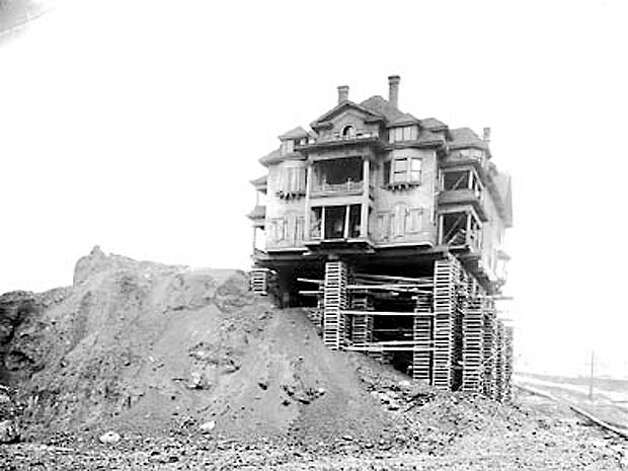
We’ve covered similar circumstances before (here, the “calvacade of homeowner holdouts,” and famous nail houses for example). Indeed, this is not a recent  phenomenon. See Seattle’s Denny regrade, for example. More photos from the Seattle Post-Intelligencer.

dennyregrade

Homeowners who didn’t go along with the Denny regrade project had the hill dug out around them. Photo: Seattlepi.com File / Seattle Post-Intelligencer

Reminds us of the Warner Bros. classic “Homeless Hare,” where Bugs Bunny objects to a developer’s efforts to evict him from his

Continue Reading When All You Have Is A Hammer, Everything Looks Like A Nail House

Here’s the property owner’s merits brief in Koontz v. St Johns River Water Mgmt Dist., No. 11-1447 (cert. granted Oct. 5, 2012). 

This case presents two questions:

  • Whether the government violates the Takings Clause when it refuses to issue a land-use permit on the sole basis that the permit applicant did not accede to a permit condition that, if applied, would violate the essential nexus and rough proportionality tests set out in Nollan and Dolan?
  • Whether the nexus and proportionality tests set out in Nollan and Dolan apply to a land-use exaction that takes the form of a government demand that a permit applicant dedicate money, services, labor, or any other type of personal property to a public use.

The amicus briefs in support of the property owner are due next week. We’ll post those when available.

Petitioner’s Brief on the Merits, Koontz v. St. Johns River Water Mgmt

Continue Reading Petitioner’s Brief In Koontz: No Bargaining Around The Takings Clause

text

Download LA COA Monteleone

case that originated with a taking in 1987 by the DOT.  In State of Louisiana, et al v. Monteleone, et al, the Court of Appeals affirmed an award of $1,631,000.50 ($214,534.14 as just compensation for the taking + $1,416,466.40 in severance damages) + $1,584,442.54 in interest + $173,030.00 and legal interest in costs +  $900,000.00 and legal interest in attorneys fees and remanded for further determination of attorneys fees due to the landowner for the appeal.  Including all interest calculations, the award totals approximately $6 Million and represents an increase 129 times greater than the initial deposit of $46,558.00

Congratulations to OCA colleague Randy Smith for this win.

Louisiana v. Monteleone, No. 11-CA-1013 (Nov. 13, 2012)Continue Reading La App:

As you know, yesterday the Supreme Court granted cert in Horne v. U.S.D.A., No. 12-123 (cert. granted Nov. 20, 2012), the third takings claim this season. As this article asked, what, if anything, is going on? Is it just “serendipity” or a “return to the norm” as two lawprofs quoted in the article suggested, or might it be something else?

Of course, no one knows but the justices themselves (and maybe the cert pool clerks). But that won’t prevent us from engaging in a little lighthearted speculation. One theory that might explain why the Court seems to be particularly interested in property cases this term is the recent election.

It takes only four of the justices to agree to review a case, and we can safely count Justices Scalia, Thomas, and Alito as very property friendly, and Justice Kennedy and Chief Justice Roberts are moderately property friendly. If

Continue Reading Three Takings Cases This Term – What’s The Deal?

It looks like our crystal balls are working.

Wait, that didn’t come out the way we quite intended, so let’s rephrase. Recently, we and others suggested paying attention to the property rights cases on the Supreme Court’s cert docket, paying particular attention to a case out of the Ninth Circuit, Horne v. United States Dep’t of Agriculture, 673 F.3d 1071 (9th Cir. 2011).

In Horne, the Ninth Circuit concluded that the defensive takings claim raised by raisin farmers who qualified as “raisin handlers” under federal regulations and thus were required to “reserve” (donate) 47% of their crop to the government, was not ripe because the farmers could seek just compensation in a Tucker Act claim in the Court of Federal Claims. The court dismissed the case for lack of jurisdiction. That opinion replaced an earlier opinion holding that the reserve requirement was not a taking because the

Continue Reading SCOTUS Grants Cert In California Raisins Takings Case

Anyone who practices land use law is familiar with the primary jurisdiction and exhaustion of administrative remedies doctrines. These rules require courts to either dismiss claims or abstain from exercising jurisdiction unless and until an administrative agency has first developed the record and passed on the issues. If you’ve got notice of the action you claim is wrong, you must challenge that decision and seek a contested case in the agency’s review process as a prerequisite to obtaining judicial review.

The latest case from the Hawaii Intermediate Court of Appeals, Dancil v. Arakawa, No. CAAP-11-001029 (Nov. 16, 2012), presents these issues in a familiar context: the County of Maui approved a coastal zone permit allowing a Halloween party to go forward in Lahaina, and someone was against it. After the County issued the permit, the objector did not appeal that decision up through the County’s administrative appeals process within

Continue Reading HAWICA: Third-Party Objector Must Seek Administrative Relief To Challenge Halloween Party

Believing that discretion was the better part of valor, we didn’t think there would be a challenge to the Hawaii Intermediate Court of Appeals’ opinion in Leone v. County of Maui, No 29692 (June 22, 2012). But we were wrong, and the County of Maui is going all in. 

Update Dec. 12, 2012: cert rejected.

The County has filed a cert application (remember, under Hawaii appellate procedure we don’t “petition” for cert, we “apply”) arguing that a property owner faced with the County’s refusal to even process its request for a use permitted by zoning has an obligation to appeal that refusal up the County’s administrative chain. The reason for the refusal to even consider the request was that the proposed use, while permissible as of right under applicable zoning, was inconsistent with the Community Plan designation (the same as General Plans in most other places), so the

Continue Reading New HAWSCT Cert App: Williamson County Ripeness Requires Property Owner Change The Law

13.LULHIIt’s back! Time once again for the bi-annual Hawaii Land Use Law Conference, to be held January 17 and 18, 2013 (Thursday and Friday) at the Downtown YWCA (a very convenient venue).

Planning co-chairs Professor David Callies and Ben Kudo have once again assembled a stellar faculty and put together an agenda that covers most topics of interest.

We’ll be moderating a panel on “Development Through Exemptions – The Evolution of Reclassifications, Permitting, Land Use &Development in Hawaii: The Unintended Consequences ofan Increasingly Complex System of Regulations,” featuring panelists Linda L.W. Chow (Deputy Attorney General State of Hawaii), Oswald K. Stender (Office of Hawaiian Affairs), and Kali Watson (Hawaiian Community Development).

Two highlights of the conference:

First, Mike Berger will give the keynote presentation on our favorite topic, regulatory takings: “Taking a Critical Look at 30 Years of the Supreme Court’s Taking Jurisprudence.” Mike has taken the lead in

Continue Reading Mark Your Calendars: 10th Hawaii Land Use Law Conference (Jan. 17-18, 2013)