


February 2013

The oral argument calendar of the Hawaii Supreme Court  looks pretty interesting:

  • Thursday, February 7, 2013, 11:00 a.m. – Sierra Club v. Land Use Comm’n, No SCWC-11-0000625, a case about the qualifications of holdover Land Use Commissioners, which we previewed here
  • Thursday, February 21, 2013, 10:00 a.m. – Kanahele v. Maui County Council, No. SCWC-29649, a case involving the “Sunshine Law” and the council’s consideration of a development project on Maui. More here from Record on Appeal.
  • Thursday, February 21, 2013, 11:00 a.m. – County of Hawaii v. UNIDEV, LLC, No. SCWC-10-0000188, a case about contracts between a private developer and the County to build affordable housing. It’s more about arbitration and appellate jurisdiction, but an interesting case nonetheless. More here from Record on Appeal.
  • Thursday, March 14, 2013, 9:30 a.m. – State of Hawaii v. Woodhall, No. SCWC-11-0000097, in which the court


Continue Reading Upcoming Hawaii Appellate Arguments Of Interest
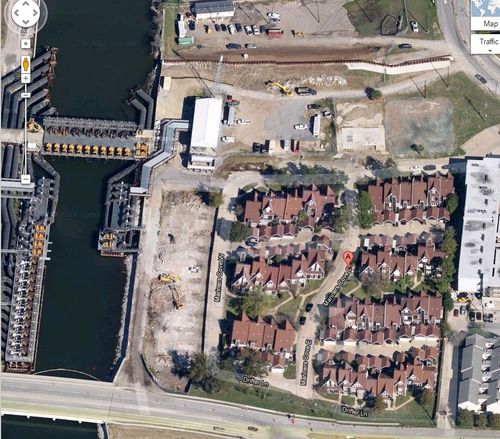
Marinerscoveneworleans

In United States v. 0.073 Acres of Land, No. 11-31167 (Jan. 28, 2013), the U.S. Court of Appeals for the Fifth Circuit held that a townhome association’s right to collect maintenance assessments from its members was property under Louisiana law, but was not compensable property in an eminent domain action.

The case involved a 58-townhome community next to Lake Pontchartain in New Orleans. The area was damaged in Hurricane Katrina after the 17th Street Canal was breached, flooding the Lakeview neighborhood. As part of the recovery efforts, the Corps of Engineers began improving the adjacent pumping station, and to facilitate its access to the site, it condemned 14 of the townhomes. (We assume that’s the vacant spot between the remaining townhomes and the pumping station/canal in the above photo.)

The Mariner’s Cove Townhomes Association had the right to collect assessments from its members for maintenance and whatnot. This right

Continue Reading 5th Cir: Right To Collect Assessment Is “Property,” But It Isn’t “Compensable” Property

Most federal takings claims against state and local government do not get heard in federal court (except to dismiss them on res judicata grounds), under the one-two punch of Williamson County and San Remo Hotel.  

Williamson County forces property owners into state court because a claim under the Fifth Amendment is not ripe until the state has denied compensation, which includes pursuit of a state law takings claim in state court, while San Remo Hotel penalizes a property owner for pursuing a state law claim in state court by concluding that she will unwillingly litigate her federal takings claim in the course of litigating her state law takings claim, thus, when her federal claim has been ripened by the visit to state court, the preclusion doctrines kick in to prevent her from raising it in federal court.

All of this presumes that the state law of whatever jurisdiction

Continue Reading Alabama Guys: Gear Up For Federal Court. Your Supreme Court Concluded That Alabama Law Does Not Recognize Regulatory Takings

The Castle,” the comic tale of Darryl Kerrigan and his efforts to protect the family home at “3 Highwview Crescent, Coolaroo” from “compulsory acquisition” (Australia’s version of eminent domain), has made it to Netflix‘s streaming service.

This is Miramax’s U.S. edit which contains a few differences from the original (several noncritical scenes trimmed, cultural references translated, and minor changes to the soundtrack), but nothing that will detract from enjoyment of the film and its story, and it’s still a must-see. Here’s our review.

We screened the Australian version at last year’s law film series, so in case you missed it, here’s your chance. Highly recommended.Continue Reading Australia’s Eminent Domain Comedy “The Castle” Now Streaming On Netflix

This post has nothing to do with our usual menu of takings, property, and other issues. But we just had to point out to you two articles which feature comments by our Damon Key colleague Bethany Ace, adding her thoughts about the “Steven Tyler Act” (yes, that Steven Tyler), a bill now pending in the Hawaii Legislature.

The Act purports to protect celebrities from being offended by invasive photographers by creating a new tort called — get this — “constructive invasion of privacy.” For some lighthearted reading on this Friday, check out the recitals:

The legislature finds that Hawai‘i is home to manycelebrities, particularly on Maui, who are subjected to harassment fromphotographers and reporters seeking photographs and news stories. The privacyof these celebrities endure unwarranted invasion into their personal lives.Although their celebrity status may justify a lower expectation of privacy, thelegislature finds that sometimes the paparazzi

Continue Reading Celebrity Incentive To Move To Hawaii: We’ll Give You An “Inoffensive” Space