


March 2013

Grab a Tim Hortons double double and get ready to read an interesting opinion.

What we call “eminent domain” Canada calls “expropriation.” But that’s not the only thing different about the takings law of the U.S. and that our neighbors in the Great White North.

Generally, under the law of most U.S. states, lost business goodwill is not recoverable as just compensation even when the losses are incurred by the owner whose land is taken. Some jurisdictions such as California allow compensation when the affected business is conducted on the property taken, or on the remainder if the property is part of a larger parcel. But even those jurisdictions do not allow a property owner whose business is impacted by a taking, but whose property is not actually taken, to recover. 

It looks like Canada takes a different approach. In Antrim Truck Centre Ltd. v. Ontario (Transportation), No 34413

Continue Reading O Canada! Supreme Court Affirms Compensation For Causing Business Losses
Update: we removed the embedded video that was posted above, since CBS kept replacing it with other clips. Here’s a direct link to the video.

As our readers know, we follow with keen interest events in the People’s Republic of China (does anyone call it that, anymore?), especially those issues related to property and a budding system of private rights. Here’s the latest from CBS’s venerable 60 Minutes, about the housing and real estate markets there. If true, it’s scary stuff, especially when you consider we live in a global economy, with so much of our goods supplied by the PRC.

China has been nothing short of a financial miracle. In just 30 years, this state-controlled economy became the world’s second largest, deftly managed by government policies and decrees.

One sector the authorities concentrated on was real estate and construction. But that may have created the largest housing

Continue Reading 60 Minutes On China’s (Possible) Housing Bubble

The other shoe has dropped, and in “Environmental Lawyers Off Target With Criticism Of Callies,” U. Hawaii lawprof David Callies responds to and rebuts an earlier op-ed by the Director of the Sierra Club and an Earthjustice lawyer which criticized Professor Callies’ recently-published law review article (and follow-up interview) detailing the stunning success rates certain parties such as the Sierra Club and Earthjustice enjoyed in the Hawaii Supreme Court from 1993-2010.

In that article, Callies labeled the record of the court on property issues “appalling” (80% overall success rate, 65% of cases reversing the Intermediate Court of Appeals). As Callies said in an earlier presentation, “Ninety percent of the time, government and the private sector are wrong? Give me a break.” (Remember, this is the court that held “western concepts” of property law such as exclusivity “is not universally applicable in Hawaii.”)

The responsive

Continue Reading Enviro Lawyers Off Target With Criticism Of Callies, Says Callies

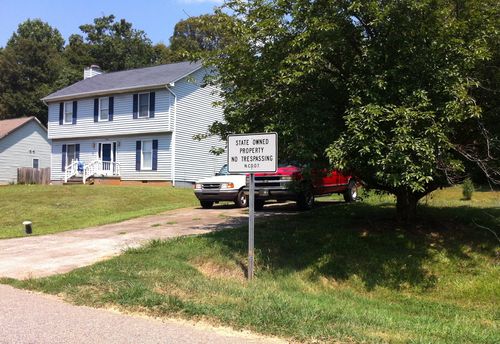
Dot-owned-2

From North Carolina colleague Matthew Bryant comes a heads-up to this report from WFDD, the NPR affiliate, “Possible Twist in Winston Northern Beltway.”

It’s about an ongoing inverse condemnation fight in the Winston-Salem area over the N.C. Department of Transportation’s designation in the mid-to-late 1990’s of certain properties for acquisition for a bypass highway. But despite these designations — which, under the state’s Transportation Corridor Official Map Act meant that the property owners’ development options were limited — DOT acquired some, but not all of the properties. The DOT didn’t buy them all because “[w]e simply do not have enough funding.” For a scope of the acquisitions, see this map which shows the DOT-acquired parcels in red, the unacquired parcels in green, and the plaintiffs in the inverse condemnation case in yellow.

After more than a decade of waiting, the owners of some of the unacquired brought inverse

Continue Reading “Lines On A Map” Or Inverse Condemnation: How Long Can A Taking Be Only “Planned” But Not Executed?

This one is not about takings, but this cert petition does relate to land and water, and come on, when the case involves Tombstone, Arizona calling out the federal government to a showdown — not at High Noon, but in the High Court — do you think we could have passed up the opportunity to post it? No way, hombre.

Here are the Questions Presented. It’s one of those QP’s with a short introduction which lays out the facts, so we won’t repeat them here:

Most fundamentally, this petition asks whether a state has any right to exist under the Tenth Amendment. Under the authority of a State of Emergency declared by the Governor of Arizona, the historic City of Tombstone sought to freely restore its municipal water supply infrastructure inholdings, located within Arizona’s Coronado National Forest, after they were destroyed by a natural disaster. Even though the City faced

Continue Reading New Cert Petition: Tombstone v. United States

Here are two amicus briefs supporting the cert petition in Estate of Hage v. United States, No. 12-918 (cert. petition filed Jan. 17, 2013). That’s the case in which the Federal Circuit held that a 22-year old takings case was not ripe because even though the agency denied Hage’s every application for a grazing permit, it might issue a special use permit that might allow the use of the water he alleges was taken. The issue in the case is whether it is a taking for the government to cut off physical access to a property owner’s vested right to use water.

First up is the brief of Pacific Legal Foundation and the U.S. Cattlemen’s Association which argues that the property owner “has a protected property interest in the right to access and perform ordinary maintenance on ditches that carry his water on vested rights-of-way over federal lands.” The

Continue Reading Amicus Briefs In Western Water Rights Takings Case

As we noted here, the City of Los Angeles has filed a cert petition asking the Supreme Court to review Lavan v. City of Los Angeles, 693 F.3d 1022 (9th Cir. 2012). In that case, a 2-1 Ninth Circuit panel held that the city could not presume that property owned by homeless people in the Skid Row area was abandoned, and enjoined the city from seizing and destroying it when the owner was “momentarily away” from it. L.A.’s petition details the conditions on the area that purportedly resulted from the Ninth Circuit’s injunction, and it sounds pretty bad (see pages 16 through 22).

The petition also argues that, like the vermin that has swept Skid Row, the panel majority’s ruling has “swept” around the Ninth Circuit from the Venice area of L.A., to Fresno, and “across the Pacific Ocean to Hawaii.” The Hawaii section of the petition points out

Continue Reading New Cert Petition: Ninth Circuit Homeless Property Ruling Created Public Health Hazard

Here are some thoughts about the Federal Circuit’s recent opinion in Casitas Municipal Water District v. United States, No. 2012-5033 (Feb. 27, 2013). It’s a long opinion, and we haven’t had a chance to digest it in detail, so these thoughts are not ours but are informative nonetheless. We offer this link to “The US wins the latest round in the Casitas saga” form environmental lawprof Holly Doremus at Legal Planet. She writes:

The Court of Claims ruled for the government, dismissing Casitas’s claim as not ripe on the grounds that the District had not shown any such interference [with Casitas’ water rights], at least not yet.

In one sense this latest decision leaves the dispute hanging. The case was dismissed without prejudice, meaning that Casitas is free to file again if and when it can prove that the fish ladder has actually prevented it

Continue Reading More On Casitas Water Rights Takings Case: “[T]he touchstone for takings cases is whether the property owner is being treated unfairly”

In Midwest Materials, Inc. v. Wilson, No. 84A04-1205-MI-258 (Feb. 27, 2013), the Indiana Court of Appeals held that Midwest did not suffer a taking for the loss of its property during the time a requirement that it provide water service to neighboring residences as a condition of a “special exception” needed to build a “molecular methane gas processing unit” on its own property was in force. The trial court eventually struck down the condition, and Midwest then alleged it suffered a temporary taking under Indiana law (only) for the time in which the permit condition was in effect.

On the inverse condemnation claim, the trial court held that Midwest had not been deprived of use of its property, and the Court of Appeals affirmed under Indiana’s version of the multi-factor Penn Central test. “The trial court did not err when it concluded that the seventeen-month period from the time

Continue Reading Indiana App: No Temporary Taking In Seventeen-Month Loss Of Use