


2013

Update: Professor Ilya Somin, a leading eminent domain scholar and author of the definitive articles on post-Kelo reforms, adds his thoughts on the decision here. Here’s a report from the local paper.

————————-

In the wake of Kelo v. New London, 545 U.S. 469 (2005), a majority of states adopted rules about what constitutes a “public use” in eminent domain. Missouri is one of the states that, by statute, now prohibits takings “solely” for “economic development” purposes:

1. No condemning authority shall acquire private propertythrough the process of eminent domain for solely economic developmentpurposes.

2. For the purposes of this section, “economic development” shall mean ause of a specific piece of property or properties which would provide anincrease in the tax base, tax revenues, employment, and general economichealth, and does not include the elimination of blighted, substandard, orunsanitary conditions, or conditions rendering the property or itssurrounding area
Continue Reading Missouri S Ct Deconstructs Condemnor’s Stated Reasons, Finds Taking Is “Solely” For Economic Development

What we’re reading today:

  • Battle of the Beach” – about the choices facing Jersey Shore towns in the aftermath of Sandy: “Offer ‘blighted’ areas to big developers or risk a slow decline. Residents worry about losing their homes.” Via the Wall St. Journal.

Continue Reading Monday Round-Up: Casinos, Sandy Aftermath, Mortgage Seizure

Drakes_bay_11

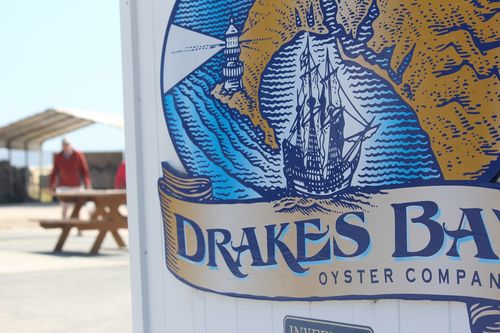
When we originally posted about Drake’s Bay Oyster Co. v. Salazar, No. 13-15227, an appeal now awaiting the Ninth Circuit’s ruling (oral argument video here, key briefs here), we knew further research on the issue was in order, perhaps by making a site visit. Yesterday, we had the opportunity to do just that, and ascertain for ourselves whether there’s room in the environmental community for what appears to be a pretty “green” business. As some of you know, I’ve been waylaid for the past few weeks, and it was the first day in many that I felt up to taking a field trip.

So off to Drake’s Bay it was. Following are some photos, as well as a short video showing the processing line, and a longer video with background on the issues. 

Here is our initial post on the case with the complaint, and our follow

Continue Reading A Visit To Drake’s Bay Oyster Farm, Epicenter Of A California Food Fight

Here’s one as cliché as beach cases from Hawaii: an opinion from a Texas court about the meaning of the term “crude petroleum” in the Texas Natural Resource Code. Oil that is. Black gold. Texas Tea

It’s also another pipeline case from the Texas Court of Appeals (Ninth District) — the same panel that on the same day held that TransCanada is a common carrier possessing the power of eminent domain. Except in this case, the court held that Crosstex, which held a permit from the Texas Railroad Commission to build a liquid natural gas pipeline is not a common carrier because a pipeline used to transport LNG is not the same as a pipeline used to transport crude petroleum. Crosstex NGL Pipeline, L.P. v. Reins Road Farms-1, Ltd., No. 09-12-00563 (May 23, 2013). 

The case was Crosstex’s appeal from the trial court’s denial of its

Continue Reading One More Common Carrier Case From Texas: Pipeline Would Transport Liquid Natural Gas, Not “Texas Tea”

At a recent ABA conference, we suggested during our presentation that cases involving pipelines (petroleum, natural gas, etc.) would be “hot topics,” and here’s the latest: in In re Texas Rice Land Partners, Ltd., No. 09-12-00484-CV (May 23, 2013), the Texas Court of Appeals (Ninth District) held that TransCanada Keystone Pipeline, L.P. is a “common carrier” that has the power of eminent domain, and can condemn an easement for its pipeline.

The Keystone Pipeline is a 2,151 mile petroleum pipline from Hardisty, Alberta in Canada, to Port Arthur, Texas, via Illinois and Oklahoma. TransCanada instituted an eminent domain action to take an easement over land being used for rice farming, and the property owners objected, asserting that TransCanada did not have the condemnation power. The trial judge didn’t make a ruling on that issue, but granted immediate possession to TransCanada, concluding that resolution of its ability to take

Continue Reading Tex App: TransCanada Keystone Pipeline Is Common Carrier With Eminent Domain Power

Mark your calendars: on August 21, 2013, The Seminar Group is putting on the 2d Annual Eminent Domain and Condemnation Law Conference, in Honolulu (Hilton Waikiki Beach). Our Damon Key partner Mark M. Murakami is the Planning Chair, and the rest of the faculty is pretty good, too. 

We’ll be speaking at two of the sessions: “Honolulu Rail Litigation Update – EIS and Acquisitions,” and “The Evolving Process of Eminent Domain – Condemnation Update; Recent Court Decisions of Interest.”

These topics will also be covered:

  • Contractor Licensing Update
  • Planning Update – Development Near the Right of Way
  • Uniform Relocation Act Benefits
  • Rail Development and Property Valuation
  • Ethics in Eminent Domain: Obligations of Condemnor’s and Condemnee’s Counsel

More information here. Download the brochure here, or below.

Hope you can join us for another great program.

2d Annual Eminent Domain & Condemnation in Hawaii – Aug 21, 2013 – Honolulu Continue Reading Eminent Domain And Condemnation Law Conference (Honolulu, Aug. 21, 2013)

Here are the latest (and last, presumably) briefs in the Arkansas Game & Fish Commission v. United States case, now in the Federal Circuit after remand by the U.S. Supreme Court. The Court earlier reversed the Federal Circuit’s conclusion that government-induced flooding could not be a taking unless it was “permanent,” and remanded the case to the Federal Circuit for more.

The Federal Circuit ordered supplemental briefing, with each party filing a brief simultaneously (initial briefs posted here), and now these, their respective briefs responding to the initial briefs:

We’ll bring you more when and if the court schedules arguments, or when it issues a decision.

Response Brief on Remand of Plaintiff-Cross Appellant Arkansas Game & Fish Commission, Arkansas Game an...

Supplemental Response Brief of the United States, Arkansas Game and Fish Comm’n v. United States, No. 2009-…Continue Reading Final Briefs In Arkansas Game Remand (Flooding As A Taking)

HSBAappellate
Earlier this week, I spoke to the Hawaii State Bar Association’s Appellate Law Section about amicus briefing, along with Daniel Gluck, Senior Staff Attorney at ACLU Hawaii.

I appeared by videoconference, and we were able to record my remarks. The handout and links I mention are posted here.

Stream it here:

HSBA-appellate-amicus-briefing-thomas-5-2013

Or download it here (right-click, “save as” – 27 minutes, 12mb mp3)
Continue Reading Audio Of HSBA Appellate Section CLE On Amicus Briefing

A lot of interesting law review articles published lately, and here’s the latest: William Baude, Rethinking the Federal Eminent Domain Power, 122 Yale L.J. 1738 (2013). As the title suggests, the author argues that for 75 years, the original view was that the federal government lacked eminent domain power, because it was not expressly granted and it “was too great of a power to be granted only by implication.” While this view has not prevailed, he argues this history should be reexamined. Here’s the summary:

It is black-letter law that the federal government has the power to take land through eminent domain. This modern understanding, however, is a complete departure from the Constitution’s historical meaning.

From the Founding until the Civil War, the federal government was thought to have an eminent domain power only within the District of Columbia and the territories—but not within states.  Politicians and judges

Continue Reading One More Law Review Article: “Rethinking the Federal Eminent Domain Power”

Here’s one that might make you feel better, particularly if you end up drawing the short straw in litigation: in The Upside of Losing, 113 Colum. L. Rev. 817 (2013), Professor Ben Depoorter writes about how winning may not be the “only thing” in public interest litigation.

Of particular interest to the readers of this blog is the section that begins on page 831, which focuses on the Kelo case and its aftermath. There’s one where the litigant didn’t win in the Supreme Court, but the issue jumped to the forefront of the public consciousness:

What first resembled a resounding loss eventually became a victory of a different sort for the opposition to economic development takings. The history of Kelo illustrates that, as much as a plaintiff might hope to win a favorable verdict, substantial benefits also obtain in defeat. Fundamentally, Kelo and its aftermath suggest that certain disputes

Continue Reading New Law Review Article, “The Upside of Losing,” Focuses On Kelo