2014

Here’s an opinion from the California Court of Appeal, issued last month but unpublished, which was recently ordered published by the court. It’s a lengthy (38 pages) and somewhat detailed opinion, but for those of you who do eminent domain, it’s a worthy read because it covers many bases, and covers them well.

First, the bottom line of San Diego Gas & Elec.Co. v. Schmidt, No. D062671 (July 21, 2014, published Aug. 13, 2014). Condemnor’s just compensation deposit: $712,200. The jury’s award: $8,034,000. That’s over an eleven-fold difference. Lowball Watch alert! 

The case involved the taking of an easement for power lines, and the issues revolved around the highest and best use of the property (the jury agreed with the owner that mining was the highest and best use, and rejected SDG&E’s claim that residential development or habitat mitigation was the highest and best use), the method of valuation

Continue Reading Cal App: Highest And Best Use Isn’t Limited To Current Uses
2010-03-24 15.24.40
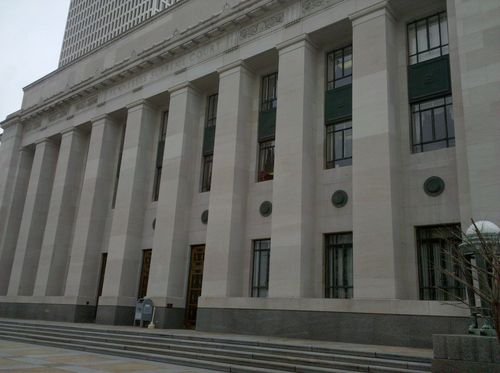
Tennessee Supreme Court, Nashville

In Phillips v. Montgomery County, No. M2012-00737-SC-R11-CV (Aug. 18, 2014), the Tennessee Supreme Court held that a property owner could recover under the state’s inverse condemnation statute, Tenn. Code Ann. § 29-16-123, for a regulatory taking:

We hold that, like the Takings Clause of the United States Constitution, article I, section 21 of the Tennessee Constitution encompasses regulatory takings and that the Property Owners’ complaint is sufficient to allege a state constitutional regulatory taking claim, for which they may seek compensation under Tennessee’s inverse condemnation statute, Tennessee Code Annotated section 29-16-123.

Slip op. at 12.

That’s all well and good, and we applaud the court for doing so. But wait a minute, you say, that statute and this issue sure sound familiar.

Indeed they do. This is the same statute which the U.S. Supreme Court, in Williamson County Regional Planning Comm’n v. Hamilton Bank

Continue Reading Tennessee Finally Recognizes Regulatory Takings Cause Of Action – A Quarter Century After The US Supreme Court Wrongly Assumed It Did

Pasadena, California, in addition to loving roses, apparently loves trees.

The city owns 60,000 street trees, and as the City Arborist testified in City of Pasadena v. Superior Court, No. B255800 (Aug. 14, 2014), “the City catalogued these trees in a database, that he ‘headed an urban tree maintenance program,’ and that ‘[t]he City strives to enhance the quality of life through the promotion, protection, and balanced management of … trees.'” Slip op. at 9.

One day, however, one of those trees fell on the home insured by Mercury Casualty Company. 

Mercury paid the homeowner, then looked to the City for damages in subrogation, asserting nuisance and inverse condemnation. Under California law, inverse condemnation liability arises when property is injured by a public project or improvement in which the defendant substantially planned, approved, constructed, or operated. As the court noted:

The sole issue here is whether the

Continue Reading Cal App: City-Owned Tree Might Be A “Public Improvement” Supporting Inverse Condemnation Claim

9780199322541_450After a couple of days detouring to election law, today we’re back to our usual programming.

We caught wind of an upcoming book (September 2014), “Private Property and Public Power: Eminent Domain in Philadelphia,” by Barnard College Professor Deborah Becher. “Her book—the first comprehensive study of a city’s eminent domain acquisitions—explores how and why Philadelphia took properties for private redevelopment between 1992 and 2007.” Sounds intriguing. More information about the book here.

Here’s an interview with Professor Becher about the book and her study, which lists some of her more controversial — and debatable — conclusions. Highlights:

  • “The problem is that pundits and activists present the transfer of ownership to a new private owner as the fundamental problem. They say that if government were to take property for a school, a highway, or a public park, abuse wouldn’t be an issue, and that all takings for new


Continue Reading Upcoming Book: Private Property and Public Power – Eminent Domain in Philadelphia

To follow up on our earlier post about issues to look for in the legal challenge to the Hawaii Chief Elections Officer’s choice to hold the delayed Democratic Party primary election on Friday, August 15, 2014, rather than keep the 21-day window open, here are the Complaint and Motion for Temporary Restraining Order filed this morning in the circuit (trial) court on the Big Island. As we suspected might be the case, the Hawaii Supreme Court’s original jurisdiction to hear election contests was not invoked, since the relief sought by the complaint is to stop Friday’s planned election, and delay it to some other time.

You can read the documents themselves (thank you, Honolulu Civil Beat, for posting them), but here is the short version:

  • The plaintiff is Democrat Colleen Hanabusa, a candidate for the Democratic Party’s nomination as U.S. Senator. There are two claims for relief:
  • The first is a


Continue Reading Too Soon? Lawsuit To Delay The Delayed Puna Precincts Primary Filed

Update 8/13/2014: complaint filed in circuit court on the Big Island, not the Supreme Court. More on the Complaint and motion for a TRO here

++++++++++++++++++++++

It appears that the Chief Election Officer’s decision to postpone the primary election in the storm-hit Puna district on the Big Island and hold it on the Admission Day holiday on Friday, August 15 — instead of waiting for the full 21-day period which state law permits (which we covered here) — won’t go by without legal action if the reports are to be believed. SeeHanabusa May Sue to Block Friday’s Primary Election in Puna,” and “Hanabusa threatens to sue to block Friday’s election.” 

We obviously haven’t seen any lawsuit, but we have a few questions:

  • What court would have jurisdiction to consider the challenge, and does the Supreme Court have original jurisdiction as


Continue Reading Issues To Watch In The Promised Lawsuit Challenging Hurricane Primary

We were all set to write up the New Jersey Supreme Court’s opinion in Borough of Merchantville v. Malik & Son, LLC, No. A-55 (Aug. 7, 2014) when we thought to ourselves “Tony Della Pelle and his crew at NJ Condemnation Law probably have this one covered already.” 

Sure enough, they did. SeeNJ Supreme Court: Condemnor Has No Duty to Negotiate with Holder of Mortgage,” a writeup of the case by Joseph Grather. The title of that post tells you most of what you need to know about the decision: the court held that the condemnor only must engage in bona fide negotiations with the “title holder of record.” Why? Because the statute says it does, pretty plainly. Which means that it doesn’t have to engage with mortgage holders. Confirming again that old canon of statutory construction, “read the statute, read the statute, read

Continue Reading NJ: Condemnor’s Duty Of Good Faith Only To Title Holder, aka Read The Statute

Last week, we posted our amici brief in Texas v. Clear Channel Outdoor, Inc., a case in which the Texas Supreme Court is considering two questions: first, whether a billboard owner is entitled to just compensation when the land on which it sits is taken by eminent domain, and second, what method of valuation can be used to measure compensation, if so. Here are the rest of the briefs in the case. 

Texas needed to widen a freeway, and condemned the land on which the billboards were located. It refused to pay just compensation on the grounds that the billboards were personal property and not “realty,” and thus the owner could simply move them. The State issued a removal order. In response, the owner filed an inverse condemnation action to recover just compensation for the billboard takings. 

The court concluded the billboards are not moveable property, but are fixed

Continue Reading Briefs In Texas Supreme Court: Is A Billboard Moveable Property?

220px-Swing_vote_08
A Puna Voter?

Of all of the impacts of Hurricane Tropical Storm Iselle — which whacked the Big Island but thankfully not the rest of the state last Friday — the one that may be the longest lasting may be that the Democratic Party primary election for the U.S. Senate seat vacated by the death of Dan Inouye (filled in the interim by Brian Schatz, appointed by the Governor) will come down to one little district on the Big Island.

As long-time readers may know, from time-to-time we also cover election law topics, so on this beautiful post-storm and sunny Sunday, so we’re going to diverge a bit from our usual subject, because along with our colleague Mark M. Murakami, we were curious about the law governing the situation where a natural disaster interferes with an election. 

First, the tale of the tape. According to the latest

Continue Reading The Law Behind Hawaii’s Hurricane Senate Primary Election: Let The Games Begin!

20140809_112157

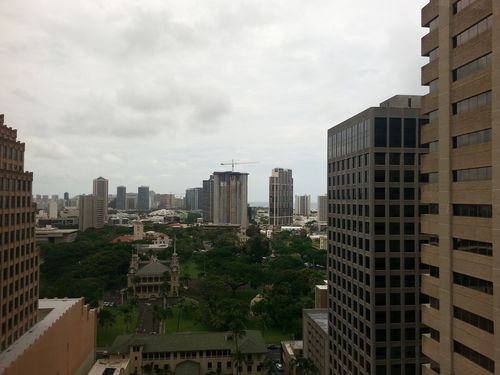
Above is what it looks like out our downtown Honolulu office window on Saturday, August 9, 2014, at 11:30 a.m. A little gloomy, and very humid, but otherwise, just another day. According to the reports, the anticipated hurricanes, as we predicted, didn’t amount to much for us on Oahu. 

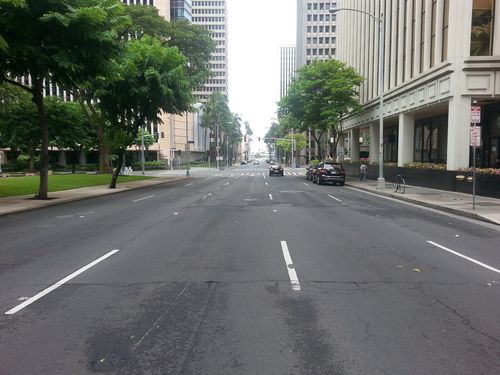
Below is downtown at about the same time yesterday morning at the corner of Bishop and King Streets. Very unusual. But speaking as someone who “braved” work yesterday (our office, along with just about everything in town, was closed), it barely rained in the downtown area. 

But better to err on the side of caution, I suppose. Also, to all of you who sent messages of concern, thank you. Thankfully nothing to be concerned about this time. 

20140808_111115Continue Reading All Clear – Hurricane No Big Deal On Oahu