February 2015

20150204_161439 (1)

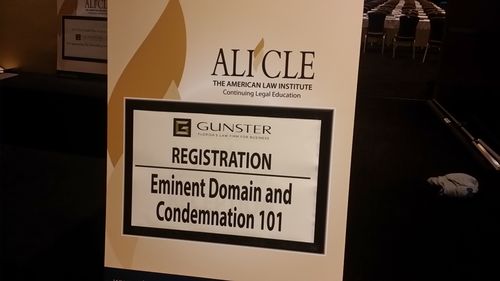
Here are the cases which I spoke about this morning at the 2015 ALI-CLE Eminent Domain and Land Valuation Litigation conference:

Here is our annual “proof of life” photo, the view from the dais. Proof

Continue Reading ALI-CLE 2015 Eminent Domain Conference: Links From Today’s Presentation
Sodarock

Beach cases from Hawaii. The South gets gator law opinions. Vermont, snow law.

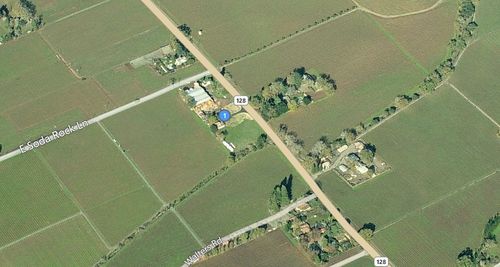
To this list of “local flavor” cases, add Belle Terre Ranch, Inc. v. Wilson, No. A137217 (Jan. 13, 2015), an opinion by a California Court of Appeal resolving a boundary dispute between a Northern California winery and the owner a neighboring vineyard.

There’s a lot of discussion about old boundary descriptions, hundred year old surveys, and other stuff, but in the end the court of appeal concluded the trial court got it right when it determined that the winery did indeed encroach on the vineyard and enjoined it from future trespass. The court of appeal had no quarrel with the trial court’s assignment of $1 as nominal damages.

The interesting part of the opinion, however, is the court’s reversal of the attorneys’ fee award of $117,000. The court held that the statute which the plaintiff

Continue Reading Cal App: Award Of $1 Not Enough To Support Attorney Fee In Vineyard Boundary Dispute

The Nevada Supreme Court’s opinion in Buzz Stew, LLC v. City of North Las Vegas, No. 15-03100 (Jan. 29, 2015) was the second time the court had issued a published ruling in the case, the first being Buzz Stew, LLC v. City of North Las Vegas, 181 P.3d 670 (Nev. 2008), in which it held that “the just compensation provision requires compensating a landowner for a lesser invasion of his property rights when a would-be condemnor acts improperly following its announcement of intent to condemn, such as by unreasonably delaying condemnation of the property.” The court remanded the case for a jury determination of whether the city unreasonably delayed condemnation.  

The jury didn’t think so, which resulted in this second appeal and the second opinion. Unfortunately, this round didn’t turn out as well for the property owner as the first, and the Supreme Court affirmed the jury’s

Continue Reading Nevada: That Contract For Future Condemnation Proceeds Isn’t Property

Here’s one with a somewhat unusual twist: the condemnee objecting to the taking by a public utility district was the state.

In Public Utility Dist. No. 1 of Okanogan Cnty. v. State of Washington, No. 88949-0 (Jan. 29, 2015), the Washington Supreme Court affirmed the power of the county utility district to take an easement over “school trust lands” for the construction of an high-voltage, high-capacity transmission line and corridor. The land was owned by the public and held in trust for schools, was “a portion of the largest publicly owned tract of shrub-steppe habitat in the Methow Valley,” and was being used for cattle grazing. The grazing leases generated $3,000 per year for the state’s public schools, and also acknowledged that the land may be subject to easements and condemnation. 

The court first concluded that an environmental organization could intervene to address the power of the utility district to take

Continue Reading Washington: State Trust Land Can Be Condemned By County Utility