


2015

Wright_home_place

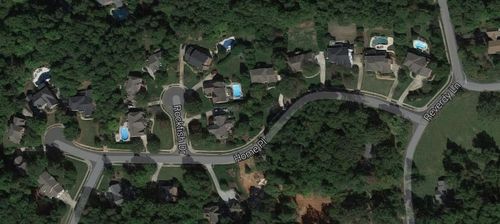
In Town of Matthews v. Wright, No. COA14-943 (Apr. 21, 2015), the North Carolina Court of Appeals invalidated a taking, the stated purpose of which was to make a portion of a private road into a public street. 

A taking to open a private road to the public? That sure does sound like a public use or purpose, no? And had the court of appeals stopped there and not delved deeper, and had the case not had the history which it did, the result might have been different. 

The facts which led the court to that conclusion are worth reading for yourself, but here’s the summary: the homes of the Wrights and five neighbors are located on a dead-end street, Home Place, which connects to the public street system at Revedery Lane. Home Place was originally a private street, but the Town believed there was an implied dedication, and treated
Continue Reading NC App: No Public Use Or Benefit When Town, Fueled By Improper Motive, Condemned Private Street To Make It Public

Compare these two reports, filed just over a month apart, about California’s “high speed” rail system, now underway in the Central Valley:

And here’s a report on an aging mass transit system, BART (there are lessons here for HART, Honolulu’s fledgling municipal rail transit authority):

Continue Reading Rail, Eminent Domain, And Who’s Going To Pay

Pic_shot_1429716535697

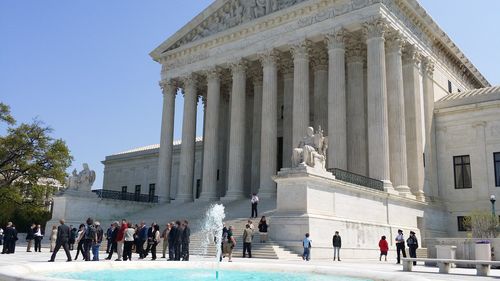
We were in the neighborhood, so decided to drop in on today’s Supreme Court oral arguments in Horne v. U.S.D.A., No. 14-275, the case about the taking of California raisins. 

The arguments ended a few minutes ago, and here’s our initial thoughts:

  • The Leviathan of the regulatory state was on full display today, with the government arguing that the seizure of the raisins wasn’t a taking, it was an “in-kind tax” and “just a standard regulation.”
  • The government actually argued that these regulations benefitted the Hornes, and that they were free to do other things with their grapes if they didn’t like the raisin regulations and government seizure.
  • The Monsanto and Leonard cases will figure prominently in the opinions. Read them again. 
  • Our initial tally: there’s enough votes to find that the USDA cannot fine the Hornes for violating the regulations because to do so would be a taking.


Continue Reading SCOTUS Oral Arguments In Horne (Taking California Raisins) – First Report

The first sign that the opinion wasn’t going the way of the Golden State Water Company — a private utility that provides water to the City of Ojai, California — was right there in the first paragraphs, which contain the one-two punch of labeling the company both a monopolist, and one that price gouges about California’s most sensitive subject these days, water.

The opinion is infused with the flavor that Golden State positively deserved to have its property taken by eminent domain:

Monopolists have long been unpopular in this country. When King George III’s choke hold on government led to intolerable levels of taxation, he was forced to divest his holdings. At the end of the nineteenth century, Congress passed the Sherman Antitrust Act with only a single dissenting vote. (26 Stat. 209, as amended, 15 U.S.C. §§ 1-7.) Introducing his landmark bill, Senator Sherman summed up the prevailing sentiment:

Continue Reading Cal App: Municipality Free To Form Community Facilities District To Take Over Water Utility

Here’s a couple of editorials about the Ramsey case, recently decided by the Virginia Supreme Court. [Disclosure: we filed an amicus brief in support of the Ramseys in that case.]

  • In “Sandbagging, exposed,” the Richmond Times-Dispatch editorial board writes: “Around the country, states that want to take people’s land will sometimes pull an underhanded stunt: If the owners don’t accept the state’s first offer, then the state will produce a second appraisal that claims the property is worth much less.

    That’s exactly what the Virginia Department of Transportation did to James and Janet Ramsey when it exercised eminent domain to take part of their land for an off-ramp. The first appraiser pegged the value of the land at more than $246,000. The Ramseys declined. After the first appraiser retired, VDOT brought in another who said the property was worth only $92,127.”

  • In “High court: VDOT’s


Continue Reading Virginia Papers On The Ramsey Case: VDOT “Bullying” And “Sandbagging” Revealed

On Wednesday, April 22, 2015, the Supreme Court will hear oral arguments in Horne v. U.S.D.A., No. 14-275, the second time this case has been to the Court. 

The first time around, the unanimous Court held that the Hornes could raise the Takings clause as a defense to the USDA’s action to enforce a regulatory scheme that Justice Kagan characterized as perhaps “the world’s most outdated law,” and which was derided by Justice Scalia as “a crazy statute.”

The Court remanded the case to the Ninth Circuit, which, to no one’s real surprise, held that the scheme was not a taking. The Court again granted cert to consider these Questions Presented:

  1. Does the government’s “categorical duty” under the Fifth Amendment to pay just compensation when it “physically takes possession of an interest in property,” Arkansas Game & Fish Comm’n v. United States, 133 S. Ct. 511, 518 (2012),


Continue Reading Raisin Takings Case Round II: Oral Argument Preview

The Virginia Supreme Court today came back with an opinion in Ramsey v. Commissioner of Highways, No, 140929 (Apr. 16, 2015), a eminent domain case in which we filed an amicus brief in support of the property owner. 

Under Virginia’s condemnation procedures, as a prerequisite to a court exercising jurisdiction over an eminent domain action, a state condemning agency must as an initial step present to the property owner a statement of “the amount which [the condemnor] believes to be just compensation,” and must include an appraisal if an appraisal is required:

The state agency concerned shall provide the owner of real property to be acquired with a written statement of, and summary of the basis for, the amount it established as just compensation, and, if an appraisal is required or obtained, such written statement and summary shall include a complete copy of all appraisals of the real property

Continue Reading Virginia: Jury Gets To Hear About Appraisal Bait-And-Switch

Here’s the latest from the Hawaii Supreme Court on the joinder of parties under Rule 19, where there’s a claim that an absent party is “indispensable” and thus the case should be dismissed. Bottom line is that an absentee should be joined if its presence is needed, and the “indispensable” determination only needs to be undertaken if the party can’t be joined. In other words, dismissal is the last resort. 

We won’t go into the details of Kellberg v. Yuen, No. SCWC-12-0000266 (Apr. 15, 2015), because we represent the plaintiff-respondent. So we will leave it to others to dissect the opinion for any civil procedure gems and practical tips. But read the opinion if you want to understand the details for yourself. 

This is the second time that this case has gone to the Supreme Court, the first trip resulting in a published opinion clarifying when an order

Continue Reading HAWSCT Clarifies Joinder Of Indispensable Parties

In 2011, Missouri adopted a statute that looks to us like a slightly modified “right to farm” law:

The statute supplants the common law of private nuisance in actions in which the “alleged nuisance emanates from property primarily used for crop or animal production purposes.” Unlike a common law private nuisance action, section 537.296 precludes recovery of non-economic damages for items such as loss of use and enjoyment, inconvenience, or discomfort caused by the nuisance. Instead, the statute only authorizes the recovery of economic damages in the form of diminution in the market value of the affected property as well as documented medical costs caused by the nuisance.

Under Missouri common law, nuisance claims arising from farming activities are considered temporary nuisances. A few days after the statute went live in 2011, Bohr Farms fired up what is known in the business as a “CAFO” (Concentrated Animal

Continue Reading Missouri: Statute Which Supplants Common Law Farm Nuisance Claim Is Not A Taking

Not too long ago — December 2013 to be exact — the Hawaii Supreme Court held that the 30-day appeal window under Haw. R. App. P. 4, (which also specifies that the timely filing of a motion for reconsideration under Haw. R. Civ. P. 59 tolls the time when a notice of appeal must be filed to “until 30 days after entry of an order disposing of the motion”) only opens once the trial court actually enters a written order disposing of the motion for recon, even where the motion is deemed denied 90 days after filing by operation of Rule 4. So even if you lose a recon motion automatically because the trial court just ignores you, an appeal is not ripe until the trial court actually enters an order memorializing that. Ass’n of Condominium Homeowners of Tropics at Waikele v. Sakuma, 318 P.3d 94 (Haw. 2013). 

Justice Nakayama filed a

Continue Reading Appellate Procedure Nerd Alert: Hawaii Supreme Court Justices Still Disagree About When You Must Appeal A Denial Of A Motion For Recon