March 2016

Here’s a new cert petition, seeking SCOTUS review of an unpublished opinion from the Eleventh Circuit. That court concluded that Dibbs’ equal protection challenge to the Hillsborough County’s Community Plan failed because he could not identify others who were similarly situated but treated differently.

Dibbs asserted. among other claims, that the County treated him differently from others when it rejected his development proposals as inconsistent with the Community Plan for three parcels he owned. Motivated by malice, he asserted, the County singled him out for ill treatment because of “vindictiveness, maliciousness, animosity, spite or other reasons unrelated to a legitimate government interest.”

Dibbs isn’t part of a protected class, so this is an Olech class-of-one claim in which he must show that he was treated differently from others similarly situated, and that the County “applied a facially neutral ordinance for the purpose of discriminating.” The district court and the

Continue Reading New Cert Petition: Circuit Split On “Class Of One” Equal Protection Claims – “Similar” Or “Identical?”

As part of a railroad realignment project, Salt Lake City needed B’s land. But B wouldn’t sell, and since B’s land was already committed to public use as a power substation, the city had doubts whether it could condemn it. So the city and B agreed that B would voluntarily give the city the land, as long as it could move the power substation elsewhere.

The city identified nine potential sites for the relocated power plant. At least one of these sites was privately owned by “A.” Let’s call “A” Evans. That’s the parcel the city settled on, and it instituted condemnation proceedings to take it by eminent domain. Evans objected, but the trial court agreed with the city, and allowed the taking. In Salt Lake City Corp. v. Evans Dev. Group, LLC, No. 20130741 (Mar. 24, 2016), the Utah Supreme Court reversed.

Even though both railroads and power plants

Continue Reading Utah: City Can’t Condemn Property From A To Exchange With B, Even Where B’s Use Would Be Public

Rhode Island has a provision in its constitution which allows condemning agencies to take more property than they might actually need “for actual construction” when building “public highways, streets, places, [and] parks or parkways.”  See R.I. Const. art. VI, § 19. This provision also requires that in the event the condemnor doesn’t use all of the property it acquired for the project, the remainder may be sold as long as “the person or persons from whom such remainder was taken shall have the first right to purchase or lease” the property. 

That’s what happened in Estate of Deeble v. R.I. Dep’t of Transporation, No. 14-235 (Mar. 24, 2016), where the DOT took property belonging to Mr. and Mrs. Deeble for a highway relocation project. Mrs. Deeble later died, and so did Mr. Deeble.  Mr. Deeble’s estate succeeded to his rights.

The DOT didn’t use all of the

Continue Reading Rhode Island: Right To Buy Back Excess Condemned Property Dies With (Former) Owner

20160325_125208

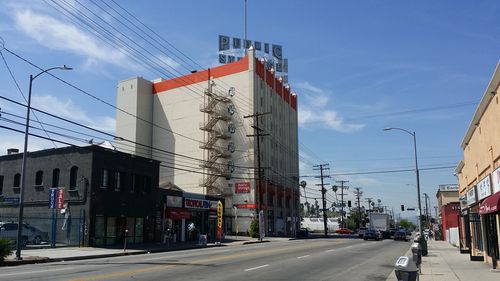
A nondescript corner of what could be just about any urban city street in America. Nothing of overwhelming interest, just the usual commercial buildings, traffic signals, and small businesses. A self-storage facility. Pretty typical in a Commercial district. Here, the “C-4 District.”

Nothing at all, in fact, to indicate that just over a century ago, this was the site of what was to become one of the most important land use cases in U.S. history — the place that gave us the first Supreme Court decision that dealt with how the expanding power to regulate the uses of property meshes with private property rights.

DSCF2746

For this area — the block southeast of the corner of Pico and Crenshaw Boulevards — was once a Los Angeles brickyard owned by Joseph C. Hadacheck.  

What is now the Arlington Heights neighborhood was once outside of the city limits. Indeed, Hadacheck’s title went back

Continue Reading Takings Pilgrimage, LA Edition: Police Power, The Zoning Game, And Nuisances

Today is Good Friday, an official state holiday in Hawaii, so we’re reposting our annual recounting of how it came to be that the State commemorates the date of the crucifixion, and how that squares with the Establishment Clause of the First Amendment

Turns out that we don’t really commemorate today as the crucifixion date, and it is just coincidence that the official State “spring holiday” occurs on the same day.

It’s plausible, isn’t it, that the State had a secular purpose when it officially sanctified “a religious holiday observed primarily by Christians commemorating the crucifixion of Jesus Christ and his death at Calvary?” 

Or so says the Ninth Circuit.

Continue Reading Go Shopping, Hawaii, It’s The Secular Good Friday State Holiday!

Mississippi, like many states, by statute allows private parties to condemn a neighbor’s land for use as a private access road, if doing so is “necessary” for a landlocked parcel to gain ingress and egress. This power is subject to limitations: for example, the parcel must be truly landlocked with no other access. Mississippi apparently has an additional requirement, that the power cannot be exercised within the limits of an incorporated city or town. 

The property at issue in High v. Kuhn, No. 2015-IA-00072-SCT (Miss. Mar. 17, 2016) is within the incorporated City of Gulfport, so the owner objected when his neighbor tried to exercise the power to take his land for access to an otherwise landlocked parcel. The trial court, however, held that the owner had waived the right to assert this objection by not objecting within five days as required by another statute. Besides, the court held, the incorporated

Continue Reading Mississippi: Statute That Says No Private Takings For Access Within City Limits Means Just That

Today’s post is by colleague William Wade, an economist in Nashville, Tennessee, who has thought a lot — and written extensively — about the just compensation and damages available in inverse condemnation and regulatory takings cases.

He provides his thoughts on a recent trial court decision in a closely-watched Texas water case, in which the appellate court earlier applied the Penn Central test to find liability, resulting in a remand to determine just compensation. As the title reveals, Bill takes issue with the way the issues were framed, and the conclusions the court reached. You may or may not agree with his conclusions, but Bill always considers these issues deeply, and his writings are always thought-provoking.  

Find him online at energyandwatereconomics.com

Bragg:  Wrong Question, Wrong Result in Texas to the Detriment of Sustainable Water Supply

by William W. Wade, Ph. D.[1]

Earlier in March, the Medina County Texas

Continue Reading Guest Post: Bragg – Wrong Question, Wrong Result In Texas, To The Detriment Of Sustainable Water Supply

20160131_103348

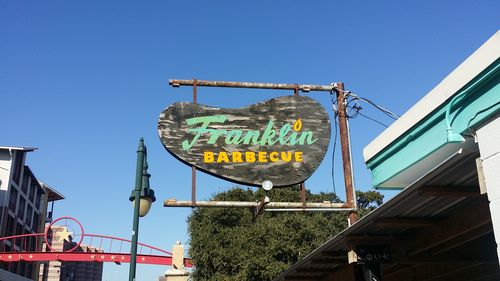
The photo above has pretty much nothing to do with today’s case, except it also involves a Texas barbecue joint. More on the photo after a short review of the Texas Court of Appeals’ decision in Lenox Barbeque and Catering, Inc. v. Metro. Transit Authority of Harris Cnty., No. 14-14-00383-CV (Feb. 23, 2016).

Lenox Barbeque, a “Houston landmark” according to its owner” (stickler’s note: landmark it may be, but we don’t care for that spelling of “barbecue”) sued the Transit Authority for inverse condemnation for lost profits resulting from the authority’s earlier exercise of eminent domain to take a portion of land Lenox owned for a road widening project. That earlier condemnation action resulted in a settlement between the Authority and Lenox under which Lenox got approximately $600 grand for its land and costs, and resulted in a partial demolition and reconstruction of the barbecue’s building. Lenox

Continue Reading Eminent Domain, Inverse Condemnation, And Texas Barbecue: Selling Property To Transit Authority Precluded Later Inverse Condemnation Claim For Lost Profits

One from the California Court of Appeal that may be interesting even though it is about municipal law, and not eminent domain or takings.

We present to you San Diegans for Open Gov’t v. City of San Diego, No. D067578 (Mar. 3, 2016, published Mar. 16, 2016), because the court concluded that an appraiser, hired by a tenant to value property leased from the city, was an “independent fee appraiser” as required by the city’s municipal code.

The code requires that when the city leases property it owns, an “independent fee appraiser” must value the property. BH, which owns and operates the Bahia Resort Hotel on city-owned land, wanted to extend its lease for another 40 years. The city council approved, and BH hired an appraiser to value the property. The city didn’t do its own appraisal, but the director of the city’s real estate assets division stated that

Continue Reading Appraiser Is “Independent” Even Where One Side Is Paying Him

The U.S. Court of Appeals for the D.C. Circuit doesn’t handle too many takings, eminent domain, or property rights related cases. But after today’s announcement that the Chief Judge of the Circuit was nominated for the vacant spot on the U.S. Supreme Court, we did a search through the legal databases anyhow, just in case we missed any.

The search came up empty, with nothing of interest to report decided by the nominee in those areas, or in the land use or due process context. So we can’t really make a solid, supported-by-his-prior-decisions prediction on how he’d rule on those issues if he is confirmed. But really, we kind of know, don’t we? 

Maybe as others have written, he’s the best we can expect

Our guess is that he’s a stalking horse, and that the real goal is Nominee #2, a much younger, much less “centrist” pick.

We are Continue Reading No Property Rights Intel On The New SCOTUS Nominee