


November 2016

IMG_20161101_131219 (1)

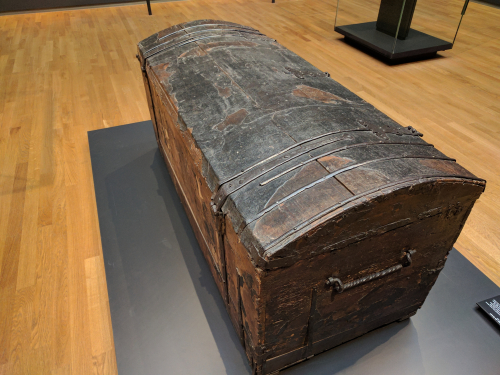
After the recent Brigham-Kanner Property Rights Conference in the Netherlands (very appropriate, as it was the home of the Dutch lawyer and property rights guy Hugo Grotius), we had the opportunity to visit one of that country’s notable museums, where we came across this odd piece, a somewhat worn and nondescript wooden chest. 

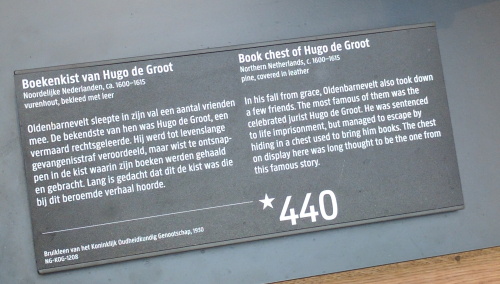
Upon closer inspection, it turns out that this might be the box in which Grotius stored his law books while he was in prison for life.

Turns out that it also might be the box in which he escaped from said imprisonment. We say “might be” because there are other boxes which lay claim to being “the” box.  
IMG_20161101_131350

No matter, because even if this box is only one “long thought to be the one from this famous story” and not the actual box, in our view, we’re still now only one degree of
Continue Reading What’s In The Box? Hugo Grotius!

  2-017_MIAMI_LUI header_small

After a short absence and a change of lead sponsor (from ALI-CLE, to the American Bar Association’s Section of State and Local Government Law), the Land Use Institute is back on.

Download the print brochure here, or visit the LUI web site for more. It will be held February 1-2, 2017, in Miami, Florida, at the Brickell City Centre‘s Akerman Conference Center, in conjunction with the ABA’s Midyear Meeting. One of the best aspects of this program is the registration fee, a mere $300, $250 if you are a judge, an academic, young lawyer, or government attorney (perhaps the best deal in CLE). Register on line here. For those who cannot attend in-person, the LUI will be live-streamed. Register here

Planning Chairs Frank Schnidman and Dean Patrica Salkin have assembled a very good faculty and program. Topics include: “Nuts and Bolts of Land Use

Continue Reading Mark Your Calendars: The Land Use Institute Is Returning – February 1-2, 2017, Miami

Remember that decision by the Hawaii Intermediate Court of Appeals that we posted a few months ago, after the Hawaii Supreme Court granted discretionary review? The case involved a question of how appeals are brought and filed in cases challenging a voter’s registration. In Hyland v. Gonzales, the ICA held that an appellant who was challenging another voter’s registration did not timely “file” his appeal, because he mailed it after the ten day statutory limitations period, and did not ensure it was delivered in that window. 

When we posted that case here, we didn’t have a dog in the hunt. But later, we were asked by the Hawaii Pro Bono Appellate Project to represent the losing appellant, now that the Supreme Court had agreed to hear the case. We signed on and asked the court for supplemental briefing and oral argument. The court agreed, and today, we filed our Supplemental

Continue Reading New HAWSCT Brief In Election Case: Voter Registration Appeal Is Timely Brought When Mailed

There’s been a few decisions recently about entry to private property in anticipation of condemnation, the most prominent being a ruling from the California Supreme Court that entries which exceed relatively minor inconveniences are takings; the court “reformed” the entry statute to import some of the protections of the eminent domain process, but otherwise gave condemnors a lot of leeway. Also, pipline cases around the country have thrust the ability of potential condemnors to come onto property into the public eye. 

This opinion from the Supreme Court of Appeals of West Virginia is the latest on that topic. The court held that a precondemnation entry by a pipeline company to do a survey would not be for a public use, and thus the pipeline company did not have the power of eminent domain. Under West Virginia law, a private company may exercise the power only when the taking would be for

Continue Reading West Virginia: No Entry For Pipeline Survey Because It’s A Private Taking

Here’s the follow up to that cert petition we recently posted. In Romanoff v. United States, 815 F.3d 809 (Fed. Cir. 2016), a rails-to-trails case, the Federal Circuit was confronted with a question about how New York property law treated an easement. In that case, the easement was granted for railroad purposes, and after the railroad stopped using it, the City of New York converted it into a public recreational park, the vaunted “Highline.”

Of course, no one bothered to pay the owner of the reversionary interest just compensation as the Fifth Amendment requires, so it was forced to bring a claim in the Court of Federal Claims to recover compensation. That court, affirmed by the Federal Circuit, concluded that the reversionary owner owned nothing, because the easement its predecessor had granted wasn’t really for railroad purposes, but allowed the grantee to do anything with the

Continue Reading Amici Brief: On Unsettled Questions Of State Law In Takings Cases, Federal Courts Shouldn’t Guess

C0IlPH7UQAA2JsX

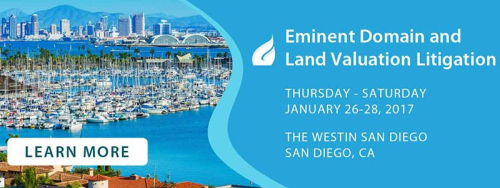
Here’s the final brochure for the upcoming ALI-CLE Eminent Domain and Land Valuation Conference, set for January 26-28, 2017, in San Diego.

Early registration gets you a discount (code CY009MK), as does multiple registrations from one office, so now’s the time to commit to joining us for our annual gathering (the 34th Annual) of the nation’s leading practitioners of eminent domain, condemnation, valuation, and takings law. There are multiple ways to register, including on line

Like in past years, the first day has three tracks: Practice, Substantive, and Condemnation 101. The latter is a one-day course for those new to the field, or as a refresher course for those with more experience. The second day, the 101 attendees will join the advanced course, and we’ll have plenary sessions in the morning, followed by Practice and Substantive tracks in the p.m. As always, attendees are free to move among

Continue Reading ALI-CLE Eminent Domain & Land Valuation Litigation Conference, San Diego, January 26-28, 2017: Final Brochure

A piece from noted eminent domain scholar Professor Ilya Somin, “Beware misguided ‘mainstream’ legal thought – ‘Kelo v. City of New London’ in perspective” at the Washington Post

The thrust of his piece (and a forthcoming law review article) is that Kelo isn’t some nutty decision, but was the product of “mainstream legal thought gone off the rails.” Comparing it to Plessy, Korematsu, Buck v. Bell, and Dred Scott, Professor Somin writes:

earlier precedents holding that almost anything can be a public use justifying the taking of property – precedents that ended up authorizing the forcible displacement of hundreds of thousands of people (most of them poor and politically weak). For the most part, the justices who voted for these decisions were not rogue extremists, but respected members of the legal establishment relying on mainstream reasoning and habits of thought.

A truly extreme, non-mainstream

Continue Reading Somin: Kelo Not An “Extreme” Decision, But Result Of Mainstream Legal Thought

Here’s the latest in a case we’ve been following (because we filed an amicus brief in the Federal Circuit in support of the property owners, and will be filing a brief in support of the cert petition). 

This is the case about New York City’s “Highline,” the abandoned elevated rail line which was converted into a public parkway. The problem, however, was that the federal government failed to pay just compensation to the owner of the railway easement, who was supposed to have the easement revert to it when the city stopped using it for a rail line.

The owner brought a rails-to-trails takings case for compensation in the Court of Federal Claims but that court, and the Federal Circuit, concluded that under New York law, the terms of the easement (what the Federal Circuit called a “general easement”) meant that the easement was granted not only for railway

Continue Reading New Cert Petition: When Faced With A Question Of State Property Law, Should A Federal Court Make Its Best Guess?

Here’s what we’re reading today.

SCOTUSblog has posted a summary of a recent lecture by Professor James Ely (recently also returned from the Brigham-Kanner Property Rights Conference in the Hague) at the Supreme Court Historical Society, about whether “the Progressive-Era court largely accommodated social and political reforms, diminished protections previously afforded to property owners and opened the door for later New Deal jurisprudence.” His conclusion is yes. 

Professor Ely’s talks are always worthy, and the SCOTUSblog summary is a pretty good substitute since we don’t have the full lecture. A sampling:

According to Ely, progressives advocated a strong police power that would enable states to promote public welfare even at the expense of certain liberties – in Ely’s description, making the public welfare into a “talisman” that could override provisions in the Constitution. As former Attorney General George Wickersham said in 1914, the “pressure was great to compel legislation

Continue Reading Reading Today: “Rethinking the court’s property-rights jurisprudence in the Progressive Era” From Professor James Ely