


December 2016

Siouxfalls

Here’s South Dakota v. JB Enterprises, Inc., No. 27176 (Dec. 7, 2016), the second in a series of three recent cases decided by the South Dakota Supreme Court involving a highway renovation project by the SD Department of Transportation. (Here’s the first.)

This one involved the DOT’s “quick take” power, and what happens when the state first grabs property — in this case, the right of access — but then partially changes its mind.

The DOT instituted a quick take of the owner’s access rights. But after consultation with federal highway authorities, the scope of the project changed and the state informed the property owner, “There is a very real chance that we won’t need any easements or access rights at all from your clients.” Slip op. at 4. 

Sure enough, that’s what happened, and the DOT informed the property owner that it wouldn’t be taking
Continue Reading South Dakota Takings Trilogy, Part II: You Quick Take It, You Bought It – Standing Down Doesn’t Obviate The Need For Compensation

Siouxfalls

Here’s the first in a series of three recent cases decided by the South Dakota Supreme Court involving a highway renovation project by the SD Department of Transportation.

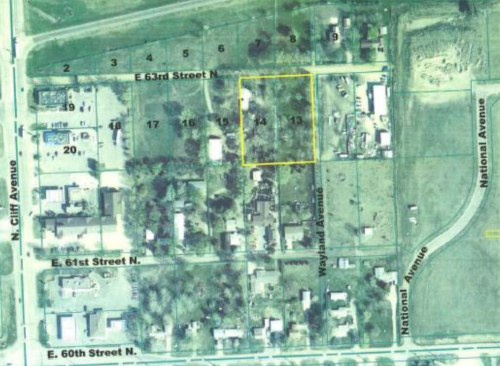
We think to more easily understand the three separate opinions in South Dakota v. Miller, No. 27198 (Dec. 7, 2016), you should read them out of order. Start of page 18, read the bit about whether the DOT’s taking of a “small triangular piece of property” on Cliff Avenue resulted in a substantial impairment of access to lots on both sides of 63rd Street, and then go back and start at page 1 and read the court’s analysis of whether several lots could be combined to calculate just compensation and damages. 

First, access. The owners claimed compensation for impairment of access to Lots 5 through 8, because in the after condition, drivers could no longer use Cliff Avenue and 63rd Street

Continue Reading South Dakota Takings Trilogy, Part I: Access Changes And Larger Parcel

For alums of the University of Hawaii Law Review, friends of the publication, or just people who like wine, here’s something to put on your December calendar. 

The Law Review is sponsoring a workshop on December 18, 2016 at 5:30 pm at downtown Honolulu’s Hound & Quail. The kicker is that this isn’t an academic workshop, but a wine workshop. The cost is $40. Now this is the type of workshop we can get behind. Register on-line here. There are limited spaces, so sign up now. 

So come on down, network with your old law school colleagues, and most importantly, support the Law Review. 

A Winter Wine Workshop – UH Law Review (Dec. 2016) 

Continue Reading U. Hawaii Law Review Winter (Wine) Workshop (Dec. 18, 2016)

Do you have “giver’s block” about an appropriate present this holiday season for the dirt lawyer in your orbit? Well fear not, here are our modest suggestions for stocking stuffers.

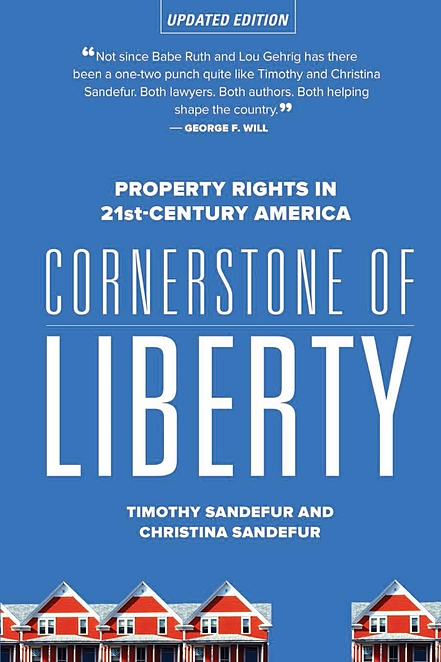
9781939709820Timothy Sandefur and Christina Sandefur, Cornerstone of Liberty: Property Rights in 21st Century America (2d ed. 2016).

“Published in the wake of the Supreme Court’s landmark decision in Kelo v. New London, Cornerstone of Liberty: Property Rights in 21st Century America made a powerful contribution to the firestorm of interest in protecting property rights. Now in its second edition, Cornerstone of Liberty has been fully updated by authors Timothy and Christina Sandefur, and examines how dozens of new developments in courtrooms and legislatures across the country have shifted the landscape of private property rights since 2005. Through a combination of real-life stories and solid legal analysis, the authors explain how key issues like eminent domain, civil asset forfeiture, and

Continue Reading Your 2017 Holiday Gift Guide, Dirt Lawyers’ Edition

When an opinion starts off like this, you just want to read the rest, even if the substance of the decision is about statutes of limitations:

This case arises from Mr. Abbas’s complaint against the United States (“U.S.” or “the Government”) in the Court of Federal Claims for an alleged taking of his property rights in certain pre-World War II German bonds. Mr. Abbas alleges that a series of post-World War II treaties between the U.S. and Germany pertaining to the handling of these bonds effected a regulatory taking without compensation of his right to enforce the bonds against Germany in U.S. courts, in violation of the United States Constitutional requirement that “private property [shall not] be taken for public use, without just compensation.” U.S. Const. amend. V.

Abbas v, United States, No.16-1342, slip op. at 2 (Dec. 6, 2016). Read the opinion for the fascinating story behind how

Continue Reading Federal Circuit: Owner Should Have Brought Takings Claim In 1959

HSBA 2017 Land Use Conference

Registration is now open for the 2017 Hawaii Land Use Conference, presented by the Hawaii State Bar Association and the University of Hawaii Law School, at the downtown Honolulu YWCA’s Fuller Hall on January 19-20, 2017. “This 2 day conference is a must attend for any attorney or professional whose practice involves land use and development,” as the registration web site says (we agree).  

Topics include the latest in Transit-Oriented Development, the Thirty Meter Telescope, GMO (including the recent rulings from the Ninth Circuit), and the topic we’ll be presenting, “Takings: Regulatory and Physical.”

The final agenda has not yet been released, but if experience is any guide, Planning Chair Professor David Callies will put together two days of timely topics, presented by distinguished faculty. 

And the cost can’t be beat: $200 for members of the Real Property and Financial Services Section and government lawyers, $300

Continue Reading 2017 Hawaii Land Use Law Conference, January 19-20, 2017

We’ve had bridges on our minds lately. Plus, we’ve been meaning to post the Nebraska Supreme Court’s opinion in Strode v. City of Ashland, No. S-15-956 (Oct. 28, 2016) for a while, and it is coincidentally about a bridge. So the title to this post came to us quickly, and naturally. But writing up the case didn’t.

But while we dawdled, Dean Patty Salkin wrote the case up on her blog, Law of the Land. Which has now saved us the effort of writing the case up in its entirety, and we suggest you start by reading her post for the background and the court’s ruling. 

The case involved two inverse condemnation claims brought by husband and wife property owners, asserting the City’s zoning regulations worked a taking of their land in two ways. They first that the regulations prohibited their use of the land for their

Continue Reading Nebraska: Inverse Condemnation Claims A Bridge Too Far

We don’t usually post unpublished opinions, but the Fourth Circuit’s recent decision in Clayland Farm Enterprises, LLC v. Talbot County, No. 15-1755 (Dec. 2, 2016), raised some issues worth your time. 

The property owner brought its claim in Maryland state court claiming, among other things, that the County’s two indefinite moratoria on development and sewer availability — which prohibited owners from seeking or obtaining County subdivision — was a facial taking. The lawsuit asserted “the moratorium is facially unconstitutional,” although it’s not clear from the majority opinion what remedy the complaint sought. 

The County removed the case to federal court and moved to dismiss. The district court granted the motion, because “[i]t is beyond the province and competence of this court to make zoning decisions[.]” 

The Fourth Circuit reversed. “Count I is a facial challenge to the moratoriums and is thus clearly ripe.” Slip op. at 7. Because a

Continue Reading 4th Circuit (Unpublished): Federal Court Facial Takings Claim Ripe After Removal By Govt To Fed Court

Here’s what we’re reading today:


Continue Reading Monday Round-Up: Food Takings; Honolulu And Nebraska Takings; Property Rights And The Environment