2016

This just in: the North Carolina Supreme Court has issued an opinion in an important case we’ve been following for a long time, Kirby v. North Carolina Dep’t of Transportation.

This is the case about the “Map Act,” a statute which designates private property for future highway use, and  “restricted plaintiffs’ fundamental rights to improve, develop, and subdivide their property for an unlimited period of time.” Slip op. at 1.  The court concluded that “[t]hese restraints, coupled with their indefinite nature, constitute a taking of plaintiffs’ elemental property rights by eminent domain.” Id.  

The North Carolina Court of Appeals earlier held the Act was a taking, and this resulted in a lot of shouting and gnashing of teeth that making the DOT actually pay just compensation would crash the system and cost the state a lot of money, so we were not terribly surprised when the DOT sought review
Continue Reading NC: “Map Act,” Which Designates Property For Future Highway Acquisition — And Prohibits Development In The Interim — Is A Taking

20160609_095451

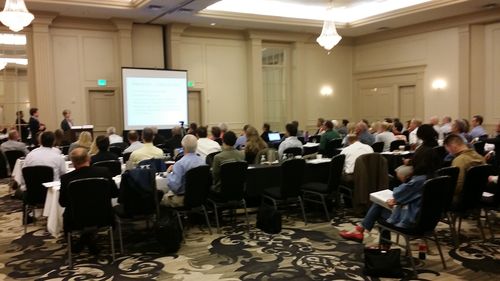
A very good crowd for today’s Oregon Eminent Domain Conference in Portland. 

Here are the links to the cases and other materials that we spoke about today in our session “Inverse Condemnation and Regulatory Takings – Issues and Trends.”  

Our thanks to Planning Chairs Jill Geleneau and Paul Sundermier for putting together a great program, and for inviting us to speak. 


Continue Reading Links From Today’s Oregon Eminent Domain Conference

We won’t go into the West Virginia Supreme Court of Appeals’ opinion in Gomez v. Kanawha County Comm’n, No. 15-0342 (June 3, 2016) — it’s well-written and easily digested (all citations are in footnotes) — but point out these highlights:

  • The condemnation took Gomez’ property for use as a dump site for debris from construction to improve an airport by removing the top of a hill that the FAA said interfered with take offs and landings. 
  • The stated public use was “improving, maintaining, and operating Yeager Airport.”
  • Gomez objected, arguing that using her property as a dump didn’t qualify, and that a jury — not the judge — could make that determination.
  • The Supreme Court disagreed: public use is a question of law, and one which the judge determines.
  • The court also rejected Gomez’ argument that the project influence rule was not applicable. She claimed the valuation must include the


Continue Reading W Va: Condemnee Acting Badly Isn’t Reason Enough For Summary Judgment

Despite all of the parties in the case calling for the removal of the hearing officer selected by the Board of Land and Natural Resources to conduct the contested case after remand by the Hawaii Supreme Court as we noted just a couple of days ago, the Board has — somewhat surprisingly — refused to do so. 

Here’s the Order, which concluded:

The Board is concerned that, taken to its logical extreme, ensuring a contested case process that subjectively “appears to be fair” to every possible person who takes an interest in the TMT project would likely necessitate not only the disqualification of Judge Amano but of every potential hearing officer who otherwise possessed the acumen to hear this case. No qualified hearing officer candidate is likely to satisfy all spectators and remove all fears of reversal. The Board will not go down this rabbit hole. Instead, the

Continue Reading “Common Sense Must Prevail” – Agency Won’t Remove TMT Hearing Officer

20160603_075340

As we head into the weekend, one more reminder about two worthwhile eventss being staged next week: 

  • Monday, June 6, 2016:Airbnb & Zoning: A Planner & Lawyer’s Guide to Short-Term Rentals,” with our ABA and Owners’ Counsel colleague Dwight Merriam, FAICP. From the Planning and Law Division of the American Planning Association. Details here. If issues about the “sharing economy” like AirBnB, Uber, Lyft, and similar operations, and how they work in the regulatory environment are of interest, you might want to consider joining us at the ABA: we’ve just formally launched a new group within the Section of State and Local Government Law dedicated to these pressing legal questions. Stay tuned here for a separate post on how to join us.  
  • Thursday & Friday, June 9-10, 2016: Oregon Eminent Domain Conference, Portland. We’ll be speaking at that one. The focus is on Oregon


Continue Reading Seminar Reminder: Oregon Eminent Domain; Sharing Economy Issues

Hawaii News Now – KGMB and KHNL

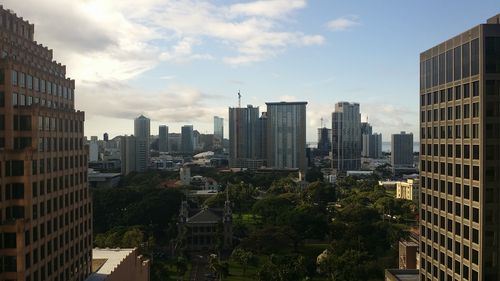
Hawaii News Now came calling yesterday, looking for commentary about the latest in the case challenging the proposed Thirty Meter Telescope on the Big Island’s Mauna Kea. We obliged.  

As you know, we’ve been following the case. It’s already been up to the Hawaii Supreme Court, which unanimously invalidated the Conservation District Use Permit which the State Board of Land and Natural Resources had previously issued. The court correctly held that the BLNR should not have issued the permit (even if the permit didn’t allow construction to begin) before it conducted the contested case to consider the objections of the challengers. This process, the court emphasized, “lacked both the reality and appearance of justice.” In other words, it looked really bad to grant a permit and only then consider objections. 

The court remanded the case to the Board for a reboot. 

Once

Continue Reading The Latest On The Thirty Meter Telescope Case: Everyone Wants The Hearing Officer Removed

Frisco

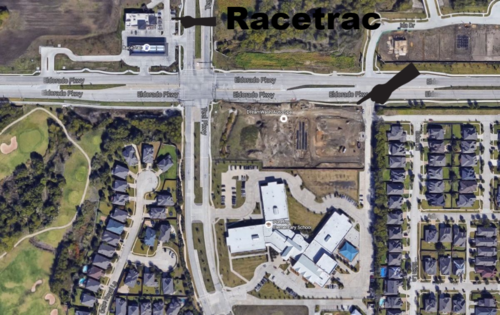
The plaintiffs in FLCT, Ltd. v. City of Frisco, No. 02-14-00335-CV (May 26, 2016), owned two adjoining parcels in the Dallas-Ft Worth area at the southeast corner what could be a very busy (and therefore profitable) intersection of two parkways. After checking with the city that the restriction in the Commercial zoning which prohibited the sale of beer and wine within 300 feet of a school wasn’t going to prohibit such sales if they sold the southern portion of the parcels for a school, the owners did so. The owners and their new southern neighbor the school district executed a development agreement that acknowledged that the sale of alcohol on the remaining parcels was okay. Building permit issued. 

A Racetrac gas/convenience store was what they had in mind. But the City amended the zoning code. And that was enough, apparently, to make the planning department change its mind about

Continue Reading Tex App: How To State A Penn Central Regulatory Takings Claim

The issue determined by the Texas Supreme Court in In re Lazy W District No. 1, No. 15-0117 (May 27, 2016), was whether — in a case where one governmental entity is trying to condemn another governmental entity’s property — the trial court must resolve the power to take issue before or after the special commissioners determine value. This was, apparently, an issue in Texas.

Here is the court’s description of the case:

The Water District offered the Lazy W $169,218 for the easement, and when the offer was rejected, petitioned for condemnation in the district court. The day after the petition was filed, without notice to the Lazy W, the district court appointed three special commissioners to determine the value of the proposed easement. When the Lazy W learned of the order, and before the commissioners’ hearing, it filed a plea to the jurisdiction, asserting its immunity

Continue Reading Fighting Eminent Domain, Texas Style: Form Your Own Utility District, Plead Immunity

This just in. The Court, in an opinion authored by Chief Justice Roberts:

The Clean Water Act regulates the discharge of pollutants into “the waters of the United States.” 33 U. S. C. §§1311(a), 1362(7), (12). Because it can be difficult to determine whether a particular parcel of property contains such waters, the U. S. Army Corps of Engineers will issue to property owners an “approved jurisdictional determination” stating the agency’s definitive view on that matter. See 33 CFR §331.2 and pt. 331, App. C (2015). The question presented is whether that determination is final agency action judicially reviewable under the Administrative Procedure Act, 5 U. S. C. §704.

United States Army Corps of Engneers v. Hawkes, No. 15-290 (May 31, 2016). 

Short answer: yes. 

The opinion is as bland as you might expect, focusing as it does on the Administrative Procedures Act. CJ had to get everyone aboard,

Continue Reading Unanimous SCOTUS: You Can Judicially Challenge A Clean Water Act Jurisdictional Determination