2016


Owlshead

Here’s a cert petition recently filed, which asks the U.S. Supreme Court to review the opinion of the Maine Supreme Judicial Court under a judicial takings theory.

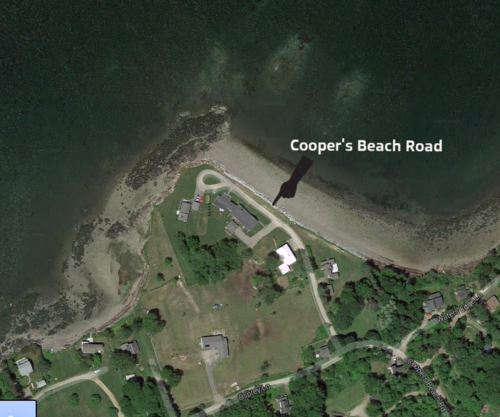
The petitioners argue that the Maine court took their private property when it departed from its prior decisions and a statute and concluded that a road to their home was a public beach access road, and not their private driveway. 

Here are the Questions Presented:

1. Did the Maine Supreme Judicial Court effect a “judicial taking” in violation of the Fifth and Fourteenth Amendments to the United States Constitution when it upheld the Superior Court’s reliance upon extrinsic evidence of the intent of petitioner’s deceased predecessor in title, John McLoon, to determine that the dedication and acceptance of “Coopers Beach Road” as a public way included the Petitioner’s driveway despite the fact that the dedication petition itself failed to specifically describe the
Continue Reading New Cert Petition: By Upholding Public Beach Road Access, Maine Supreme Court Judicially Took Our Driveway

20151205_150101

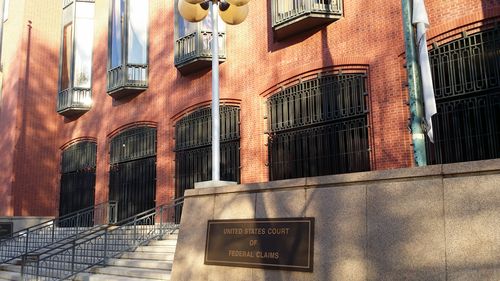
A noteworthy opinion from the Court of Federal Claims in Petro-Hunt LLC v. United States, No. 00-512L (Apr. 26, 2016), dismissing a claim for a judicial taking for lack of subject matter jurisdiction because the claim would require the CFC, an article I court, to review the actions of the Fifth Circuit, an article III court. The CFC concluded that in this situation, the Federal Circuit holds there’s no jurisdiction.   

The takings case came about after the Fifth Circuit held that the plaintiff did not own mineral leases in Louisiana because under federal common law, it did not acquire any rights by prescription. The plaintiff asserts in the CFC that this is a taking because the Fifth Circuit’s ruling altered its previously-established rights by changing the law. The court accepted that fact as true, but concluded that the CFC has no jurisdiction to tell the Fifth Circuit it

Continue Reading CFC Tackles Judicial Takings: SCOTUS “Cracked Door Ajar,” But Federal Circuit Mostly Says No Jurisdiction

“Help us help you.”

That was the tenor of the questions from the Ninth Circuit panel (Judges Tashima, Tallman, and Hurwitz) sitting in Portland

The Deputy AG arguing for the State started

“You Honor, my opponent’s concession that Patel forecloses his argument about the nature of the facial challenge, resolves this case in its entirety.” 

It’s hard to join the Democratic Party of Hawaii?Continue Reading Voting Overwhelmingly For Democrats Isn’t Enough – We Want Your Hearts And Minds: 9th Cir Oral Arguments In Hawaii “Open Primary” Appeal

20151205_145903

Earlier today, we asked the Federal Circuit for its permission to file this amici brief urging the court to rehear its recent panel decision in Romanoff Equities, Inc. v. United States, No. 15-5034 (Fed. Cir. Mar. 10, 2016).

This is a rails-to-trails takings case in which the panel concluded that the words in the original easement grant “for railroad purposes and for such other purposes as the Railroad Company … may … desire to make” mean that the easement was a “general” easement which allowed the grantee to not only make railroad use of the easement, but literally any use it desired. Thus, when the railroad abandoned the line and the City of New York turned it into the Highline public park, the reversionary property owners were not entitled to compensation.    

Our brief argues that there’s no such animal as a “general” easement that allows the

Continue Reading Amicus Brief: NYC’s Highline Park Is A Taking: A “General” Easement Allowing All Uses Isn’t Really An Easement At All

California Associate Justice Goodwin Liu — often mentioned on short lists of potential future nominees to the U.S. Supreme Court even after the Republican-led Senate stymied his nomination by President Obama to the Ninth Circuit — just saw his chances for a promotion go up today, if ever so slightly. No, we’re not talking about Donald Trump’s Indiana primary victory, even though that might play into it. Rather, we’re talking about an eminent domain case that was argued earlier this morning in the California Supreme Court.

Yes, you read that right: an eminent domain case might be instrumental in a future SCOTUS appointment. 

Live From San Francisco!

We weren’t able to be present in the San Francisco courtroom for today’s arguments in Property Reserve v. Superior Court. But for the first time, the court beamed arguments live on the web for all the world to see, so we

Continue Reading Cal Supreme Court Post-Argument Analysis: Does The Entry Statute Provide The Same Protections As Eminent Domain?

The New Hampshire Supreme Court, in our view, got it wrong in Ashton v. City of Concord, No. 2015-0400 (Apr. 29, 2016). Really, really wrong.

Indeed, the New Hampshire court seems to have resurrected the California Supreme Court’s now-defunct rule from Agins v. City of Tiburon, 598 P.2d 25 (Cal. 1979), which held that there is no compensation remedy when the application of an ordinance denies an owner all beneficial use of property, only declaratory and equitable relief. See id. at 26 (“the need for preserving a degree of freedom in the land-use planning function, and the inhibiting financial force which inheres in the inverse condemnation remedy, persuade us that on balance mandamus or declaratory relief rather than inverse condemnation is the appropriate relief under the circumstances”). The Agins rule was held unconstitutional in First English Lutheran Church of Glendale v. County of Los Angeles, 482

Continue Reading Does New Hampshire Think It’s California? Wrongful Denial Of Demolition Permit Cannot Be A Taking Because City Was Merely Applying The Statute

Dominionstorage

Is the forced acquisition of property by the government’s power of eminent domain a “purchase?” To the Virginia Supreme Court, the answer to that question is yes. Why, we’re not really sure, because the court doesn’t tell us why.

In City of Chesapeake v. Dominion SecurityPlus Self Storage, LLC, No. 150328 (Apr. 29, 2016), the court held that the use of the word in a subdivision plat in which the owner agreed that it “reserve for future purchase by the City” a part of its property with no compensation for any improvements on that land, meant that the owner also agreed to let the city condemn the land without paying for the improvements.  

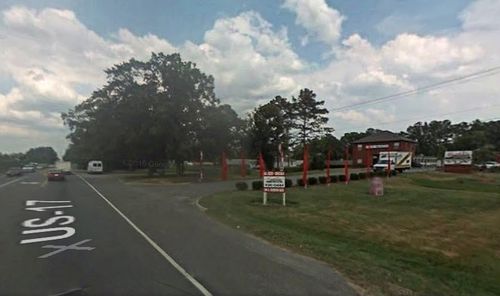
This case involved a highway widening and elevation project in southern Virginia. The current owner of the property, which operates a self-storage facility on the parcel, purchased it from the prior owners who had subdivided it

Continue Reading Virginia: Taking By Eminent Domain Is “Purchasing” Property. Why? Because We Said So.

Another day that we’re tied up, so there won’t be too much analysis. But we wanted to post this fascinating case out of the California Court of Appeal, Friends of Martin Beach v. Martin Beach 1 LLC, No. A142035 (Apr. 27, 2016).

As the caption of the case indicates, it involves beach access. Specifically, access to a Northern California beach that, despite some junky Yelp reviews, is apparently popular enough to spawn a “friends of” activist defense group. The Friends want access across private property owned by a really rich Silicon Valley guy. Before he owned it, they alleged, the owners let the public cross to get to the beach. The Silicon Valley guy, however, didn’t continue that practice, and the lawsuit followed.

The owner claimed he had exceptionally good title, because the land, like much land in California, could trace title back to a Spanish or Mexican

Continue Reading Cal App On Tidelands And Mexican Title: Owner Has Title In Land Used For Beach Access, But May Have Lost It By Dedication

We’re tied up today, so can’t write much, but wanted to post this recent decision from the Court of Federal Claims. Here’s the court’s own summary:

Plaintiffs Love Terminal Partners, L.P. (“Love Terminal Partners”) and Virginia Aerospace, LLC (“Virginia Aerospace”) are leaseholders of property at Dallas Love Field Airport (“Love Field”), located in Dallas, Texas. In their complaint, filed in the United States Court of Federal Claims (“Court of Federal Claims”) on July 23, 2008, plaintiffs allege that the federal government, through the enactment of the Wright Amendment Reform Act of 2006 (“WARA”), prohibited the use of their property, thereby destroying all economic value or benefit of their leasehold and effecting a taking without just compensation, in contravention of the Fifth Amendment to the United States Constitution. Plaintiffs seek compensation for the taking as well as interest from the date of the taking, attorneys’ fees, appraiser and expert witness fees

Continue Reading $133,500,000 CFC Verdict For A Categorical Lucas Taking

DSCF2762

When you think “LA” or Southern California, what comes to mind? Things like “the hills of Beverly Hills, the Hollywood Hills, and the Los Angeles basin, including the Hollywood sign, the Griffith Observatory, downtown Los Angeles, and … Mount Baldy,” perhaps?

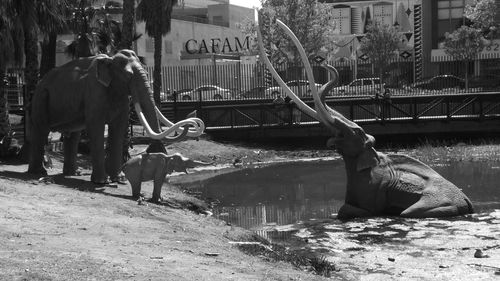
Or maybe, like us, you think of prehistoric elephants stuck in tar.

But no matter, because our point is that each of us recognizes what we call “cliche litigation.” You know, the cases that involve just the thing you think about when you imagine a certain place. We have our beach cases in Hawaii; the south has alligator cases, for example. 

Well, here’s the LA version, Boxer v. City of Beverly Hills, No. B258459 (Apr. 26, 2016).

The City of Beverly Hills planted redwood trees in a public park. These trees apparently blocked the views from the plaintiffs’ backyards of some very So Cal-ish things like

Continue Reading Cal App: Beverly Hills Blocking Views Of The Hollywood Sign Isn’t Inverse Condemnation