September 2017

ALI-CLE2018

It’s not too early to reserve your spot at the 35th Annual ALI-CLE Eminent Domain and Land Valuation Litigation Conference, to be held at the Francis Marion Hotel in historic downtown Charleston, South Carolina, January 25-27, 2018. 

We’re finalizing the Conference details, but can report that the program will, as usual, feature expert presenters from across the nation, and both an in-depth update on the subjects we love, and a “101” track for those new to the field or who would appreciate a refresher. Check out some of the topics:

  • Takings and Damaging by Flood: Case Selection Advice For Savvy Practitioners
  • Quarterbacking the Case: Blocking Defenses, Controlling the Witnesses, and Converting for Verdicts
  • We’ve Been Working on the Railroad: Utility Crossing Disputes
  • Protecting Your Record,and Anticipating Appeals
  • Lucas 25 Years Later: Property Rights in the Age of Global Warming
  • Building and Growing Your Eminent Domain Practice With


Continue Reading 2018 ALI-CLE Eminent Domain Conference: Early-Bird Registration Discount Now Posted
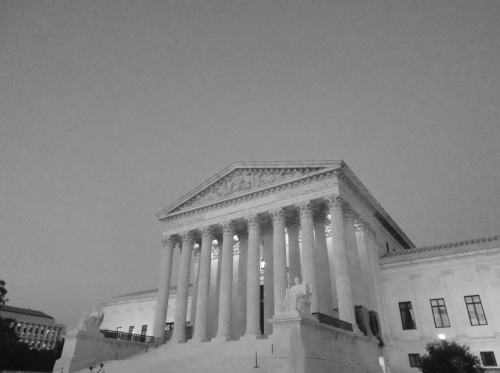
It’s no secret: along with a lot of our colleagues, we have thought for a long time that the Supreme Court needs to address the “final decision” prong of the Williamson County ripeness test. Ever since four Justices in 2005 concurred in San Remo Hotel to say so, we’ve been anticipating the case which presents the Court with the vehicle to finally present that issue. There have been a lot of attempts in the interim, but none so far successful (here’s the latest, a case asking the Court to overrule Williamson).

Meanwhile, the lower courts have been steadily chipping away (see this decision, for example) at Williamson County, concluding it is a prudential doctrine, that further applications would be futile, that it doesn’t apply to facial claims, and similar. 

Here’s another cert petition, recently filed, that doesn’t call for overruling Williamson County outright

Continue Reading New Williamson County Cert Petition: How Far Down The Rabbit Hole Does The “Final Decision” Requirement Take Us?

DSCF3369

Back when the opinion was first released, we posted a list of Murr v. Wisconsin links. Now that Court is nearly back from its summer vacation, here’s an updated list:

Will there be more? No doubt. Murr is the takings case that keeps on giving. Continue Reading The Takings Case That Keeps On Giving: Murr Round-Up, Continued

20170918_171304_Richtone(HDR)

Here’s the amici brief we’re filing today in a case we’ve been following, Jarreau v. South LaFourche Levee District, No. 17-163.

As the name of the case indicates, this one is out of Louisiana and the Question Presented asks whether the Fifth Amendment’s Just Compensation Clause requires that an owner be made economically whole when her business is destroyed as the consequence of an exercise of eminent domain.

There’s a lower court split, and the U.S. Supreme Court has weighed in on the subject in the famous case of Kimball Laundry Co. v. United States, 338 U.S. 1 (1949), in which the Court held that the owner was entitled to so-called “business losses” when the government took the laundry. Many lower courts have distinguished Kimball Laundry, however, holding that it only applies when the government actually takes the business involved, and was not deciding that the Just Compensation

Continue Reading New Amici Brief: “The reality is that “just compensation” is, in application, often neither just nor results in compensation.”

Here’s a recently-filed cert petition involving property in the Florida Keys. The city allegedly downzoned the property to virtual worthlessness, but the lower courts concluded that it was not a Lucas take because the owners could still camp on the land, and the city gave them something called “ROGO points.” 

Which reminds of us the science-fiction trope of “credits” instead of money.  You can see why we find the case interesting, no? 

Here are the Questions Presented:

When Gordon and Molly Beyer purchased the nearly nine-acre Bamboo Key in Monroe County, Florida, zoning rules allowed them to put one residential home on each acre. In 1996, the local government adopted a Comprehensive Plan that deemed Bamboo Key a “bird rookery.” The only allowable use for the property became temporary camping. The Beyers challenged the application of this zoning change to their property; the courts concluded no taking occurred because

Continue Reading New Cert Petition: Is It Just Compensation To Be Paid In Space Bucks?

Flooding

For obvious reasons, much of our recent traffic has come to the blog looking for information or cases about inverse condemnation and flooding. So instead of having you chase down links through a search engine or our Search page, here are some of the more popular links regarding government liability for flooding: 


Continue Reading Flooding And Inverse Condemnation Links

We get that chicken and egg vibe from the California Court of Appeal’s opinion in Surfrider Foundation v. Martins Beach 1, LLC, No. A144268 (Aug. 9, 2017), a case that has been in the hopper for a while, but due to this-and-that we haven’t gotten around to posting about until now.

Our procrastination has allowed our colleagues at the California Eminent Domain Report to beat us to the punch with trenchant analysis, and Brad Kuhn has posted “Court Holds Temporary Injunction on Martins Beach Access Dispute Does Not Constitute a Taking.”

We say “chicken and egg” because the question in the case

Surfrider Foundation v. Martins Beach 1, LLC, No. A144268 (Cal. App. Aug. 9, 2017) 

Continue Reading Cal App: Temporarily Forcing Public Access To Private Property Isn’t A Taking

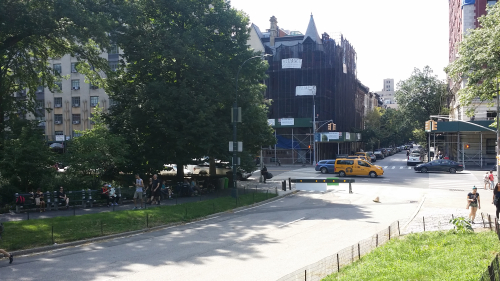
What do takings mavens think about when they hear “New York City” and “takings?” Probably the granddaddy case of them all, Penn Central. Or maybe Courtesy Sandwich Shop, or Loretto. All good ones, landmarks. 

But this post isn’t about a visit to the sites of those cases (not to worry, we’ll get to Grand Central soon), or even about a matter that ended up in the official reports, but about a New York eminent domain story that has been more lost to time, and which is now being rediscovered and recognized. It’s a visit to Seneca Village.


20170813_151125

You wouldn’t know it today, but just inside the boundary of what is now Central Park, right near the West 85th Street entrance, once was “the largest community of free African-American property owners in antebellum New York.”  Beginning in 1825, this locale was home to up to 250 residents in 70

Continue Reading New York City Takings Pilgrimage, Central Park Edition

Eminent domain, regulatory takings, and property rights


Continue Reading Cases