


2017

Under Missouri law, the owner of land must have owned it at the time of the taking in order to have standing to bring an inverse condemnation claim. In Hull v. Pleasant Valley School District, No. WD79302 (June 6, 2017), the Missouri Court of Appeals (Western District), a case involving inverse condemnation liability for flooding, concluded that the owners of a golf course who recorded title to the land after the first instance of flooding had standing to bring a total taking claims.  

The Hulls purchased the golf course from Mr. Hull’s parents in 2005 but didn’t record the deed until 2009. The first flood occurred in 2007. After the jury awarded the Hulls $3 million for the total taking (after which the court ordered the Hulls to sign over the deed to the district), the district asserted the Hulls lacked standing because the deed wasn’t recorded until
Continue Reading Golf Course Owners Who Recorded Title After The First Flood Had Inverse Condemnation Standing

A quick one from the Oregon Court of Appeals. In Courter v. City of Portland, No. A158840 (June 7, 2017), the court concluded that the property owners’ inverse condemnation claim — which alleged that the City had not buried its pipes deep enough — was ripe for judicial review.

The case started after the City condemned a utility easement on the property and then didn’t bury the pipes deep enough. Doing so exceeded the scope of the condemned easement and interfered with the owners’ right to develop their property in the future because they’d have to either rezone the property or have the pipes buried deeper in order to develop. The City argued that the case wasn’t ripe because the damages which the owners complained of had not yet occurred. “[B]ecause a court could not adjudicate whether they were harmed by the placement of the pipes until plaintiffs successfully

Continue Reading Oregon App: Physical Inverse Condemnation Claim Is Ripe From The Moment Of Occupation

ABA State and Local 2017-2017 conferences image

Mark your calendars for this Friday, June 16, 2017, at 2:00 p.m. Eastern Time for a free talk we’ll be giving, “Regulatory Takings: Emerging Issues.” 

Yes, it’s free, but there’s a catch: this talk is sponsored by the ABA Section of State and Local Government Law’s Land Use Committee, and you have to be a Section member (or be willing to join us). One of the benefits of being a member is that you can sign on to these bi-monthly calls and learn about the latest developments in the broad range of topics the Committee covers. Ping me if you want to sign up.  

And what’s the deal with the graphic above? Well, starting in August 2017, I’ll be taking over as Chair of the Section (assuming my ABA colleagues do not come to their senses before then), and the big focus of the Chair is to

Continue Reading Upcoming Free Takings Talk (Friday, June 16, 2017). But There’s A Catch…

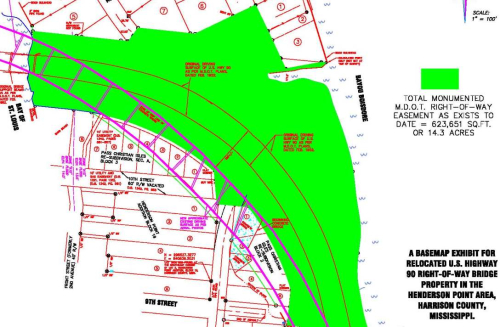
BayPointMap

Here are the Questions Presented in Bay Point Properties, Inc. v. Mississippi Transportation Commission, No. 16-1077 (cert. petition filed Mar. 3, 2017), a case which seeks Supreme Court review of a decision by the Mississippi Supreme Court. We represent the Petitioner. 

The full set of party and amici briefs are posted below. 

An inverse condemnation jury determined the Mississippi Transportation Commission (MTC) ceased using a highway-purpose easement granted to it in 1952 by Petitioner’s predecessor-in-title for a specific bridge, “Toll Project No. 1,” the U.S. Highway 90 crossing of Bay St. Louis. In 2005, Hurricane Katrina destroyed the bridge. MTC removed Toll Project No. 1 and built an entirely new bridge in a different location, and converted the majority of Petitioner’s land into a public recreational park. This discontinued the specific use authorized by the easement, and Petitioner should have immediately recovered unencumbered possession. The jury determined MTC’s

Continue Reading Bay Point Properties v. Mississippi Transportation Comm’n, No. 16-1077

You heard that right. After the Michigan Court of Appeals’ recent ruling in Lanzi v. Township of St. Clair, No. 329795 (May 23, 2017), you should consider skipping the usual Williamson County step of filing your federal takings claims in state court.

In that case, property owners sued the township after the township’s sewage system broke down and backed up grey water into the plaintiffs’ basement. They brought a complaint in Michigan state court alleging both negligence and a physical invasion taking. The township alleged it was immune by statute from such suits. The trial court rejected the argument and the township appealed. 

The court of appeals reversed on the negligence claim, agreeing with the township that it was immune because it had taken reasonable steps to repair any defects in the sewer system. We’ll let you read that part of the opinion if you’re interested.

What got us

Continue Reading Michiganders: Go Ahead, File Your Federal Regulatory Taking And Inverse Condemnation Claims In Federal Court

As we noted recently, we don’t usually post trial court decisions. But there are exceptions. The Northern District of Florida’s recent order in Sabal Trail Transmission, LLC v. Real Estate, No. 16-cv-00063-MW-GRJ (June 5, 2017), is one of those exceptions. 

First of all, our New York City colleague Michael Rikon beat us to the punch, and posted a summary of the case on his blog yesterday. Read it.

The issue, as Michael notes, is whether federal or state law applies in a federal Natural Gas Act taking by a private pipeline in federal court. In Sabal Trail, the big difference why choice of law matters is that under the Fifth Amendment, just compensation does not include attorneys’ and other fees, while under Florida’s “full compensation” provision (which we noted here), a property owner may recover fees and costs. 

The District Court rejected the pipeline’s

Continue Reading Florida’s “Full Compensation” Rule (Attorneys’ Fees!) Governs In Federal Natural Gas Act Taking By Private Pipeline

Here’s one we’ve been waiting for (we filed a brief in support of the property owner), one in which we were hoping (although not expecting) a more favorable result.

In Brott v. United States, No. 16-1466 (May 31, 2017), the Sixth Circuit held that federal inverse condemnation plaintiffs who sue for more than $10k are not entitled to bring their claims before an Article III tribunal in the first instance, and can be forced by Congress to pursue claims in the Court of Federal Claims. The court also concluded that it wasn’t a problem constitutionally for the property owners to not be able to have their claims determined by a jury. 

The opinion noted the oft-quoted Supreme Court cases which concluded that the Just Compensation requirement in the Fifth Amendment is “self-executing,” that this means that a waiver of sovereign immunity isn’t necessary, that once a taking occurs

Continue Reading 6th Cir: Takings Clause Isn’t Really Self-Executing, So Federal Takings Plaintiffs Must Go To The CFC; And No, They Don’t Get A Jury Either

Here’s the unanimous Supreme Court opinion, issued this morning in a case we’ve been following, Town of Chester v. Laroe Estates, No. 16-605 (June 5, 2017), a takings case, although the issue resolved by the Court is one of civil procedure. 

The Court’s holding is remarkably unremarkable: a plaintiff — including a plaintiff who intervenes in a lawsuit as of right under Fed. R. Civ. P. 24(a)(2) — must have Article III standing. We say “unremarkable” because we never could quite figure out why that proposition was apparently so controversial that it ended up with a lower court split: doesn’t every federal court plaintiff need to show that there’s a live case and controversy on every claim and form of relief that is alleged? Yes, the parties didn’t dispute it, and the Court, in the opinion authored by Justice Alito, reached that conclusion in the second sentence:

Continue Reading SCOTUS: To Intervene As A Plaintiff (In A Takings Case), You Need Article III Standing (Duh)

A fascinating case from the U.S. Court of Appeals for the Tenth Circuit involving an attempt by a private utility company to take property which is now tribal land. 

In Public Service Co. of New Mexico v. Barboan, No. 16-2050 (May 26, 2017), there wasn’t a question that a federal statute prohibited a utility company from taking “tribal land.” The big issue was what land fell within that definition.

The Navajo Nation owned undivided fractional interests in two parcels which the utility claimed it needed for a electric transmission line. The problem wasn’t that the land was currently owned by the Navajos, and thus was tribal land, but that it originally had been allotted to individual Navajos during the time in which the federal government was making such individual allotments. Eventually, the Nation obtained fractional interests in the two parcels via a “buy back” consolidation program (14% for one

Continue Reading 10th Circuit Not Bothered By Holdouts: No Condemnation Of Tribal Land, Even If Formerly Allotted To Individuals

Update 6/6/2017: LA denizen Professor Gideon Kanner wrote about this case a couple of years ago on his blog.

* * * *

For those of you in the Los Angeles area, you may want to check out an upcoming lecture at the Central Library.

On Thursday, June 8, 2017 at the Mark Taper Auditorium, the library is presenting “Siege at Fort Anthony,” about a 1964 eminent domain battle stemming from the “ill fated” Hollywood Museum, a vanity project of “motion picture industry heavyweights headed by Sol Lesser, Gregory Peck, Mary Pickford and Walt Disney, decided to create a museum showcasing the history of movies, radio and television to be located across the street from the Hollywood Bowl.”  

Everyone but Mr. Anthony left on their own:

The place: The Cahuenga Pass, opposite the Hollywood Bowl.

The conflict: An eminent domain showdown between, on

Continue Reading Upcoming Lecture: LA Eminent Domain Showdown – To Condemn A Mockingbird