August 2018

We think you should pay attention to the South Carolina Supreme Court’s opinion in South Carolina DOT v. Powell, No. 2016-000594 (Aug. 8, 2018). Indeed, it is a short opinion, and worth a read in its entirety. The reason why we think it is important is that it analyzes an issue that confuses many: the partial loss of access as the result of a condemnation.    

Quick facts: DOT’s highway project resulted in the taking of a part of Powell’s commercially-zoned, undeveloped property. The parcel has “easy access” to the adjacent US Highway 17 via an intersection. DOT’s appraiser thrice valued the 0.183 acres that DOT was taking from Powell between $68k and $71k.

But right before trial, DOT amended its plans, which resulted in a loss of easy access, even though the roads which directly abut Powell’s property were not altered or closed. “Travelers on the Bypass could reach
Continue Reading South Carolina: No Segmenting A Taking – Once Condemnor Takes Property, Loss Of Indirect Access Is Compensable

TR

We usually don’t cover trial court orders, but this one is short, and, we think, worth your time reading. 

The issue before the North Dakota District Court (Ward County) was the award of attorneys’ fees following a successful necessity challenge by a landowner. In North Dakota, the award of fees and costs to a defendant is within the trial court’s discretion.

The condemnor didn’t object to the award of fees, but the court undertook its own review to determine the complexity and difficulty of the case. The judge correctly noted that “[i]n most eminent domain cases, the issue of necessity never arises.” Order at  7. The order continued:

In his brief in support of his motion for fees, attorney Boughey cites to recent United States Supreme Court authority to support his argument that questioning the necessity of a taking, and standing up to the often heavy-handed authority

Continue Reading “A Lawyer May Spend A Lifetime Working For That One Magnificent Hour” – ND Court Awards Fees For “A Good Day”

IMG_20170726_134028

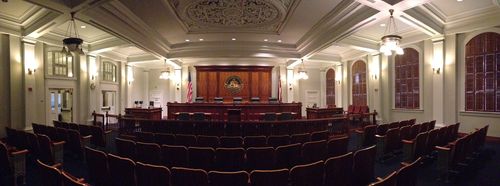
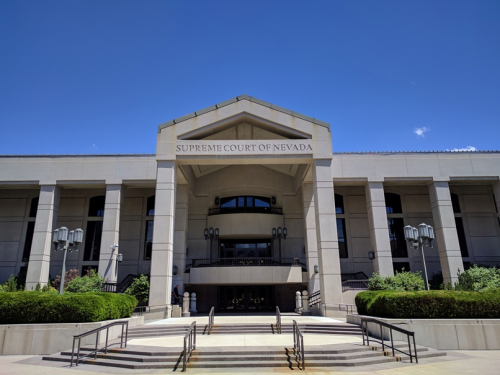
A quick one from the Nevada Supreme Court (pictured above).

In Clark County v. HQ Metro, LLC, No. 71877 (Aug. 2, 2018), the unanimous court concluded that the owner of property at the time the condemnor obtained an order of possession (in Nevada, the term apparently is “order of occupation”) is the party entitled to compensation, and not the party owning the property when the condemnor actually entered the property. 

Quick facts: to build a power line, Nevada Power Company condemned property owned by HQ Metro, and leased to Clark County. Nevada power got an order of occupation entitling it to enter the land to construct the line. But before it actually entered, HQ sold the land to Clark County. 

The question: who gets compensation? The parties agreed that when the taking occurred was the dispositive legal question. Did it occur when the court granted the order allowing physical

Continue Reading Nevada: “Taking” Occurs Upon “Substantial Government Interference” With Property Rights

20180803_104034_HDR

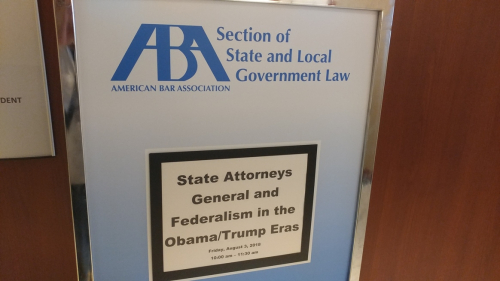
One of our last acts as Chair of the ABA’s Section of State and Local Government Law was to green light a CLE program at the recent Chicago annual meeting entitled “State Attorneys General and Federalism in the Obama and Trump Eras.”

The title kind of gives it away, but the main topic was the implications of the multitudinous lawsuits brought by states and their attorneys general against actions by the president’s administration, first grabbing headlines during President Obama’s tenure, and now during President Trump’s. And then switching playbooks after the election, it seems.  

20180803_104204_HDR

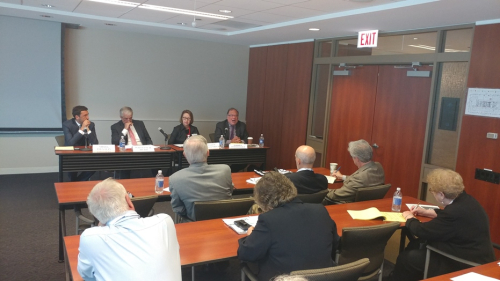
One of the good things about the CLE programming we do in our Section is that we try and get speakers from all sides of the ideological spectrum. We think we did a pretty good job here, with (left-to-right — geographically above, not ideologically) Wisconsin Solicitor General Misha Tseytlin (Madison, WI), William Hurd (past

Continue Reading Litigation As A Substitute For Legislation? Coverage Of Our ABA Section’s Federalism CLE

Photo

One of the problems with high-public-profile cases like the multiple challenges to the “Thirty Meter Telescope” up on the top of the Big Island’s Mauna Kea, is that when the court issues an opinion, the public focuses only on the result, mostly from a policy perspective. Who won? Did the court invalidate the TMT permits? Did it side with the “right” party? 

We get that. Big cases make big headlines, and most people don’t care much about what the decision might mean for the law and future cases. And it matters in these type of cases who won. 

But those of us down here in the trenches look at these cases somewhat differently. Yes, the Hawaii Supreme Court’s long-awaited opinion in the latest phase of the multiple litigations challenging the TMT has dropped, and as you might have figured from this post’s headline, the court sided with the telescope and

Continue Reading Hawaii Telescope – Been There, Done That: Cultural Property Ownership Gets You Only A Public Hearing If You Have Other Chances To Make Your Case

No surprises in the U.S. Court of Appeals for the Eleventh Circuit’s opinion in Checker Cab Operators, Inc. v. Miami-Dade County, No. 17-11955 (Aug. 6, 2018). As the caption suggests, this is another one of those takings claims brought by “traditional” taxicab operators against a local government for its refusal to keep ridesharing services from the market. 

As in other cases (see our article summarizing several of them here), the court came down on the side of “no taking.” The rationale was that owning a government-issued taxicab medallion, while “property,” does not give the holder a property right to exclude others because the point of the medallion system was to protect consumers, not to give the taxis a monopoly:

Moreover, the main purpose behind the County’s medallion policy was not to enrich medallion holders, but rather to enhance consumer welfare. The County sought to “license and regulate

Continue Reading 11th Cir: No Uber Taking – Taxi Medallion Does Not Give Right To Exclude Others From Transportation Marketplace

My year as the Chair of the ABA’s Section of State and Local Government Law is coming to a close. I’m in Chicago this week at the Annual Meeting, ready to hand over the gavel to my colleague, friend, and successor, Ron Kramer. Below is my 2017-18 report on the Section’s highs and lows, just published in the State and Local Government News

* * * *

2018-18 Chair’s Report: The Year of Living Creatively

It is my pleasure, as Chair of the Section of State & Local Government Law, to report on the 2017-2018 Bar year. When Oregon Attorney General Ellen Rosenblum entrusted me with the Section Chair’s gavel during the ABA Annual Meeting in New York in August 2017, I remarked that the upcoming Bar year would be challenging. It would be a year in which we could experiment; view fundamental organizational changes within ABA as

Continue Reading ABA State And Local Govt Law Section – 2017-18 Chair’s Report: The Year of Living Creatively

Doesnotsimply

We already knew from its amicus brief brief that the federal government supported the property owner in Knick v. Township of Scott, No. 17-647, the case in which the US. Supreme Court agreed to review the continuing validity of the “state procedures” rule of Williamson County Regional Planning Comm’n v. Hamilton Bank, 473 U.S. 172 (1985). The SG’s brief called for the Court to vacate and remand the dismissal of Knick’s case. We also filed an amicus brief in support of Ms. Knick

But recently, the feds have doubled down by filing a motion to participate in oral argument and to split time with the Petitioner, which notes:

The United States has filed a brief as amicus curiae supporting vacatur and remand. The brief argues that Williamson County correctly recognized that the Fifth Amendment does not “require that just compensation be paid in advance of, or

Continue Reading Federal Govt: Reject Williamson County! Property Owners Whose Property Is Taken By Local Governments Should Be Able To Enforce Fifth Amendment Rights In A Federal Forum