2018

20181003_114518_HDR

Seeking A Cause of Action

It has been just under a century since the U.S. Supreme Court first recognized (in the modern era, that is) the regulatory takings doctrine. You might think that the intervening decades would be enough time to allow the Justices, collectively, to have figured out what a cause of action looks like. You know, just enough to get by a motion to dismiss for failure to state a claim under Rule 12(b)(6).

Unfortunately, yesterday’s oral arguments in Knick v. Township of Scott, No. 17-647 (transcript here, and below), would not confirm that belief.

Our major impression from the argument is that no more than three Justices clearly understand the major difference between an affirmative exercise of the eminent domain power to take private property, and an inverse condemnation action in which a property owner asserts that the exercise of a power other than
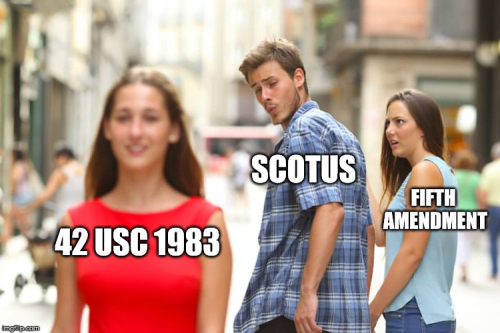
Continue Reading Oranges And Tangerines – The Difference Between Eminent Domain And Inverse Condemnation: Deconstructing The Knick Oral Arguments

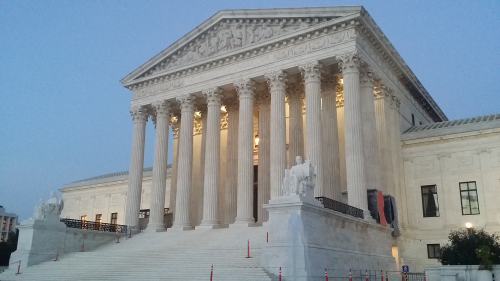
20170918_192854

Just out of the Knick arguments. Full report to come later. But for now, these thoughts:

College of Surgeons – D.O.A. I think there’s a consensus to overrule the case to the extent it allows municipalities to remove takings cases to federal court. 

San Remo – On life support. I think also that there may be enough votes to overrule the Catch-22 aspects of that case and the preclusion/full faith and credit trap. 

Here’s the federal government’s position, in a nutshell:

2j7vra

Justice Kagan, like us, found that distinction hard to swallow. 

Justice Bryer quote of the day: “why not let sleeping dogs lie?” (Asking about stare decisis.)

As for the “big” issue of whether the Court will overrule Williamson County? Too close to call. We didn’t see an obvious majority forming around anything but overruling Chicago and San Remo. No Justice seemed to like Williamson County too much (except

Continue Reading Meanwhile Back At 1 First Street … Hot Take On The Knick Arguments

6a00d83451707369e20223c85004e4200c-800wi

I’m not going to do an in-depth preview of tomorrow’s Supreme Court oral arguments in Knick v. Township of Scott, No. 17-647 for several reasons.

First, a lot of others have summarized the issues already, far better than I can. See the list below.

Second, I filed an amicus brief in the case in support of Ms. Knick, and that brief pretty much sums up my thinking about the case. Williamson County ripeness is something I’ve railed on for a while, and there’s no need for me to say it once again.

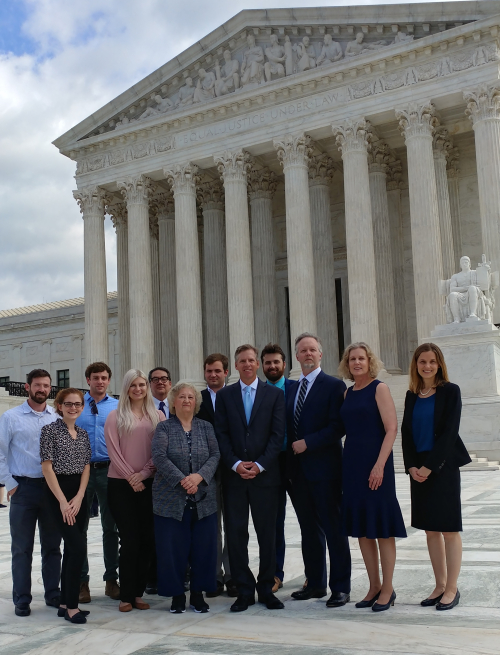
Finally, I’m attending the arguments tomorrow with my William and Mary Law class, (they get to see the sausage being made!) and am keeping my powder dry for a post-argument report from the scene. 

First, the previews, followed by some brief thoughts:

  • Read the merits and amici briefs (all 21 of them!) here 


Continue Reading Knick Preview: Reevaluating Williamson County Ripeness With An Eight-Justice Court – Just How Badly Can SCOTUS Screw Up Takings Law?

Been meaning to post this one for a while, because it’s on a topic that is frequently on the mind of eminent domain lawyers, but isn’t often covered by the courts: liability for inequitable precondemnation activities.

In City of Albuquerque v. SMP Properties, LLC , No. A-1-CA-35261 (Sep. 26, 2018),  the New Mexico Court of Appeals 

City of Albuquerque v. SMP Properties, LLC, No. A-1-CA-35261 (N.M. App. Sep. 26, 2018)

Continue Reading NM App: Inequitable Precondemnation Activities

Louisiana

A very important public use case from the Louisiana Court of Appeals.

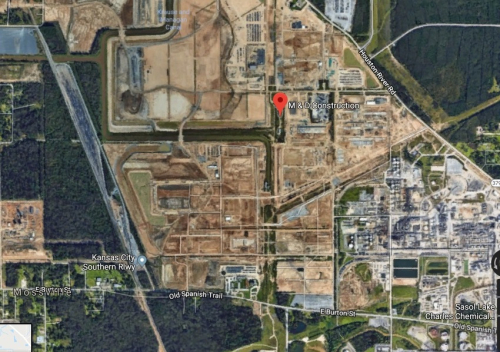
In Ryan v. Calcasieu Parish Police Jury, No. 17-00016 (Sep. 27, 2018), the court upheld a preliminary injunction issued by the trial court “barring the [Lake Charles Harbor and Terminal] District from expropriating a tract of [the Meyers’] property in Westlake Louisiana.” Slip op. at 1.

The map above shows the property (M & D Construction), and its proximity to what is known as the “Sasol Megaproject.” Barista’s note: it looks like the P.R. people didn’t get a hand in naming the project – when you name your chemical factory “the Megaproject,” you should probably not be surprised when there’s objection.

Sasol needs/wants Meyer’s five acres, and tried for several years to buy it. No deal. So the District adopted a resolution which provided “certain assurances with respect to the acquisition of the property needed” for the

Continue Reading La App: I Get By With A Little Help From My Friends – When Condemnor Testifies That “were it not for [the benefited private project], the District would not have looked at acquiring,” A Property Owner Can Enjoin A Taking

“Condemnation clauses” — provisions in leases that say if the leased premises is taken, then the lease automatically terminates — are pretty common. They also “codify” the common law, which provided the same thing. These provisions also commonly allocate if and how the lessor and the lessee would divide up any compensation award (often the tenant gets nothing).

The condemnation clause at issue in Utah Dep’t of Transportation v. Kmart Corp., No. 20160653 (Sep. 25, 2018) was just one of these. It provided:

In the event all of Tenant’s buildings constructed by Landlord shall be expropriated or the points of ingress and egress to the public roadways . . . be materially impaired by a public authority or quasi-public authority, this lease shall terminate as of the date Tenant shall be deprived thereof.

Slip op. at 3. Most critically, the clause also noted that the tenant (Kmart) would

Continue Reading Utah: “Condemnation Clause” In Lease Terminated Tenant’s Ability To Be Compensated

Our colleague and co-planning chair Joe Waldo was in town yesterday, so we walked through historic Williamsburg, Virginia (cradle of the Constitution and the Bill of Rights), to invite you to join us for the 36th Annual ALI-CLE Eminent Domain & Land Valuation Litigation Conference (January 24-26, 2019, in Palm Springs, California).

As we wrote in this post, the Conference will feature the nation’s best eminent domain faculty, presenting on the topics we love.

Register now here. Early registration and group discounts available. The 2018 Conference in Charleston sold out, so be sure to sign up now so you don’t miss out. Continue Reading Join Us For The 36th Annual ALI-CLE Eminent Domain & Land Valuation Litigation Conference In Palm Springs (Jan 24-26, 2019)

Here’s the latest in an issue we’ve been following closely. In the Natural Gas Act, Congress has not delegated to private pipeline companies the quick-take power. To get around that, to get immediate possession of properties which they are taking, pipeline companies use a procedural mechanism — a preliminary injunction under Fed. R. Civ. P. 65 — to get the same result. 

A preliminary injunction in these case looks like quick take, quacks like quick take (there’s a deposit, just like in quick take), and walks like quick take (the effect is the same). But it’s not really quick take because Congress has never actually approved of quick take in NGA takings. 

Of course, by the time a court gets to the actual merits of the validity of the taking — if it ever does — the pipeline is in place, and the whole thing a “done deal.” Fait accompli

Continue Reading 4th Cir Judge In Pipeline Arguments: “Condemnation is one of those monarchy things” – Is Immediate Possession Unconstitutional When Congress Has Not Delegated That Power To A Pipeline?

One more lesson on the speed of the interwebs: we were all set to take a deep dive into the California Court of Appeal’s opinion in an inverse condemnation case, Bottini v. City of San Diego, No. D071670 (Sep. 18, 2018), when our colleague Brad Kuhn analyzed the case at his California Eminent Domain Report blog. 

The title of Brad’s post, “Improper CEQA Determination Does Not Trigger Regulatory Taking,” tells you most of what you need to know. The short story is that the City asserted that Bottini’s planned demolition of a beach bungalow as part of a project to build a new house required assessment and analysis under California’s environmental reporting statute, CEQA (California Environmental Quality Act). Bottini disagreed, asserting the demolition was exempt from CEQA, and, by the way, the delay caused by the City’s wrongful assertion of CEQA authority was a temporary taking. 

Continue Reading Cal App: Landgate’s “Substantially Advance” Standard Isn’t The Takings Test (But The Property Owner Still Loses)

BK header

Come join us for one of the best conferences on property rights and property law at the 2018 Brigham-Kanner Property Rights Conference, October 4-5, 2018 at the William and Mary Law School in Williamsburg, Virginia.

Register here

We’ve attended and presented at the Conference in past years, including when it went international in Beijing and at the World Court in The Hague. This year it is back home, and will focus on the work of the 2018 B-K Prize winner, Professor Stewart Sterk of Cardozo Law School

The B-K Prize is awarded to a legal scholar, judge, or practicing lawyer who “has advanced the cause of property rights and has contributed to the overall awareness of the important role property rights occupy in the broader scheme of individual liberty.” The list of past prize winners is a pantheon of property law greats. 

We will be speaking

Continue Reading 2018 Brigham-Kanner Property Rights Conference: Williamsburg, Oct. 4-5, 2018