


May 2019

Rowlettmap

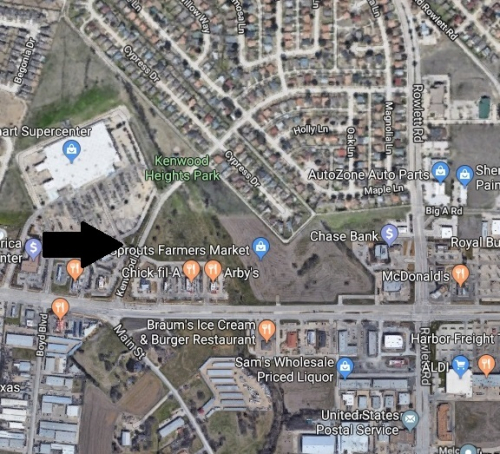
Here’s one we’ve been waiting to drop. In KMS Retail Rowlett, LP v. City of Rowlett, No. 17-0850 (May 17, 2019), a deeply divided Texas Supreme Court held that a statute — adopted in response to Kelowhich seems to limit eminent domain power, also contains a massive hole: according to the court, it doesn’t apply to “transportation projects.” 

The statute — Texas Gov’t Code § 2206.001 — bars four kinds of takings:

  • if the taking confers a private benefit on a specific private party
  • if the taking is pretextual, and although it purports to be for public use, is actually for private benefit
  • economic development takings
  • if the taking “is not for a public use”

But the statute also provides, “[t]his section does not affect the authority of an entity authorized by law to take private property through the use of eminent domain for: (1) transportation projects, including

Continue Reading Texas: Transportation Projects Exempt From Post-Kelo Limitations On Eminent Domain Power

Here’s what we’re reading today, in between real work:

Continue Reading Friday Reading: Pipeline Injunctions, Justifying Kelo, And Maui Groundwater Case

Yesterday, on behalf of our Owners’ Counsel of America colleagues, we filed this request asking the U.S. Court of Appeals to consider our amicus brief in support of the property owners in a natural gas act pipeline case.

The issue is what evidence the trier of fact in a compensation trial may consider about “stigma” damages resulting from a natural gas pipeline being located next to the remainder parcel. 

Rather than paraphrase the brief, here’s the summary of the argument: 

UGI Sunbury, LLC (“UGI”) condemned portions of privately-owned land to build its natural gas pipeline. Natural gas pipelines have made headlines nationwide recently due to safety concerns. In takings such as these, where only a portion of a parcel is condemned, severance damages are a fundamental component of just compensation, awarded for the injury posed to the remainder of the landowner’s property as a result of the taking of a

Continue Reading CA3 Amicus Brief: “Paired Sales” Isn’t Only Way To Prove Market Stigma Damages

The Arizona Court of Appeals’ opinion in Arizona Electrical Power Cooperative v. DJL 2007 LLC, No. 1 CA-CV 16-0097 (May 9, 2019), is about the date of valuation in eminent domain, but beyond that is interesting to us because it sheds light on a case we’ve been following about natural gas pipelines and the use of the federal courts’ injunction power to effect immediate possession

In the Arizona case, the owner purchased land from the BLM subject to the private electric company’s 30-year easement on which it had installed high-voltage transmission lines. The grant of easement expired in 2011, but the electric company did not remove the lines. In 2014, it instituted an eminent domain action to condemn the easement. 

The trial court rejected the utility’s request for immediate possession. Instead, it granted a preliminary injunction allowing the utility to continue to operate and maintain the transmission lines.

Continue Reading AZ App: Private Utility Does Not Effect A Taking “until after trial and payment”

On one hand, there’s nothing really new in the Hawaii Supreme Court’s opinion in In re Hawaii Electric Light Co., No. SCOT-17-630 (May 10, 2019), because the court has previously told us the answers to each the component questions in the case:

  • On the ultimate question posed in the title, must the PUC consider whether a power purchase agreement for a Big Island “woody biomass” electric plant might have an effect on a clean and healthy environment by affecting the utility’s willingness to purchase electricity generated by more “pure” means such as wind and solar: you don’t need to read the 66 page unanimous opinion to know the answer: of course it has to. The statute mostly says so, and you didn’t need a deep understanding of the other details in the case to be able to predict about how this one was going to end up, merely the


Continue Reading HAWSCT: PUC Must Consider Whether Renewable Biofuel Energy Plant Might Impact Property Right To Clean And Healthful Environment

Remember that Christopher Nolan movie from a few years ago, “Inception,” with its dream-within-a-dream storyline?

Well, that’s what a recently-filed cert petition which asks the U.S. Supreme Court to jump into California’s inverse-condemnation-liability-for-wildfires issue reminds us of with its taking-within-a-taking argument, as detailed in the Question Presented:

Whether it is an uncompensated taking for public use in violation of the Fifth and Fourteenth Amendments for a State to impose strict liability for inverse condemnation on a privately owned utility without ensuring that the cost of that liability is spread to the benefitted ratepayers.

Let’s see if we are keeping the argument straight: it’s a taking to hold a private entity which possesses the delegated power of eminent domain liable for a taking for burning down private property unless the utility is also entitled to pass the cost of any taking judgment on to those who benefit from

Continue Reading New Cert Petition: Fifth Amendment Requires California To Spread The Cost Of Wildfire Inverse Condemnations To Ratepayers

The title of this post may have you wondering, especially the part about how a regulation that invites others to physically enter private property, is determined by a court to not be a physical taking. (The court also hints at looking at a physical taking under Penn Central, and not by applying per se rules.) 

At issue in the Ninth Circuit’s 2-1 opinion in Cedar Point Nursery v. Shiroma, No. 16-16321 (May 8, 2019) was a regulation adopted by California’s Agricultural Labor Relations Board which requires agricultural employees to open their land to labor union organizers. The regulation is framed as protecting the rights of ag employees to “access by union organizers to the premises of an agricultural employer for the purpose of meeting and talking with employees and soliciting their support.”

The regulation, as the Ninth Circuit majority pointed out, “is not unlimited,” and regulates the “time

Continue Reading PruneYard Undone: California’s Union Easement – Which Invites Labor Organizers To Enter Private Property – Isn’t A Physical Taking

Here’s what’s on the reading list for today:


Continue Reading Tuesday Takings And Property Round-Up

The city conceded that its street and storm water project resulted in a neighboring commercial property flooding three times, and that “the evidence supported a prima facie case of a ‘partial taking’ of Lenertz’s property.” So far, so good. 

But Lenertz had alleged the city’s project caused past and future flooding, and resulted in a total take. “Near the conclusion of Lenertz’s case in chief, but before receiving testimony from appraiser Daniel Boris, his expert on damages, the court found the evidence established only a partial taking of Lenertz’s property.” Because the appraiser was going to testify about the “full measure of damages to the property,” and not the before-and-after value, the court concluded that the jury could not consider the appraiser’s testimony, and entered judgment in favor of the city.  

In Lenertz v. City of Minot, No. 20180153 (Apr. 3, 2019), the North Dakota Supreme Court agreed. It

Continue Reading Flooding Was A Taking. But What Kind Of Taking?

Here’s the Reply Brief in a case which we’ve been following (and in which we filed this amici brief). This is the one in which landowners are challenging the district court’s issuance of an injunction in a Natural Gas Act taking which allow a private condemnor to obtain immediate possession of the land being condemned even though the Natural Gas Act does not delegate to pipeline condemnors the quick-take power.

The Reply responds to the Brief in Opposition, and argues:

These decisions conflict with the basic structure of eminent domain, which grants condemnors the power to buy land by force—not occupy it by federal injunction. The decisions let pipeline companies exercise a formidable power that Congress has not given them. And for landowners in the path of pipeline projects, the decisions create grave burdens to which no other federal condemnee is subjected. Because only this Court can correct

Continue Reading SCOTUS Reply Brief Clears Up Misconception About Eminent Domain Actions