


2019

JD Morris has the story at the San Francisco Chronicle, “California’s strict wildfire liability rule hangs over bankrupt PG&E.”

The story is about inverse condemnation of course, and how California law applies that doctrine in cases involving what look like natural disasters, most notably the state’s recent experiences with major wildfires.

We provided comments on whether an insurance fund might make some sense (because isn’t the mail goal of inverse liability to spread the economic burden of public benefits?). And the story also picks up on the recent 2-1 Ninth Circuit decision on how inverse claims which have not been reduced to judgment get treated in bankruptcy

The wildfire fund alternative Paulo identified could be evaluated by a new committee focused on wildfires and utilities that was authorized by Dodd’s bill, SB901. Gov. Gavin Newsom appointed his three members to the committee just last
Continue Reading SF Chronicle: “California’s strict wildfire liability rule hangs over bankrupt PG&E”

In the usual circumstance, we wouldn’t be terribly interested in an unpublished — and therefore not precedental — opinion. But the U.S. Court of Appeals’ opinion in Kerns v. Chesapeake Exploration, LLC, No. 18-3636 (Feb. 4, 2019) caught our attention because it involves “forced pooling,” which this site describes this way:

At its most basic, pooling is the joining together or combination of small tracts or portions of tracts to create sufficient acreage to receive a drilling permit under applicable state spacing rules and regulations, and for the purpose of sharing the production from the pooled unit among the pooled interest owners.

Often, pooling is done voluntarily. That is, interest owners agree to the benefits of the combined acreage. Most oil and gas leases contain provisions allowing the lessee to pool the acreage covered by the lease; sometimes this right is virtually unlimited.

At times, however, there are unleased

Continue Reading 6th Cir (unpub): “Forced Pooling” – Requiring Holdouts To Participate In Fracking – Isn’t A Taking

We suppose we should not be too surprised by the U.S. Court of Appeals for the Fourth Circuit’s panel opinion in Mountain Valley Pipeline, LLC v. 6-56 Acres, No. 18-1159 (Feb. 5, 2019), which concluded, like the Third, Sixth, and Eleventh Circuits did recently, that a private condemnor may obtain immediate possession of property that it may condemn, even though Congress did not delegate the quick take power to those private condemnors in the Natural Gas Act.

After oral argument, we had a faint hope that the panel might see things differently. See4th Cir Judge In Pipeline Arguments: “Condemnation is one of those monarchy things” – Is Immediate Possession Unconstitutional When Congress Has Not Delegated That Power To A Pipeline?

But alas no, it was not to be. All three judges concluded that this case is “on all fours” with the Fourth Circuit’s earlier

Continue Reading Fourth Circuit Panel Sticks With Sage: Natural Gas Act Condemnor Given Immediate Possession Even Though No Grant Of Quick Take Power In The Statute

A short update from the west coast: the California Supreme Court late last week denied discretionary review in the case in which a California utility was arguing that it cannot be liable under that state’s version of inverse condemnation because the utility, unlike a governmental entity, cannot automatically spread the cost of any judgment to all members of its constituency.

We posted the utility’s petition here (“Electric Company: We Can’t Be Liable For Inverse Condemnation For Cal Wildfires Unless We Can ‘Unilaterally Recoup Costs From The Benefited Public Through Taxation Or Rate Increases‘”).

There are other cases raising the same issue coming up the pipeline, so stay tuned for more. Continue Reading Cal Supreme Court Denies Review Of Wildfire Inverse Petition

JEFS

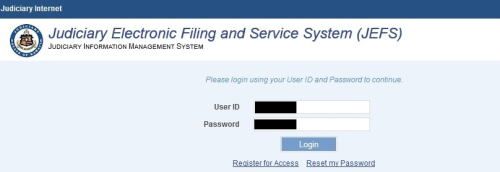
A heads up for our Hawaii appellate colleagues: on two separate occasions — in two different cases — the JEFS system has failed to notify us of events in the cases in which we are counsel. 

The first case ended up being automatically “closed” by the system after an opinion by the Supreme Court, even though a post-opinion motion in that court was still pending. We were not provided notice the case had been closed, when we tried to find the case (by searching by case number), we received a “null search/case does not exist” response. Talk about one of those “moments.” Only a call to the Clerk’s office revealed that (1) the case was closed automatically even though the Court had not disposed of the pending motion; and (2) the motion was still under consideration by the Court.  We are still unaware of whether, when the court eventually rules

Continue Reading Heads Up, Hawaii Appellate e-Filers: We’re Not Receiving 100% Case Notifications

Those of you interested in the ongoing debate about vacation rentals (aka TVR’s) (in Honolulu, the minimum period a property owner can rent in a residential district under the zoning code is 31 days, unless the owner possesses a nonconforming use permit) should read the Hawaii Intermediate Court of Appeals’ published opinion in Dao v. Zoning Board of Appeals, No. CAAP-15-565 (Jan. 31, 2019).

You should read the opinion even though it contains a whole lot of detail, because it not only details the applicable law, but also how the City and County of Honolulu Department of Planning and Permitting goes about investigating and prosecuting violations of the ordinance. Let’s just say that the court wasn’t too impressed with the Department’s methods.

The property owner, Mr. Dao, was cited multiple times for renting to tenants for less than the required 31 days. Neighbors dropped dime (this is the source

Continue Reading Hawaii App: Slipshod Investigation By Planning Department Cannot Support Vacation Rental Citation

Our Owners’ Counsel colleague John Hamilton deserves kudos for the Kansas Supreme Court’s recent decision in Nauheim v. City of Topeka, No. 114271 (Jan. 25, 2019).

The case is about a subject often overlooked, relocation benefits. In this case, the condemning agency’s duties under the Kansas statute which dictates their duties towards a “displaced person.” The usual case is where the owner or tenant has to move because of condemnation. The twist here was that the property owner negotiated a purchase under the cloud of eminent domain and the City never had to actually exercise its condemnation power. The tenants who were forced to relocate sought — but were denied — relocation benefits under the statute, as “displaced persons.”

The Kansas statute provides that when “federal funding is not involved” (which it was not here), “and any real property is acquired … through negotiation in advance of a condemnation

Continue Reading Kansas: Tenant May Be Entitled To Relocation Benefits In Voluntary Acquisition If There’s Evidence That City Intended To Condemn If Deal Fell Through

The “Flint water crisis,” which, as the opinion of the Michigan Court of Appeals in Gulla v. State of Michigan, No. 340017 (Jan. 24, 2019), noted, is “the contamination of
plaintiffs’ water supply and their exposure to toxic and hazardous substances,” is all over the front pages. Which means it also spawned lawsuits.

The plaintiffs raised several claims across several cases, alleging (among other claims) inverse condemnation. In one series of cases, the defendants sought dismissal, arguing that the facts as alleged would not support takings liability. In the other, the court denied the defendants summary judgment. The court of appeals consolidated the appeals.

This is an unpublished opinion, so there’s not a whole lot of controversy or deep analysis by the court. But it is still worth reading because the court considered (and rejected) the defendants’ immunity argument. And the opinion gives a good rundown of Michigan takings

Continue Reading Mich App: Flint Water Plaintiffs Stated An Inverse Condemnation Claim

0124190909_HDR

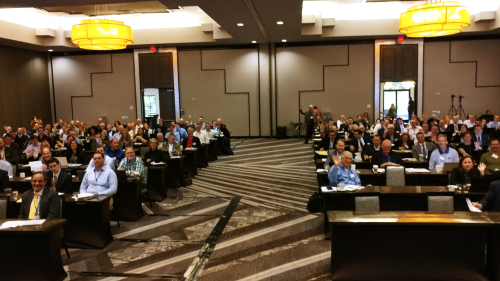
Here is our annual “proof of life” photo, taken from the dais during the opening session, to prove that all 250 of us were in the room for the ALI-CLE Eminent Domain Conference, and not out on a Palm Springs golf course (it is 72º and sunny, so a golf course would not be a bad place to be).  

Here are the links from our talk this morning (along with Amy Boulris) about the latest issues to watch in eminent domain:


Continue Reading Wish You Were Here: Links From Day 1, 2019 ALI-CLE Eminent Domain And Land Valuation Litigation Conference

With the opinion in the Knick v. Township of Scott case to drop as soon as Tuesday (we’re guessing the opinion will be by Chief Justice Roberts, by the way), hold on. We’re about to get super nerdy here. Impossibly nerdy. Yes, we’re revisiting the Star Trek analogies. We’ve been down this road before, even going so far as to have a colleague (who is perhaps even further down the rabbit hole than we are) present a takings CLE in his Starfleet uniform

The bottom line is this (and if you are not into Trek, you can stop right here): to us the key question which the Court is grappling with is whether a state’s judiciary is part of the state’s compensation system. If the majority of the justices conclude that it is, then don’t expect an out-and-out overruling of Williamson County, only a modest trim

Continue Reading Shaka, When The Walls Fell: Knick Is Going To Be About Federalism, Not Takings