


April 2020

Title

To all who joined from Hawaii and across the nation, thank you for doing so. As I mentioned during the webinar, here is the video and links to the cases and other materials I spoke about: 

  • “Emergency does not create power. Emergency does not increase granted power or remove or diminish the restrictions imposed upon the power granted or reserved.”  Home Building & Loan Assoc. v. Blaisdell, 290 U.S. 398 (1934).  
  • The King v. Tong Lee: Hawaii Supreme Court upholds restrictions on commercial laundries in Honolulu’s Chinatown deferring to the government’s assertion that doing so was necessary to preserve the public health. 
  • United States v. Pac. R.R., 120 U.S. 227 (1887): during the Civil War, the Union Army blew up railroad bridges “to prevent the advance of the enemy.” No compensation because the destruction of the bridges was a “military necessity.” “The destruction or injury of
Continue Reading Video, Materials And Links From Today’s Webinar, “Safety vs. Freedom: Are There Limits to Lockdowns?”

This is mostly for our 808 sisters and brothers, but the rest of you might also find it interesting as well, because it is a Chief Justice of a state supreme court talking directly (to a lawyer-interviewer) about the measures which the third branch of state government is undertaking during lockdown.

Chief Justice Mark Rectenwald interviewed by Jay Fidell on Think Tech HawaiiContinue Reading Think Tech Hawaii (Jay Fidell)’s Interview With HAWSCT Chief Justice

Today’s Federal Circuit opinion in Golden v. United States, No. 19-2134 (Apr. 10, 2020) is the latest in the post-Oil States cases involving the alleged taking of patents.

Golden asserted three theories:  

The complaint alleges the takings occurred by virtue of: (1) the government’s use, manufacture, development, and disclosure of the subject matter “outlined” in the claims and specifications of Golden’s patents; (2) the cancellation of certain patent claims during the [inter partes review] initiated by the government; and, (3) certain actions by the Claims Court and the Federal Circuit in the Lead Case.

Slip op. at 6.

The Federal Circuit rejected each of these theories.

First, the court held that an allegation that the feds infringed on Golden’s patents was a tort claim, not takings. Slip op. at 10 (citing Schillinger v. United States, 155 U.S. 163, 168-69 (1894) (infringement claim “is one sounding

Continue Reading Fed Cir: Patent Infringement Claim Is A Tort, Not A Taking (Nor Is Inter Partes Review)

Even if the world were open today, the doors to most Hawaii state, county, and city offices would still be locked. Because today is the day that Hawaii celebrates Good Friday.

Yes, Good Friday is an an official state-sanctioned holiday in the 808 area code, so we’re reposting our annual recounting of how it came to be that the State commemorates the date of the crucifixion, and how that squares with the Establishment Clause of the First Amendment

Turns out that we don’t really commemorate today as the crucifixion date, and it is just coincidence that the official State “spring holiday” occurs on the same day. (And this being Hawaii, in the end it’s really a public worker’s union thing.)

Good Friday is a legal holiday in the State of Hawaii pursuant to Haw. Rev. Stat. § 8-1. [Barista’s note: here’s a case we argued a couple

Continue Reading Take It Easy: Today Is Hawaii’s Secular Good Friday Holiday

Untitled Extract Pages

Here’s yet another complaint alleging that a virus-related order is a taking, this time with an interesting twist (other complaints here, here and here).

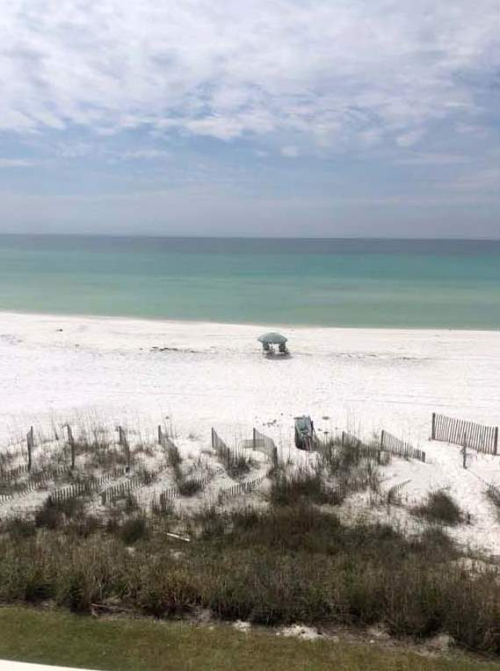
The twist is that the plaintiff/property owners (who include former Arkansas governor Mike Huckabee) assert that they are being prevented from using their own residential property. The complaint asserts that sheriffs and code enforcement officers have trespassed on the owners’ private beaches by “patrolling,” and that the officers “have physically prevented Plaintiffs from being able to use or even set foot in their own backyards.” Complaint at 11.

The complaint seeks a declaratory judgment, an injunction, and just compensation. They also assert due process and search-and-seizure claims, that the emergency orders were preempted by other orders allowing the plaintiffs’ uses, and a claim under the Florida Constitution for breach of the right of privacy.

Will there be more of these? Bien sûr.

Complaint

Continue Reading Private Beach Owners: Closing All Beaches Is A Physical Taking

Here’s the latest complaint challenging the virus-related business shut down orders springing up nationwide. (Other lawsuits are posted here and here.)  

This one alleges a host of constitutional violations (and defamation!) after the Connecticut governor banned large gatherings and ordered all restaurants and bars to close, and the New Haven mayor publicly “highlighted” the plaintiff — a lounge — as a noncompliant business.

Relevant for our purposes here, buried in the complaint is a takings claim:

Count Eleven – Violation of Constitutional Rights of The Right To Receive Compensation For A Taking of Property as to Defendant Ned Lamont

73. Paragraphs 1 through 22 and 58 through 72 of the Complaint are incorporated herein.

74. Lamont’s order limiting the activities of businesses and deciding which businesses can remain open based on their purposes regulates the use of private property to such a degree that it effectively deprives the Plaintiffs of

Continue Reading Another Takings Challenge To Business Shut Down Order

Here’s a short one from the Florida District Court of Appeal where the background might be more relevant to today’s circumstances than the court’s actual holding about which party bears the burden of proof on valuation (and goes first at trial). 

First, the decision. In Florida Dep’t of Agriculture v. Mahon, No. 5D19-3102 (Apr. 9, 2020), the court held that in during the valuation phase (which comes after the trial judge determined there was a taking), the government bears the burden of proof and makes its presentation to the jury first. The court rejected the Department’s argument that, hey, in an inverse condemnation case the property owner is the plaintiff, and the usual rule in every other civil case is that plaintiffs go first. Making us go first here would deprive the Department of due process!   

Not so, held the court of appeal, government goes first in an

Continue Reading Fla App: In Valuation Phase Of Inverse Case, Condemnor Has Burden Of Proof

9780472074419

More information, including how to get your copy here.

Here’s the description: 

Stringfellow Acid Pits tells the story of one of the most toxic places in the United States, and of an epic legal battle waged to clean up the site and hold those responsible accountable. In 1955, California officials approached rock quarry owner James Stringfellow about using his land in Riverside County, east of Los Angeles, as a hazardous dump site. Officials claimed it was a natural waste disposal site because of the impermeable rocks that underlay the surface. They were gravely mistaken. Over 33 million gallons of industrial chemicals from more than a dozen of the nation’s most prominent companies poured into the site’s unlined ponds. In the 1960s and 1970s, heavy rains forced surges of chemical-laden water into Pyrite Creek and the nearby town of Glen Avon. Children played in the froth, making fake beards with


Continue Reading New Book: Stringfellow Acid Pits – The Toxic and Legal Legacy

Join us next Tuesday, April 14, 2020, at 12 noon Hawaii Time (3pm PDT, 6pm EDT) for a free webinar sponsored by the Grassroot Institute of Hawaii, “Safety vs. Freedom: Are There Limits to Lockdowns?” Register here

Here’s the description of the program:

Governments at every level in Hawaii have responded to the coronavirus pandemic by implementing lockdown measures never before seen in the United States during peacetime. We have been forced to give up many of our freedoms, but by what authority can our governor and mayors shutter our businesses, declare vast swaths of our communities “non-essential” and make us stay home? Are there any legal limits to these shutdowns?

Joining us for a free webinar at noon, Tuesday, April 14, to help answer these questions will be Grassroot Scholar Robert Thomas, a widely published attorney who is a director with the law firm

Continue Reading Safety Dance: Are There Limits To Lockdowns? Free Webinar April 14

We were all set to digest the California Court of Appeal’s opinion in Ruiz v. County of San Diego, No. D074654 (Apr. 7, 2020), when we realized that the opinion was not issued today, but merely ordered published today, and that the opinion was issued last month as an unpublished. So we checked with the California Eminent Domain Law Report, and sure enough, Brad Kuhn had written up the case back when it was issued. Thus, we won’t be diving into the case in too much detail, but instead offer a couple of thoughts to supplement Brad’s

Short story: Ruiz’s property suffered a flood after a storm drain installed by the property’s developer overflowed. Installed 50 years ago, the drain eventually rusted. The drain was privately owned. The developer had offered to dedicate the drain to the County, but the County had not accepted the dedication.The

Continue Reading Cal Ct App: Storage Of Publicly-Owned Water On Private Property Isn’t A Taking