


July 2020

Check this out. In Willowbrook Apts, LLC v. Mayor & City Council of Baltimore, No. 1:20-cv-01818 (July 6, 2020), the U.S. District Court for the District of Maryland denied the plaintiff/property owner’s motion for a temporary restraining order, in a case challenging the COVID orders that pretty dramatically alter the landlord/tenant relationship in Maryland:

Specifically, the Baltimore City Council passed the Rent Increase Protection Act on May 19, 2020 (“Baltimore City Act”). On May 23, 2020, the Howard County Council passed the Rental Protection & Stability Act (“Howard County Act”), and the city of Salisbury followed suit one week later (on June 1, 2020) with Ordinance No. 2599, which amended chapter 15.26 of the city’s Municipal Code (“Salisbury Act”).

These laws (the “Acts”), while enacted in different jurisdictions, have the same three fundamental components, which Plaintiffs contend are constitutionally infirm. First, the Acts prohibit housing providers from increasing a
Continue Reading Fed Ct: Property Owners Not Irreparably Harmed By COVID Rent Orders (Because They Might Be Able To Get Compensation Later)

KingStreet

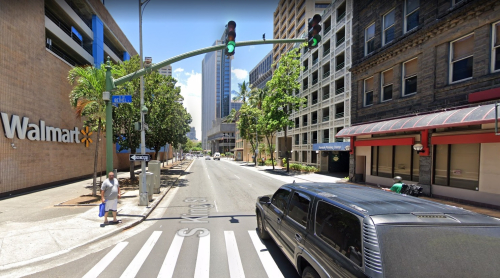
Breaking! In H.C. Cornuelle, Inc. v. City and Cnty of Honolulu, No. 14068 (Haw. July 17, 1990), the Hawaii Supreme Court held that the City and County of Honolulu inversely condemned a strip of private property in downtown when it prohibited development and use of that land because the City intended to acquire it in the future for a road-widening project.

Wait, what? “Breaking,” you say? This memorandum opinion was issued nearly 30 years ago. What gives? Well, we remember this case from back in the day when we were just starting out, but had long forgotten about it. Plus, the same case resulted in one of the first post-Williamson County Ninth Circuit opinions, because the landowners originally sued for the taking in federal court, but were bounced out for ripeness. So they tried the takings case in a Hawaii state court. The Hawaii Supreme Court’s opinion

Continue Reading HAWSCT: City’s Prohibiting Use Of Property Pending City Acquisition Is Land Banking Taking

As expected, a quick decision and opinion from the U.S. District Court for the District of Hawaii, after yesterday’s hearing on the plaintiff’s request for extraordinary preliminary relief (a TRO and PI) in the case challenging the Hawaii Governor’s imposition of a 14-day self-quarantine on all travelers inbound to Hawaii (and other emergency orders, although the TRO request was limited to the quarantine).

When the opinion starts this way, you know which way it is headed:

Claiming that there is no emergency in Hawai‘i or the United States, Plaintiffs seek temporary injunctive relief enjoining Defendant from enforcing the 14-day quarantine requirements of the Emergency Proclamations and an order to show cause why a preliminary injunction should not issue.

Op. at 1-2 (footnote omitted). I’m not sure that’s exactly what the plaintiffs were arguing (“no emergency” anywhere), but you get the drift.

The Governor challenged the plaintiffs’ standing (they have not

Continue Reading Federal Court Denies TRO: Hawaii Gov’s Coronavirus Travel Quarantine Doesn’t Stop Anyone From Coming To Hawaii

Last we checked in, the U.S. District Court for the District of Hawaii has granted the Hawaii Attorney General’s request to hold an in-person hearing on the plaintiffs’ motions for preliminary relief in the case challenging Governor Ige’s COVID-19 related orders (including travel quarantine). Unfortunately, that meant that those of us not able or willing to visit the courthouse in person would not be able to listen in.

Well thank you, Judge, for zagging back, and yesterday opening up the hearing to the public via telephone again. Here’s the latest court order, on how today’s hearing is going to go:

EO: The Court CONVERTS the hearing on Plaintiffs’ 12 Application for Temporary Restraining Order and for Order to Show Cause Why Preliminary Injunction Should Not Issue from an in-person/telephonic hearing to one by video conference.

The courtroom manager will provide participants with instructions and information to connect by video

Continue Reading Zigging And Zagging: Federal Court Hearing On Challenge To Hawaii Gov’s COVID Orders Is Back On-Line

We joined friend and colleague Clint Schumacher for the milestone 50th episode of his essential Eminent Domain Podcast

If you are not already a subscriber and regular listener, you should be. Clint features interesting guests (present company excepted) and listening in is a good way to keep our community together, especially when many of us may be feeling isolated and shut off from our friends and fellow property law travelers.

The 50th Episode is indeed a milestone. Anyone who has tried it knows that putting together a podcast is nowhere near as simple as you might think. Scheduling guests. Getting the sound right. Mixing boards. Editing it so the guest doesn’t sound completely illiterate (thanks for removing the “you knows” and “uhhhhhs,” Clint). Bumper music. So thank you Clint, for providing this service for the rest of us. (If you have any suggestions for guests or topics, be sure

Continue Reading We Join Clint Schumacher For The 50th Episode Of The Eminent Domain Podcast To Talk COVID Takings

OK, takings mavens, what’s your guess on whether a court would conclude there’s been a taking when a state bans “rapid fire trigger activators” (“devices that, when attached to a firearm, increase its rate of fire or trigger activation”)?

Under the law, it is a crime to “manufacture, possess, sell, offer to sell, transfer, purchase, or receive” that kind of device, and you can’t transport one into the state. The plaintiffs are folks who owned a device, plus an organization (Maryland Shall Issue, Inc.).

If you guessed “no taking,” you would have accurately predicted the U.S. Court of Appeals’ opinion in Maryland Shall Issue, Inc. v. Hogan, No. 18-2474 (June 29, 2020), which held there was not a taking under either the Fifth/Fourteenth Amendment, or the Maryland Constitution. Oh, and MSI, Inc. didn’t have organizational standing.

The takings part of the opinion starts on page 13. We’ll leave it

Continue Reading CA4 (Over Dissent): No Taking When Maryland Outlawed “Rapid Fire Trigger Activators”

Here’s the amicus brief filed yesterday in a Virginia Supreme Court case we’ve been following.

This is a case at the intersection of property and takings law, and environmental protection. Several Nansemond River oystermen own a lease from the state for the riverbed, which among other things, allows them to harvest some of the oysters that Virginia is so well known for. But they were forced to bring an inverse condemnation claim in state court, asserting that the City’s dumping of wastewater in the river — and prohibiting the harvesting of oysters during those times — was a taking under the Virginia Constitution’s taking or damaging clause (article I, § 11).

The trial court sustained the City’s demurrer, accepting the City’s argument that it has the right to pollute the river, based in part on the U.S. Supreme Court’s decision in Darling v. City of Newport News, 249

Continue Reading Amicus Brief In Virginia Oyster Takings Case: City’s Purposeful Pollution Of River Is A Taking Under The Virginia Constitution

Please plan on joining us on Wednesday, July 22, 2020, at 1pm ET (10am PT) for a long-form program on “Emergency and Police Power: Property Claims in Times of Crisis.”

Our speakers are Professors Craig Konnoth (Colorado) and John Nolon (Pace), and one of the lawyers on the forefront of the nationwide legal challenges, Harmeet Dhillon (San Francisco). I’ll be moderating, along with Professor Sarah Adams-Schoen (Oregon).

Here’s the program description:

On the eve of the centennial of Pennsylvania Coal Co. v. Mahon (US 1922), this panel will revisit the question: How far can the police power be stretched to protect the public against dangers? The panel will evaluate the scope of state and local authority to respond to emergencies and the implications for private property rights—asking, how far is too far? What is the scope of implied limitations on private property rights in times of crisis? When

Continue Reading July 22, 2020: “Emergency and Police Power: Property Claims in Times of Crisis” (ABA Webinar)