2020

Here’s another coronavirus-related complaint asserting a taking.

But unlike other, recently-filed complaints (see here, here, here, here, here, here and here), this one doesn’t object to shut down orders. Instead, it challenges two measures undertaken by local authorities related to the owner/tenant relationship.

To deal with the pandemic, Union City, New Jersey adopted two ordinances. First, for units already subject to the city’s rent control ordinance, it froze rents retroactive to March 1, 2020. Second, it froze all evictions. These, according to the Complaint, are takings. Here are the allegations:

78. Plaintiff repeats and realleges the previous allegations as if fully set forth herein.

79. By adoption of the Freeze Ordinance, Plaintiff and its members have been deprived of their vested contractual and property rights without due process of law or adequate compensation in violation of the United States and New Jersey Constitutions.

80.

Continue Reading Yet Another Coronavirus Complaint: Eviction, And Retroactive Rent Freeze In Rent-Controlled Apts Is A Taking

Here’s the latest complaint asserting that a state governor’s business shut-down order (under which certain businesses are deemed “essential,” while others not) is a taking, inter alia, that joins a growing list of similar lawsuits (see here, here, here, here, here and here).

This one is by licensed beauty professionals and has a slightly different flavor than other similar complaints, because the plaintiffs are alleging a specific property right in their licenses, raising the question of whether a state-granted or state-recognized license is a property interest that needs to be condemned if the government prohibits the licensee from actually using it. The plaintiffs argue a Lucas taking:

113. The regulatory actions taken by the Defendants have resulted in Plaintiffs being deprived of all economically beneficial or productive use of their property including, without limitation, their licenses, their leased property, and their business property, and

Continue Reading Another Federal Takings Complaint For Business Shut-Down Order (California)

In City of Chicago v. Eychaner, No. 1-19-1053 (May 11, 2020), the Illinois court of appeals revisited a case that it ruled on once before. 

Five years ago, in City of Chicago v. Eychaner, 26 N.E.3d 501 (Ill. Ct. App. 2015), the same court held that a redevelopment taking of Eychaner’s property qualified as a public use. We won’t go into the details of facts or that opinion’s reasoning. Instead, we’ll refer you to our summary, analysis (and criticism) of the opinion here (“The Chicago Way: City Taking Non-Blighted Property For Economic Development Was Not Pretextual Because … Studies“). After approving the taking, the court remanded the case for a determination of the compensation owed.

Flash forward. On remand, the jury determined just compensation was $7.1 million. Also while the case was remanded, the City changed its redevelopment plans. You know, the basis for the court

Continue Reading Illinois App: We Haven’t Changed Our Mind – Chicago’s Sketchy Redevelopment Taking Is Still For Public Use

Screenshot_2020-05-12 William Mary Law Review

Looking for some property and takings scholarly reading while you cool your heels at home? Well, the William and Mary Law Review has recently published no less than three worthy pieces, all available for download.


Continue Reading Three New Property And Takings Articles From William & Mary Law Review

LUI 2020 slider

Join us starting tomorrow, Tuesday, May 12, 2020 for the 34th Land Use Institute. Originally scheduled for April in Tampa, we obviously couldn’t do tha, so we did the next best thing — moved this venerable course online. The Planning Chairs (Frank Schnidman and Dean Patricia Salkin) have assembled the usual hot topics session and a lineup of expert faculty (we’re speaking at the 2:45 ET session on Federal Laws (in our case, NEPA, Water, and Wetlands (including the Maui case from SCOTUS)). 

The program takes place over three days Tuesday, Wednesday, and Thursday, and you can either register for the sessions or all three days, with various discounts if you are a member of the American Bar Association, and even more if you are a member of the Section of State and Local Government Law. 

Here’s the three-day agenda. There is a lot here to like, and we

Continue Reading Join Us This Week: May 12-14, 2020 For (Virtual) Land Use Institute Webinar Series

YOUAREHERE

Normally, we would not be asking our colleagues who are licensed to practice in Hawaii to represent an opposing party. Especially in a case in which the Hawaii Supreme Court has already accepted an application for writ of certiorari (local practice note: in the 808, we don’t say that you petition for cert — you “apply,” and the court doesn’t “grant” cert, but rather “accepts” cert).

The case involves a question of due process. The application sought the Supreme Court’s discretionary review of a memorandum opinion of the Intermediate Court of Appeals, and the Supreme Court recently accepted the application. 

The Court, however, declined to schedule oral argument. But the petitioner asked the Court to retain it. The Court denied the request without prejudice:

Petitioner/Petitioner-Appellant WW’s motion for retention of oral argument filed on March 10, 2020, is hereby denied without prejudice. Should the parties be accepted to

Continue Reading Step Up, Hawaii Appellate Lawyers: Petitioner Needs Counsel For Supreme Court Oral Arguments In Due Process Case

Here’s the latest in a case we’ve been following. In Pakdel v. City and County of San Francisco, No. 17-17504 (9th Cir. Mar. 17, 2020), a 2-1 panel of the U.S. Court of Appeals held that a federal takings case was not ripe because the plaintiffs had not sought an exemption (“variance”) from the regulation.

Now, the property owners have asked the en banc Ninth Circuit in this petition to consider the issue. The panel decision created a “target rich environment” as they say: 

The panel decision conflicts with the Supreme Court’s decisions in Patsy v. Board of Regents of State of Florida, 457 U.S. 496 (1982), and Williamson County Reg’l Planning Comm’n v. Hamilton Bank of Johnson City, 473 U.S. 172 (1985), and previous decisions of this Court. Dodd v. Hood River County, 59 F.3d 852 (9th Cir. 1995); Mechammil v. City of San Jacinto

Continue Reading CA9 En Banc Petition: Must A Property Owner Exhaust Admin Remedies Before Filing A Federal Takings Claim?

IMG_20191024_125128
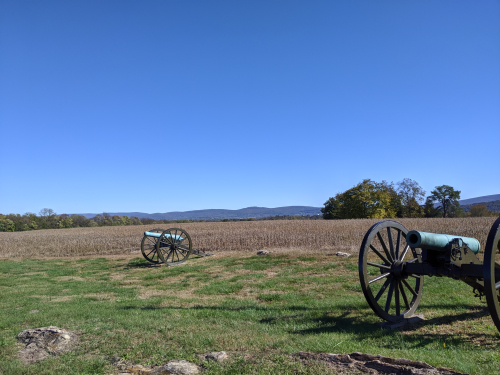
“The Cornfield” at Antietam

Two more complaints that challenge state-ordered shut-down orders as takings. The first from Maryland, the second from across the country in Nevada. These join an ever-growing list of such lawsuits. See here, here, here, here and here, for example.

We set out what we think about how these type of claims should be analyzed in this article (“Evaluating Emergency Takings: Flattening The Economic Curve“). And, we’ll be moderating a Federalist Society teleforum (open to the public!) next Friday on “COVID-19 & Property Rights: Do Government Actions in Response to the Coronavirus Pandemic Create Compensable Takings?” if you want to get in on the issue.

Of course, we shall keep following along. 

(What’s the deal with the photos you ask? Nothing, except the first is from the Antietam Battlefield on our last visit (the Maryland complaint is

Continue Reading Two More Complaints Challenging Shut-Down Orders As Takings (Md, Nev)

Please mark your calendars for Friday, May 15, 2020 at 2:30pm Eastern Time, for the teleforum sponsored by the Federalist Society’s Environmental Law & Property Rights Practice Group, “COVID-19 & Property Rights: Do Government Actions in Response to the Coronavirus Pandemic Create Compensable Takings?”  

The issue: how should courts evaluate the claims for compensation arising out of emergency measures? This question is on the front burner at the moment (and will continue to be because the courts will likely be confronted from these type of claims as the fallout continues). For example, here are some of the complaints that have been filed in courts around the nation: see here, here, here, here and here.  

Please join the program (public welcome). It will be a moderated discussion between two experts in the area, both of whom have been following the issue closely, and who have written

Continue Reading Join Us Next Friday, May 15 (2:30pm ET, 11:30am PT, 8:30am HT): FedSoc Teleforum: “COVID-19 & Property Rights: Do Government Actions in Response to the Coronavirus Pandemic Create Compensable Takings?”

Thanks to a colleague for cluing us in to the first case on the docket today, that brings to mind ferae naturae, Pierson v. Post, and (of course) takings.

In Britton v. Keller, No. 1:19-cv-01113 (D. N.M. Apr. 16, 2020), the U.S. District Court for the District of New Mexico held that the City of Albuquerque could not be liable for a taking of a homeowner’s property when it set up a “trap, neuter, and release” site for feral cats next to her house. As you might expect, setting up a feral cat farm next to your house results in things like “disease vectors, property damage as a result of cat defecation and urination, and property damage from the feral cats themselves[.]” Slip op. at 2.  

We don’t have much to add to that, except to say the court goes about its analysis in the wrong way. First

Continue Reading Hey All You Cool Cats And Kittens: Creating A Feral Cat Colony Next To Your Property Isn’t A Taking