2021

Check this out, the latest episode of Clint Schumacher’s Eminent Domain Podcast, where his guest is Judge Andrew Edison (who may be familiar to many of you for his ALI-CLE presentation a couple of years ago about the eminent domain angle in the JFK assassination film).

Today, the topic is Robert Moses, NYC taker and redeveloper extraordinaire. We’ve been waiting a long time for this episode, and you won’t be disappointed. 

Here are the liner notes:

U.S. Magistrate Judge Andrew Edison has devoted much time and research to the life and legacy of Robert Moses, a former Parks Commissioner who had a broad and deep impact on the development of New York City’s infrastructure over a period of 50 years. Moses’ career in many ways provides a study of the human cost of eminent domain for different socio-economic communities. Judge Edison’s insight into Moses’ legacy is relevant to

Continue Reading Latest Ep, Eminent Domain Podcast: The Legacy Of Robert Moses (Judge Andrew Edison)
Now’s the time to register for the 2022 ALI-CLE Eminent Domain and Land Valuation Litigation Conference, January 26-29, 2022 at the McCormick Ranch Resort in Scottsdale, Arizona.

That’s right, we’re back in-person at the venerable event (38th annual) and we’re bringing you the great content, speakers, and social events that are our hallmark.

Sessions include:

  • Property Rights as Civil Rights
  • Eminent Domain National Update
  • Just Relocation: Understanding the Law and Regulations to Ensure Fairness
  • Challenging Public Use: Lessons From a 67-Day Trial
  • COVID Takings
  • Federal Court and the Daubert Challenge: How to Prepare
  • Did the Supreme Court Signal a New Direction in Property Rights in Cedar Point Nursery?
  • How to Position Your Client for the Fallout When Projects Don’t Get Built
  • Rural Broadband and the Emerging Constitutional Challenges
  • Are Precondemnation Entry Statutes Still Valid After Cedar Point Nursery?
  • How Condemnor and Property Owners’ Counsel Prepare the Battlefield


Continue Reading Time Is Running Out: Register Now For The 38th Annual ALI-CLE Eminent Domain & Land Valuation Litigation Conference, Jan 26-29, 2022, Scottsdale

Screenshot 2021-12-12 at 09-10-29 Event Registration

This Wednesday, December 15, 2021, at 1pm ET (10am PT) our PLF colleague Chris Kieser will be presenting an American Bar Association webinar, produced by the Real Property, Probate, and Trust Section, “Cedar Point Nursery v. Hassid: Supreme Court Weighs in on Definition of ‘Private Property’ and Implications for the Future.”

Register here. Here’s the details:

Chris Kieser, one of the attorneys representing Cedar Point Nursery in the recent Supreme Court case, will discuss the Court’s ruling as to what constitutes a physical taking of “Real Property” under the 5th Amendment and its potential applications in other contexts. He will be supported in the discussion by moderator, Nick Laurent, the chair of Land Use and Environmental Group – Condemnation Committee.

Chris is one of the lawyers representing the prevailing property owners in Cedar Point (our own look at the decision here), so he has a very

Continue Reading Wed, Dec. 15, 1pm ET: “Cedar Point Nursery v. Hassid: Supreme Court Weighs in on Definition of “Private Property” and Implications for the Future” ABA RPTE Webinar

What to get the dirt lawyer in your life for the holidays? Charlie Brown got a bag of rocks for Halloween, so there’s that. Or there are the old reliable, origami boulders. But you are better than that and want to be a good gifter.

So here are our 2021 suggestions for stocking stuffers that will make property mavens celebrate the season. 

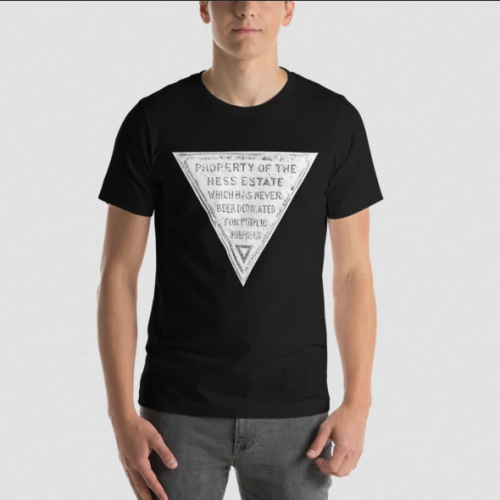
Start here, a Hess Triangle t-shirt, available from Brooklyn Streetworks. No no true dirt lawyer could resist this classy depiction of the smallest piece of private real estate in the Big Apple. True mavens know this one, and donning this shibboleth is a sign to others in the know that you know your stuff; a “secret handshake” of sorts to kindred spirits.

“Never been dedicated to public use?” – you show ’em who’s boss!

Screenshot 2021-12-11 at 08-49-00 unisex-staple-t-shirt-black-front-6197259c1cf00_590x png (WEBP Image  590 × 590 pixels)

* * * *

Next up is the recently-published “


Continue Reading Dirt Lawyer Holiday Gift Giving Guide (2021 Edition)

If you knew nothing about a case except that it was public use challenge to a redevelopment condemnation in New York, you’d be on firm footing if you guessed the outcome was not going to be favorable to the property owner. New York, after all, is what one colleague called the worst in the nation at protecting property owners, and has produced such stinkers are the Atlantic Yards decision, and the Columbia-takes-Manhattanville case. 

The facts in PSC, LLC v. City of Albany Indus. Dev. Agency, No. 432952 (Dec. 9, 2021), might not be as dramatic as those two cases, but the result is the same: the New York Supreme Court Appellate Division upheld a redevelopment taking of a holdout owner, concluding that the agency’s decision to take a public parking lot was not subject to any serious judicial questioning. Same as it ever was.   

The court

Continue Reading NY App Div: Taking In Albany’s “Parking Lot District” Meets Low Redevelopment Standards, Even Though No One Seems To Want To Redevelop

PASH symposium

Back in February, we were honored to be part of the University of Hawaii Law Review’s symposium “25 Years of PASH,” a retrospective of one of the Hawaii Supreme Court’s most famous (or infamous) decisions, Pub. Access Shoreline Haw. v. Haw. Cnty. Plan. Comm’n, 79 Haw. 425, 903 P.2d 1246 (1993), cert. denied sub nom., Nansay Haw. v. Pub. Access Shoreline Haw., 517 U.S. 1163 (1996) (PASH).

At the conference, we spoke on the panel about “PASH and the Changing Coastal Environment” (see video here at the 2:02:25 mark if you want to watch our panel’s summations). The Law Review has now published the symposium, and here’s our contribution, Takings PASH and the Changing Coastal Environment, 43 U. Haw. L. Rev. 525 (2021).

For those of you not totally tuned in, in the PASH case the Hawaii Supreme Court

Continue Reading New Article: “Takings, PASH, and the Changing Coastal Environment,” 43 U. Haw. L. Rev. 525 (2021)

The latest in a case we’ve been following, and this one is a double nerd whammy. The cert petition in RLR Investments, LLC v. City of Pigeon Forge, No. 21-703 (Nov. 15, 2021), seeks review of a Sixth Circuit decision in a takings case where the issue on appeal is whether the Rooker-Feldman doctrine applies only to final decisions, or also covers interlocutory rulings by a district court.

Here’s the story: Pigeon Forge wanted RLR’s property. Next stop – condemnation. RLR objected to the taking, asserting the condemnation was not supported by a public use. The Tennessee trial court considering the condemnation suit disagreed, and concluded twice (once at the hearing on immediate possession, the other on a motion for summary judgment) that the taking was supported by a public use or purpose. 

Instead of proceeding to a valuation trial, the owner pressed its argument the taking lacked

Continue Reading New Cert Petition: Rooker-Feldman Does Not Apply To Interlocutory State Court Orders

Check it out: the “Digging a Hole” Podcast includes in one of its recent episodes a discussion of SCOTUS’s latest takings case, Cedar Point Nursery v. Hassid.

Our final guest for Season 3 is Nikolas Bowie, assistant professor of law at Harvard Law School and board member of the ACLU of Massachusetts, Lawyers for Civil Rights, the People’s Parity Project, and MassVote. In this episode, we dive into two of his recent articles — “Antidemocracy” and “The Constitutional Right of Self-Government.” We begin by discussing the Court’s recent ruling in Cedar Point Nursery v. Hassid (2021) and how it ties to Heart of Atlanta Motel, Inc. v. United States (1964). As part of this conversation, we touch on the implications of Cedar Point moving forward, whether the Court is operating as a democratic institution, and how our institutions can move toward isocracy, a system of government where citizens have

Continue Reading Digging A Hole Podcast Takes On Cedar Point Nursery…And Isocracy

Here’s how the Pennsylvania Supreme Court stated the issue in Hughes v. UGI Storage Co., No.J-69A-2021 (Nov. 29, 2021):

In these consolidated appeals, we consider the Commonwealth Court’s holding that, to be held liable for damages under Pennsylvania’s inverse condemnation statute, an entity must be clothed with the power of eminent domain – not only in a general sense, in that it must be a governmental or quasi-public entity to which condemnation powers may be delegated – but also, the entity must be invested with eminent domain authority specific to the property in issue.

Slip op. at 1.

If all you need to know is “what did the court answer?” you can stop right here: the court held that UGI Storage did not need to have been delegated the power of eminent domain, nor must it be delegated the power to take the property at issue, in order to

Continue Reading Pennsylvania: To Be Liable For Inverse Condemnation, Taker Need Not Have Eminent Domain Power

Like a lot of things in Gary, Indiana, the Housing Authority was “troubled.” So troubled, the feds took it over. The Housing Authority received big money from the feds, and was required to agree to an annual contribution agreement, by which the Authority ok’d a HUD takeover in the even of the Authority’s substantial default.

Next up, default. The city dissolved the Housing Authority’s Board of Commissioners, and HUD appointed one of its employees to be the administrator of the Authority and to serve as the Board of Commissioners. Back in business.

Part of the administrator’s … ahem … “Authority’s” business was redevelopment. The Authority decided to take 624 Broadway’s property (which, not surprisingly, included 624 Broadway) to do some mixed-use and affordable housing. The taking was undertaken under Indiana’s eminent domain procedures. Attempts to purchase the property were not successful, so the Authority instituted an administrative taking.

Continue Reading Indiana App: Even When Federal Agency Steps Into The Shoes Of A Local Redevelopment Agency, It Has To Follow Local Rules