July 2022

Is there a more appropriate place at which to study property rights and dirt law than William and Mary Law School? After all, it is a stone’s throw from Jamestown, the place where there’s a good argument the concept of property law and property rights first took hold in the New World. As noted by author David Price in “Love and Hate in Jamestown – John Smith, Pocahontas, and the Start of a New Nation” –

The introduction of private property for the common citizen had a salubrious effect on the owners’ sense of initiative, as John Rolfe would observe. By the end of 1619, he reported, the “ancient” (or longtime) colonists had chosen their allotments, “which giveth all great content, for now knowing their owne lande, they strive and are prepared to build houses and to cleare their grounds ready to plant, which giveth …

Continue Reading Ye Olde Law 608: Eminent Domain & Property Rights, S5E1 @ William & Mary Law

IRWA

The International Right of Way Association‘s Real Estate Law Committee produces twice-a-year reports “which contain summaries of eminent domain decisions and legislation within the United States.”

And what is really nice is that they make the report available

We’re posting it here because we’re one of the co-authors. Hat tip to our co-authors Brad Kuhn, Jillian Friess Leivas, and Ajay Gajaria.

The report is short, and doesn’t contain a lot of fluff. Just what you wanted.Continue Reading IRWA’s Summary Of Major Eminent Domain Cases & Legislation (Jan-May 2022)

Last week, along with my colleagues Deborah La Fetra and Kady Valois, we filed this cert petition in a case we’ve been following (even before we joined as counsel).

The petition seeks review of the Fifth Circuit’s opinion holding that there’s nothing a federal court can do if a local government does not pay a state-court just compensation judgment for an unreasonably long time. Because we are counsel in the case we won’t go into further detail, but will leave it to you.

Here’s the Question Presented:

A fundamental element of just compensation is “certain payment of the compensation without unreasonable delay.” Bragg v. Weaver, 251 U.S. 57, 62 (1919). In 2013, the Sewerage & Water Board of New Orleans inversely condemned the properties of 70 home and business owners for a flood control project. The property owners obtained state court judgments starting in 2018. Louisiana law

Continue Reading New Cert Petition (Ours): Can Condemnor Delay Actually Paying Compensation Indefinitely?

Mmm
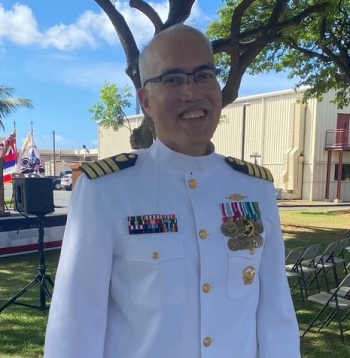
An officer and a gentleman.

Before I go on, a note: we’re posting this with a slight bit of reluctance, because we know that friend and colleague Mark M. Murakami does not crave the spotlight, but is the type to downplay this sort of thing. But I think it is important to acknowledge milestones — especially the accomplishments of friends in public service — so please read on.

You may already know of many of his professional legal accolades: Owners’ Counsel member, SCOTUS amicus brief author, Best Lawyer in a slew of categories, regular CLE faculty member and presenter, and land use, eminent domain, and property law legal scholar (he will be returning this fall to the U. Hawaii Law School on the adjunct faculty) to name a few. But he isn’t just an accomplished lawyer, and you may not have known of his military

Continue Reading More Than Just A Property Lawyer: A Salute To Three Decades Of Service

JQA

No, not that JQA. (Sorry for the clickbaitey headline.) But who could resist the Fifth Circuit’s per curiam opinion in John Quincy Adams v. Pearl River Valley Water Supply District, No. 21-60749 (July 20, 2022) which held that Mr. Adams, who owned property near a reservoir, could not sue state officials in federal court for injunctive relief for due process violations and takings.

Adams alleged that Mississippi water district officials were violating a state statute by not allowing him to exercise the option to re-acquire property that the water district had condemned decades earlier. His federal court complaint avoided directly asking for money damages because those claims would mean the state officials would have Eleventh Amendment immunity. Instead, “[t]he Adamses requested a declaratory judgment that the District’s sales and leases of property without notice were ongoing constitutional violations and asked the court to fashion whatever injunctive relief it deemed

Continue Reading John Quincy Adams Loses A Takings Case

In Skatemore, Inc. v. Whitmer, No. 21-2985 (July 19, 2022), the U.S. Court of Appeals for the Sixth Circuit held that neither the Just Compensation Clause, nor the Fourteenth Amendment abrogated the states’ immunity from being sued in federal court for compensation for takings.

This is another one of those cases where — due to Co-19 — businesses forced to close or limit operations by the state (here, Michigan) brought regulatory takings claims in federal court. The claims included takings, and the relief sought was just compensation (no prospective injunction or declaratory judgment). The complaint named state officials (in their official capacities) and state agencies as the defendants. The district court dismissed for lack of jurisdiction and for failure to state a claim. 

The Sixth Circuit affirmed. The court rejected the argument that a state’s Eleventh Amendment immunity from being haled into a federal court without consent does not

Continue Reading CA6: State Officials Enjoy 11th Amendment Immunity From Just Compensation Claims In Federal Court

Here’s the latest in an issue we’ve been following for a while. You recall that several years ago, a divided panel of the Ninth Circuit held there’s nothing particularly special about an unresolved takings claim for just compensation that sets it apart from other creditor claims in a government bankruptcy.

The Ninth Circuit majority held that owners who assert their property was taken by the debtor-government before the bankruptcy — but who have not been compensated — are just unsecured creditors who must “share[] the pain” of the government going broke and sloughing off debt, even if it means that as a result the owner has had its property taken without just compensation. SeeNinth Circuit: Inverse Condemnation Plaintiff Must “Share The Pain” – City Can Shed Obligation To Pay Just Compensation In Bankruptcy, Which Is ‘Purely A Monetary Claim’.”

Next up, Round 2: In In re Financial

Continue Reading CA1 Splits With CA9: “[T]he Fifth Amendment precludes the impairment or discharge of prepetition claims for just compensation in Title III bankruptcy.”

We were all set to detail the Iowa Supreme Court’s recent opinion in Garrison v. New Fashion Pork LLP, No. 21-0652 (June 20, 2022), when we discovered that Iowa State University’s Center for Agricultural Law and Taxation beat us to it with “Iowa Supreme Court Overrules Key Ag Nuisance Case.”

On June 30, 2022, the Iowa Supreme Court, in a 4-3 decision, overruled 18-year-old precedent to find that Iowa’s right to farm statute, Iowa Code § 657.11, does not violate the inalienable rights clause of the Iowa Constitution. This decision generally restores statutory immunity from nuisance lawsuits seeking special damages for many animal feeding operations.

The “18-year old precedent” mentioned made Iowa an “outlier” the majority concluded, because every other state that has considered RTF statutes has upheld them. Welcome back, Iowa.

We couldn’t do a better job at summarizing the case and the arguments, so we’ll

Continue Reading Iowa Rejoins The Fold: Right-To-Farm Statute Does Not Violate State Constitution

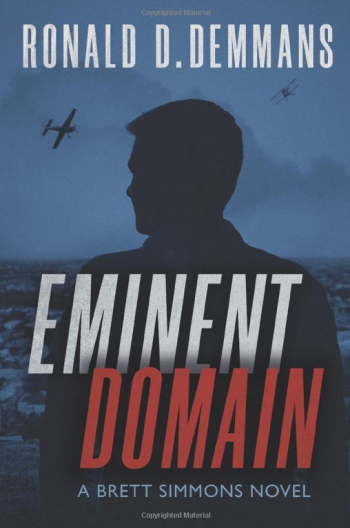
Screenshot 2022-07-10 at 10-35-34 Amazon.com Eminent Domain (Brett Simmons) 9781954676220 Demmans Ronald D. Books

A “brash, wise-cracking unapologetic lawyer” gets caught up in “two innocuous words of legalese” and next thing you know, he’s embroiled in “lies, deceit, and ultimately murder.” Sound like your practice? (ha!) If so, then have we got a novel for you: “Eminent Domain” by Ronald D Demmans.

Yes, a novel where condemnation is a central plot point:

Brett Simmons and the town of Lenore are inextricably linked. Brett Simmons, the brash, wise-cracking, unapologetic lawyer and Lenore, the hometown he loves. Two innocuous words of legalese will lead Brett down a dangerous path of lies, deceit and ultimately murder. He has taken a look behind the curtain…the wrong curtain. He has seen too much and what he has uncovered could cost him everything: his career, his freedom, even his life. With the odds clearly stacked against him and the future of Lenore at stake, Brett engages in a

Continue Reading New Novel: “Wise-Cracking Lawyer” Gets Caught Up in Eminent Domain … And Murder!

Here’s the latest in a case we’ve been following.

In City of Oberlin v. FERC, No. 20-1492 (July 8, 2022), the U.S. Court of Appeals for the D.C. Circuit held FERC adequately explained why, in granting a certificate of public convenience, it relied in part on evidence that some of the natural gas in the pipeline was slated to go to Canada. 

Earlier, the court held FERC had not explained why well enough (or at all), and sent the case back down to give FERC the chance to do so. The handwriting was on the wall in the remand order because the court pointedly did not vacate FERC’s order granting the certificate: “we remand without vacatur, because we find it plausible that the Commission will be able to supply the explanations required, and vacatur of the Commission’s orders would be quite disruptive, as the Nexus pipeline is

Continue Reading DC Circuit OK’s Pipeline That’s Already Built