Skip to content

December 2024

Check out the opinion of the Court of Federal Claims in Nix v. United States, No. 23-704C (Dec. 11, 2024). Fascinating stuff.

We post it here not because it breaks new ground, but due to the subject matter of the lawsuit: the alleged taking of a film that captures (in part) the assassination of President Kennedy in 1963.

No, this isn’t the famous Zapruder film, which was also the subject of a well-known takings claim. This case involved the “Nix film,” taken that fateful day “from an angle opposite the more famous Zapruder film. The Nix film thus captures Abraham Zapruder and the area around him, where some claim a gunman other than Lee Harvey Oswald was hiding.” Slip op. at 2. 

Nix licensed the film to UPI, which “unbeknownst to him … transferred the Nix film to the United States House of Representatives Select

Continue Reading CFC: Complaint Adequately Pleaded Physical Taking Of JFK Assassination Film
Our thanks to Bobby Debelak for having us back on as a guest on his Eminent Domain Podcast.

We’re long-time fans of the pod (naturally), and it was good to get together with Bobby and talk a bit of shop.

Here’s a description of our session:

Robert Thomas joins Bobby Debelak to discuss the most interesting legal developments from 2024, cases to watch next term, and previews the 2025 ALI-CLE conference to be held in San Diego at the end of January 2025. At the end, a musically themed cross-examination includes Robert’s dream set list of 70s bands.

Our three set list entries: the first, a classic, timeless sound; the second might reveal our “square” proclivities; while the may be a selection The Dude may not approve.

Check it out above, on Spotify, or wherever you get your pods!Continue Reading Latest Ep, Eminent Domain Podcast: Podworthy Cases, ALI-CLE, And 1970s Bands

Screenshot 2024-12-09 at 16-13-02 Involuntary Regulatory Servitudes Correcting for “Regulatory Takings” Terminological Problems by Donald J. Kochan SSRN

Check this out, a new SSRN posting by lawprof Donald Kochan (George Mason/Scalia Law).

If this one is not a direct sequel to his earlier work on re-branding the “takings clause” (a piece we think is excellent and is part of the materials we teach in our Eminent Domain course at William and Mary Law), it does at least seem like a spiritual successor.

Here, Professor Kochan suggests that we’re being unclear when we use the term “regulatory takings” to describe those instances where an exercise of some governmental power other than eminent domain results in what feels like an eminent domain taking from the property owner’s viewpoint.

Instead, he argues, we should focus on the burdens the regulations place on an owner’s use (what the common law described as a servitude). To us, that seems very consistent with the Supreme Court’s approach, and proposals from other commentators. And it does focus the inquiry on the right question, namely what effect has a regulation put on an owner’s property rights. As that suggests, this should be a property-centric inquiry, and not on such unknowables such as the “character of the government action,” or whether an owner has “distinct investment-backed expectations.”

Here’s the Abstract:

This essay challenges the use of the term “regulatory takings” in our takings jurisprudence and scholarly discussion. The words we choose when developing doctrine matter. They can, even subconsciously, affect—by reducing, enlarging, distorting, limiting, or accurately shaping—the perceived and functional quality and character of the things they describe.

The better way to frame the inquiry underlying what is often called regulatory takings law should be to determine not whether there is a “regulatory taking” – some special kind of taking – but instead whether there is a regulation that amounts to a taking. Segmenting the judicial treatment of regulatory effects into a specialized analysis that takes it farther and farther away from an enterprise focused on equivalency between the private law of voluntary servitudes and the public law of what we should be calling involuntary regulatory servitudes. Regulations that restrict some but not all sticks in the property rights bundle should be characterized as the involuntary equivalent of the voluntary instrument, mechanism, or transfer that would have been necessary to achieve a parallel result. The essay proposes an alternative test for determining whether a regulation should be deemed a taking based on a comparison between the effect on the bundle from the regulation and determining whether the same effect in the private marketplace would have required a consensual, mutually beneficial exchange with appropriate compensation. This would better serve the meaning and purposes of the so-called Takings Clause.

The essay also documents the usage history of the regulatory takings label. To be sure, “regulatory takings” was not a dominate part of the takings lexicon before 1981. The first law review publication available in Westlaw to use the term “regulatory takings” is from 1965. The first court opinion to use the term came in a footnote in 1977. Briefing in advance of the 1980 U.S. Supreme Court decision in Agins v. Tiburon involved significant invocations of “regulatory takings” language across nearly a dozen briefs. But, the U.S. Supreme Court in its Agins opinion never uses the phrase “regulatory takings.” The first major court opinion to use “regulatory takings” language is the dissenting opinion by Justice William Brennan—joined by Justices Stewart, Marshall, and Powell—in the 1981 case of San Diego Gas & Elec. Co. v. City of San Diego. And, the Brennan dissent may have entrenched the term in the takings lexicon and is likely the impetus for widespread adoption of the term after 1981.

A must-read for all you takings…uh, dirt law…mavens.
Continue Reading New Article (Donald Kochan): “Involuntary Regulatory Servitudes: Correcting for ‘Regulatory Takings’ Terminological Problems”

We’ve been following a Second Amendment case, Hawaii v. Wilson, as it awaited the U.S. Supreme Court’s decision whether to accept review. Not because it is relevant to the usual subjects of this blog, but because a friend and colleague is Counsel of Record for the petitioner, and we’re just naturally interested in cases from the 808 that involve locally-disfavored rights. In that case, the right to keep and bear arms.

The Hawaii Supreme Court refused to consider a criminal defendant’s defense that to prosecute him for carrying a firearm publicly violated the Second Amendment, concluding he lacked standing under Hawaii law because he had not sought a license to carry a firearm.  

Today, in this Order, the Court denied certiorari. But three Justices issued or joined statements (Thomas, Alito, Gorsuch). And Justice Thomas’s statement revealed this Fifth Amendment nugget:

Our rejection of state procedural restrictions on

Continue Reading A Takings Clause Vibe In A Second Amendment Case

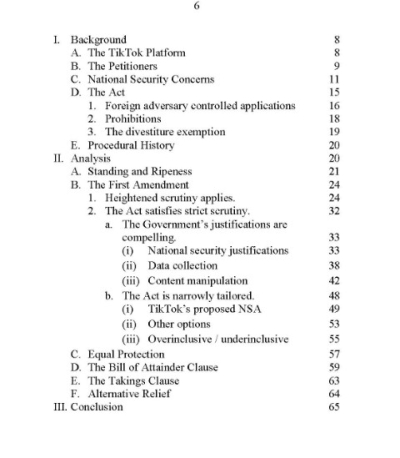
TocA Table of Contents. Don’t see that too often
in an opinion. (
And this doesn’t include
the concurring opinion!)

We may do social media (Twitter/X and LinkedIn), but so far we have avoided TikTok. Our attention span is already short enough, and it doesn’t need to get even shorter.

And even more critically, we understand the TikTok platform consists mainly of short dance videos. That only makes us want to avoid it even more (OK Boomer). 

Well, as of today, we may not really have a choice. At least if the U.S. Court of Appeals for the D.C. Circuit’s opinion in the case which challenges the Congressional ban on TikTok stands: TikTok Inc. v. Garland, No. 24-1130 (Dec. 6, 2024).

As you may know, in the Protecting Americans from Foreign Adversary Controlled Applications Act, Congress permitted the President to identify “foreign adversaries”

Continue Reading DC Cir: TikTok Taking? Uh, No. Because They Can Sell It To Americans

‘Tis the season for TV holiday movies. Here’s one to add to your list, as it is on-brand for us dirt lawyers. “Christmas at the Drive In” is described thusly:

“A property lawyer works to prove that her town’s Drive In Theater, a local institution, is not closed down at the holidays, finding romance with the very person who is trying to sell the property.”

When property, redevelopment, historic preservation, and l’amour is involved, who could resist?Continue Reading Holiday Dirt Law Movie: “Christmas at the Drive In” (aka Rudolph The Red-Nosed Redeveloper)

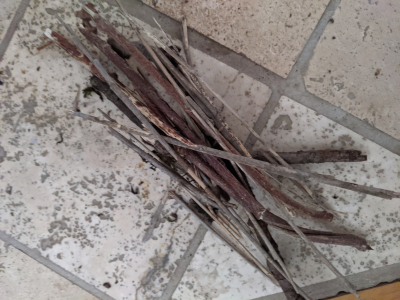
Sticks bundle
We thought this was going to be about sticks.

We ain’t gonna pretend we understand cryptocurrency or blockchain. I’m just a caveman. Your world frightens and confuses me!

And there’s a lot there to confuse us in the U.S. Court of Appeals’ recent opinion in Van Loon v. Dep’t of the Treasury, No. 23-50669 (Nov. 26, 2024), where one of the questions was the meaning of the term “property” as used in the International Emergency Economic Powers Act. Under that statute, the President may “block … any property in which any foreign country or national thereof has any interest.”

The Treasury Department blocked “Tornado Cash” which, as far as we can tell, is a computery way to anonymously transfer asserts digitally, and “obfuscat[e] the origins and destinations” of the transfer. Slip op. at 2. The Department’s regulations define “property” broadly, and it blacklisted Tornado Cash “for

Continue Reading Beyond The Hohfeldian Bundle: Cryptocurrencies, Blockchain, And The “Ordinary, Common” Meaning Of “Property”

PXL_20240821_114525464.MP
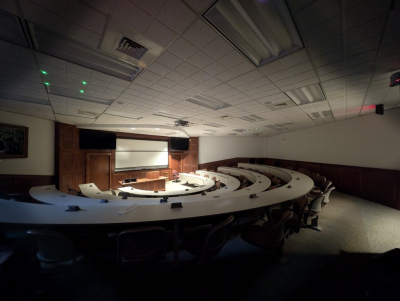
How it started.

Once again, our fall duties included teaching two property law courses at the William and Mary Law School: Eminent Domain & Property Rights, and Land Use Controls. We started in mid-August, and just wrapped the classroom portion of the courses earlier this week. I say “classroom portions” because although we are done with classwork, the courses are not done, and the students are presently deep into writing their final papers (we don’t do an exam in either course). Then comes grading, and a welcoming of the students as full-fledged colleagues in the Dirt Law Bar.

Many law schools feature Land Use Law courses, but only a few are so bold as to include a course on Eminent Domain and Property Rights in their offerings (and a substantial three-credit course, at that). William and Mary Law School is an excellent and very appropriate place to study these topics.

Continue Reading Another Semester Of Dirt Law In The Books

Today we have another guest post by New York colleague Jennifer Polovetsky, who writes about trade fixtures in New York. Lots of good stuff for those of us not in NY as well. Thanks to Jennifer (and to the New York Law Journal) for allowing us to republish her intriguing piece.

_____________________________

Trade Fixtures In New York Eminent Domain Cases – What Qualifies and How Are They Valued?

by Jennifer Polovetsky

In New York, the eminent domain laws require that compensation be made to a business tenant for the loss of its compensable trade fixtures in a separate condemnation award. A business tenant is entitled to receive compensation for its “chattel” (i.e., any machinery, equipment, and/or other legally compensable installations that are used for its business purposes) separately from any compensation offered to the landlord/owner of the property for the seizure of their real estate. See Eminent Domain Procedure


Continue Reading Guest Post (Jennifer Polovetsky): “Trade Fixtures In New York Eminent Domain Cases – What Qualifies and How Are They Valued?”