June 2025

A short one from the Virginia Court of Appeals. Very Virginia-specific, but there are lessons here for those of you outside the Old Dominion. 

In City of Virginia Beach v. Mathias, No. 2073-23-1 (June 10, 2025), the court held that when a statute requires the condemnor to do something prior to taking property, the condemnor better do that thing. Close enough isn’t good enough. 

In 2022, the Virginia General Assembly began requiring that at a time between the condemnor’s offer of purchase and when it files the certificate of take, it must undertake a title examination, among other things:  

Notwithstanding any provision of law to the contrary, a condemnor, prior to making an offer to acquire a fee simple interest in property by purchase or filing a certificate of take or certificate of deposit pursuant to Chapter 3 (§ 25.1-300 et seq.) or § 33.2-1019, shall (i) conduct or
Continue Reading Va App: When Statute Requires Condemnor Provide 60-Year History Examination Of Title But It Doesn’t Do So, Guess What?

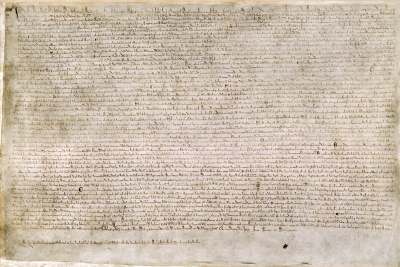
Magna_Carta_(British_Library_Cotton_MS_Augustus_II.106)

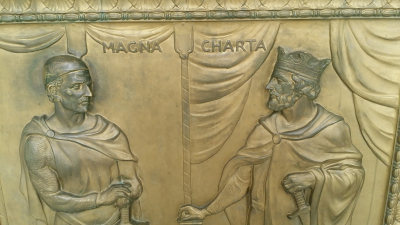
810 years ago today* on a grassy plain down by the river, the barons convinced bad King John to affix his seal to Magna Carta. Or the Magna Carta. Or Magna Charta. However you want to grammarize it. (And no, he didn’t “sign” it, they didn’t do things like that back then.)

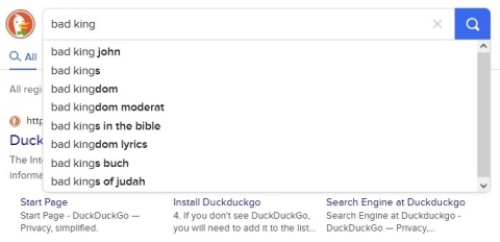
And boy was that guy bad even by the standards of medieval royals: when you type “bad king…” in your search engine, the first suggested search is “bad king … John.”

Badkingjohn

There’s a lot of good stuff in Magna Carta — and a lot of stuff that has been rendered irrelevant or quaint by the passage of time, and even some stuff that we’d consider cringe-worthy today (see art. 10, for example).

But we takings geeks all know and continue to appreciate article 28:

Nullus enarius aries, vel alius ballivus noster, capiat enar vel

Continue Reading Happy 810th (The) Magna Carta (Charta) Day!

Fischel_600

Here’s news we’ve been waiting for.

The William and Mary Law School announced that Professor William Fischel will be awarded the 2025 Brigham-Kanner Property Rights Prize at the annual conference in Williamsburg in October 2025. 

The Brigham-Kanner Property Rights Prize is presented annually to a scholar, practitioner, or jurist whose work affirms the fundamental importance of property rights. It is named in honor of the late Toby Prince Brigham, a leading property rights attorney, and the late Gideon Kanner, a devoted scholar of property rights who was Professor of Law at Loyola Law School in Los Angeles.

Professor Fischel taught in the Economics Department at Dartmouth from 1973 until his retirement in 2019. His scholarship focuses on the law and economics of local government, and his expertise includes local government law, school finance, zoning and land use controls, property taxation, and regulatory takings law. He is the author of five

Continue Reading And The 2025 Brigham-Kanner Property Rights Prize Goes To…Professor William Fischel

A short one from the U.S. Court of Appeals for the Eighth Circuit.

In Couser v. Shelby County, No. 23-3758 (June 5, 2025), the court held that local ordinances which were adopted after a pipeline company announced plans to build a project to move carbon dioxide across several states (and presumably designed to make it harder, or impossible, to build the pipeline), were preempted by federal and state statutes. 

That’s it. You preemption/home rule mavens can read the opinion for the details which we won’t go into, except to point out what we think is the heart of the matter: 

This court holds that the Counties’ setbacks are safety standards. They apply alike to economically developed and remote areas. This blanket application undercuts aesthetic, land-use, and development rationales. It suggests the effect on safety is not incidental, but rather the “primary motivation.” Texas Midstream, 608 F.3d at 211.

Continue Reading CA8: Local Ordinances Regulating Pipelines Are Preempted By State And Federal Pipeline Law

Backgroundprinciples

Here’s the latest, a student-authored note, “‘Background Principles’ and the General Law of Property,” 138 Harv. L. Rev. 2071 (2025).

Here’s the argument:

Background principles are a strong medicine. When a court analyzes a takings claim, it must first identify the property interest at issue before deciding the more complex, discretionary question of whether that property was “taken.” Background principles are “logically antecedent” to this analysis, meaning that they can foreclose an aggrieved property owner’s claim before the first step.

….

In recent years, the Supreme Court has increasingly defined property by looking beyond state-specific law, toward a more dynamic, unbounded body of what might be called “general property law” or “jurisdictionless property law.”

….

This Note fills that gap by demonstrating that the collision of ascendant general property law and the background principles exception could ultimately cause the Takings Clause to underprotect property interests. Part I provides

Continue Reading New Article: Note, “Background Principles” and the General Law of Property, 138 Harv. L. Rev. 2071 (June 2025)

Check out the latest episode of the Lunch Hour Podcast, featuring lawprof Donald Kochan, “Property Rights, Regulation, and the Rule of Law.”

Here’s the description:

In this episode of The Lunch Hour with Federal Newswire, host Andrew Langer sits down with Professor Donald Kochan of the Antonin Scalia Law School at George Mason University. They explore why property rights form the foundation of a free and prosperous society, how regulatory takings impact individual autonomy, and what the legal implications are for recent lawsuits against oil companies in Louisiana. Professor Kochan breaks down the concept of “involuntary regulatory servitude,” the role of third-party litigation financing—including foreign influence—and how courts can sometimes undermine economic development through retroactive liability.

Topics Discussed:

  • The foundational role of property rights in society
  • Regulatory overreach and due process
  • Economic impact of property law on tribal lands
  • Louisiana lawsuits and retroactive environmental liability
  • Third-party


Continue Reading New Podcast: “Property Rights, Regulation, and the Rule of Law with Donald Kochan”

In Bojorquez v. Florida, No. SC2023-0095 (June 5, 2025), the Florida Supreme Court reached a decision that a lot of other courts have reached: taxi licenses are not “private property” and therefore there’s no taking when the government does something to affect the value of those licenses. But this one has some interesting points, making the opinion worth a look. 

Between the 1976 and 2017, the State implemented a special municipal government — the Hillsborough County Public Transportation Commission — to regulate taxis in Hillsborough County. To operate a taxi, you needed a taxi certificate or permit. In 2012, to clarify that these certificates and permits were transferrable and were considered property, the Legislature declared that issued and future certificates and permits are “the private property of the holder of such certificate or permit[,]” which may be sold or assigned, or otherwise transferred to another. In 2017, the State

Continue Reading Florida: Taxi Licenses May Have Been Declared “Private Property,” But They Aren’t Actually Private Property

SCOTUSdoor
Knocking on the Supreme Court’s door

Earlier this week in this Order, the U.S. Supreme Court declined to review four property rights cert petitions (three of which were ours):

Is this a sign, something we should place any significance in?

Of course, reading Supreme Court tea leaves is a fool’s errand except for nine people, none of whom are talking. Sometimes there are hints, such as dissents from cert denials, or statements. Not this time. Just what might be considered “routine” denials.

We don’t think that these denials should tell us much of anything about some

Continue Reading Should We Make Anything Of The Supreme Court’s Denial Of Four Property Rights Petitions?

Here’s the latest in a case we’ve been following

In this Order, the U.S. Court of Appeals for the Federal Circuit denied en banc review of a 2-1 panel opinion which concluded that a complaint challenging the CDC’s Co-10 residential eviction moratorium properly pleaded a physical takings claim even though the Supreme Court eventually invalidated the moratorium as beyond the CDC’s authority.

In that opinion, the Court also noted that preventing a property owner from “evicting tenants who breach their leases intrudes on one of the most fundamental elements of property ownership–the right to exclude.” The Darby panel concluded similarly, holding that prohibiting evictions is not merely regulating the lessor-lessee relationship, but could result in a physical occupation taking. This issue is the same one we’ve been on hold waiting to see if the Supreme Court is willing to take up in GHP Management Corp. v.

Continue Reading Fed Cir Denies En Banc, Tees Up SCOTUS: Can There Still Be A Taking If Government Acts Illegally? Is Prohibiting Eviction A Physical Taking?

Misusingheader

Check out this recently-published student note: Cameron P. Hellerman, Misusing Eminent Domain: Pretextual Takings For A Traditional Public Use, 93 Fordham L. Rev. 2229 (2025).

The article considers the Second Circuit’s decision in Brinkmann v. Town of Southhold, about what we call “spite takings” — those in which the government’s stated public purpose supporting the taking is not the actual reason. That issue is now being considered by another court in Rhode Island.

Here’s the summary:

Eminent domain is a powerful tool at the disposal of local, state and federal governments.  The Fifth Amendment to the U.S. Constitution imposes two conditions on this sovereign power:  the taking must be for “public use,” and the condemner must pay “just compensation” to the property owner.  There are minimal guardrails in place to police potential misuse of the eminent domain power in the courts.  The U.S. Supreme Court equates “public use”


Continue Reading New “Spite Takings” Article: “Misusing Eminent Domain: Pretextual Takings for a Traditional Public Use” (Fordham L. Rev.)