2025

Here’s the latest in a case we’ve been following

In this Order, the U.S. Court of Appeals for the Federal Circuit denied en banc review of a 2-1 panel opinion which concluded that a complaint challenging the CDC’s Co-10 residential eviction moratorium properly pleaded a physical takings claim even though the Supreme Court eventually invalidated the moratorium as beyond the CDC’s authority.

In that opinion, the Court also noted that preventing a property owner from “evicting tenants who breach their leases intrudes on one of the most fundamental elements of property ownership–the right to exclude.” The Darby panel concluded similarly, holding that prohibiting evictions is not merely regulating the lessor-lessee relationship, but could result in a physical occupation taking. This issue is the same one we’ve been on hold waiting to see if the Supreme Court is willing to take up in GHP Management Corp. v.
Continue Reading Fed Cir Denies En Banc, Tees Up SCOTUS: Can There Still Be A Taking If Government Acts Illegally? Is Prohibiting Eviction A Physical Taking?

Misusingheader

Check out this recently-published student note: Cameron P. Hellerman, Misusing Eminent Domain: Pretextual Takings For A Traditional Public Use, 93 Fordham L. Rev. 2229 (2025).

The article considers the Second Circuit’s decision in Brinkmann v. Town of Southhold, about what we call “spite takings” — those in which the government’s stated public purpose supporting the taking is not the actual reason. That issue is now being considered by another court in Rhode Island.

Here’s the summary:

Eminent domain is a powerful tool at the disposal of local, state and federal governments.  The Fifth Amendment to the U.S. Constitution imposes two conditions on this sovereign power:  the taking must be for “public use,” and the condemner must pay “just compensation” to the property owner.  There are minimal guardrails in place to police potential misuse of the eminent domain power in the courts.  The U.S. Supreme Court equates “public use”


Continue Reading New “Spite Takings” Article: “Misusing Eminent Domain: Pretextual Takings for a Traditional Public Use” (Fordham L. Rev.)

In Muskingum County Convention Facilities Auth. v. Barnes Advertising Corp., No. CT2024-0134 (May 22, 2025), the Ohio Court of Appeal upheld the Authority’s taking of two billboard easements where the stated purpose was for a “new facility serving the City of Zanesville and Muskingum County community[.]” Slip op. at 3.

OK, but what public use is that “new facility” for? How about we describe it by cutting-and-pasting the language in the statute which gives us the authority to take facilities, which defines “facility?” Check it out:

The CFA’s petition to appropriate the billboard easements states that “[t]he [CFA] is currently undertaking a public project to develop a new facility serving the City of Zanesville and Muskingum County community.” That petition describes the “new facility” as “any convention, entertainment, or sports facility, or combination of them, located within the territory of a convention facilities authority, together with all

Continue Reading Ohio App: Reciting The Statutory Definition Is Enough To State A Public Use

TX EmDomain2025

Mark your calendars — or better yet, register now — for the 8th Annual Texas Eminent Domain Conference (Houston), August 14-15, 2025.

We’ve attended in the past, and can report from first-hand experience that it is a great conference, chock-full of the information you need for eminent domain practice in the Lone Star State. 

Check out the agenda and speaker list., and thee to Houston!Continue Reading Register Now: 8th Annual Texas Eminent Domain Conference, Houston: August 14-15, 2025

Although the U.S. Court of Appeals for the Eleventh Circuit’s opinion in Warner v. City of Marathon, No. 2024-10901 (May 27, 2025) is unpublished, we’re posting it here because, as the title notes, this one might be the last victim of Williamson County‘s “state procedures” requirement.

As frequent flyers know, between 1985 and 2019 a property owner who claimed that a local government action resulted in a de facto taking of property under the Fifth Amendment could only raise that claim in a state court. The theory being that there had not been a taking without just compensation unless and until the state courts had told a claimant no compensation. And thus, the federal takings claim (and along with it, federal court jurisdiction) was not ripe until a property owner lost a state claim in state court.

Once that occurred it was theoretically possible, now having ripened a

Continue Reading The Final Victim Of Williamson County?

One of the frustrations of challenging the power to take is … let’s say you win. Yay! You’ve stopped the taking!

So now what? Go back to your life safe in the belief that your property rights are secure? Maybe. If the government has had enough and says “no mas,” your win may be the end of it.

But what if the government really really wants your property? Can it come at you again, armed with with the blueprint your successful public use challenge just provided for how to do it right this time? Probably. There are few situations where the usual “one shot” principle in civil cases — also known as claim preclusion (res judicata to you traditionalists) — ties a condemnor’s hands and prevents it from taking a second, or third, or more shot.

So what about settling your public use challenge? If you

Continue Reading CA8: You Believed The County When It Promised In The Settlement Agreement To Not Take Your Land In The Future? Shame On You!

In this order, the U.S. District Court for the Northern District of Illinois temporarily enjoined enforcement of Chicago suburb Glen Ellyn‘s prohibition on renting property for less than 30 days.

Blakelick owns a five-bedroom single family home that when purchased was not located in Glen Ellyn. Since 2022, it has been offering the home for short-term rental on platforms like Airbnb. But in 2024, the property was annexed by the Village of Glen Ellyn. Blakelick continued to rent the property for less than 30 days. 

The dispute apparently began six months earlier when a neighbor began complaining about noise, culminating in the threat to “do everything in [his] capability to see to it that such use of property is banned in this area.” Slip op. at 2. Apparently he was successful, because in 2025, the Village, now having jurisdiction over the property, adopted an ordinance prohibiting owners from

Continue Reading Property Owner Likely To Succeed On Claim That Prohibition Of Short-Term Rentals Is A Penn Central Taking

The opinion of the Texas Supreme Court in Myers-Woodward, LLC v. Underground Services Markham, LLC, No. 22-0878 (May 16, 20205), doesn’t involve eminent domain, takings, land use, or any of our usual topics. 

But we’re posting it here because at bottom, students of these topics must be conversant in plain old property law, what we affectionately refer to as “dirt law.” And this case is pretty dirty.

Short story: “A” owned the surface and conveyed the subsurface mineral estate to another. A portion of that mineral estate — the right to mine salt — was conveyed, in turn, to “B,” who exercised that right. The extraction of the salt resulted in large caverns, which could be used to store (you guessed it) oil and gas storage. As a consequence, a dispute arose about who owned that cavern space, the surface owner, or the owner of the salt deed.

Here’s

Continue Reading Dirt Law Wednesday: Absent Agreement Otherwise, Empty Space Remaining After Salt Mining Belongs To Surface Owner

Here’s a recently-filed cert petition raising questions in a challenge to Los Angeles’ County’s imposition of ban on commercial evictions during Co-19. A lot of other jurisdictions around the country imposed eviction restrictions or prohibitions on residential properties, but LA County stood alone in restricting commercial evictions.

This one asks whether a party is categorically barred from asserting a claim that a local government impaired a contract solely because other jurisdictions had adopted or were adopting similar restrictions (although here, those restrictions affected only residential leases), and thus had no expectation of having his contract unimpaired.  

This is out of our shop, so we’re not going to say much more about it except to post the Question Presented:

In response to the COVID-19 pandemic, the County of Los Angeles enacted a moratorium that prohibited commercial landlords from, among other things, evicting defaulting tenants and demanding immediate payment of overdue rent.

Continue Reading New Cert Petition: To Assert A Contracts Clause Claim, Must You Predict Futurelaw?

Programming note: On the weekend we’ve set aside to remember our nation’s war dead, we thought we’d repost this one, about how Arlington National Cemetery came to be, and how yes, there’s a takings story there.

———————————————————

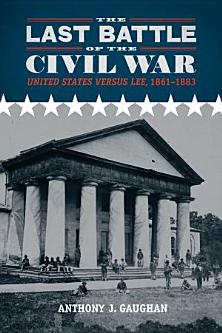
LastbattlebookYou know how we’re always saying that the provisions in the Takings Clause are “self-executing,” that even in the absence of a waiver of sovereign immunity, the Tucker Act, and section 1983, property owners would still be able to maintain a claim for compensation? Well here’s an article that explains that how that rule was first articulated, and not in a dry academic way, but with a fascinating historical story.

It’s the tale of United States v. Lee, 106 U.S. 196 (1882). We knew the land that is now Arlington National Cemetery was once owned by Robert E. Lee, but we can’t say that we gave much thought to how it became


Continue Reading Memorial Day 2025: Arlington National Cemetery And Takings