


Here’s the amici brief of the Cato Institute, the NFIB, the Center for Constitutional Jurisprudence, and the Reason Foundation in support of the petitioner/property owner in Horne v. United States Dep’t of Agriculture, No. 12-122 (cert. granted. Nov. 20, 2012).

That’s the case in which the Supreme Court is considering whether a property owner who is being targeted by the federal government for a fine may assert a takings defense, or whether the sole approach is to pay the fine and then seek compensation later in the Court of Federal Claims. We know that sounds stupid, but that’s exactly what the Ninth Circuit held a property owner must do. See Horne v. United States Dep’t of Agriculture, 673 F.3d 1071 (9th Cir. 2011). And that’s the USDA’s argument, now too.

As the brief argues:

In the government’s view, property owners who have been wrongfully ordered to pay the
Continue Reading Amicus Brief In California Raisin Takings Case: 9th Circuit Has A “Rube Goldberg” Approach To Takings

How, as an appellant, do you know you are in trouble? When an opinion starts like this, that’s how:

Although a residential subdivision proposed for construction in a bucolic Rhode Island town never saw the light of day, its ghost continues to haunt the parties. But apparitions rarely have substance, and this one is no exception. After careful consideration of the plaintiff’s complaint and the district court’s order of dismissal, we lay the ghost to rest.

The remainder of the opinion in Marek v. Rhode Island, No. 12-1460 (1st Cir. Dec. 27, 2012)  deals with whether a property owner suffered a taking when the State of Rhode Island and other parties granted a permit and approved construction by a neighboring owner of a road that allegedly encroached on the plaintiff’s land.

Among other arguments (as far as we can tell), the plaintiff raised a takings claim in federal court

Continue Reading First Circuit: Inverse Condemnation Claim In State Court An “Adequate Procedural Pathway” To Compensation

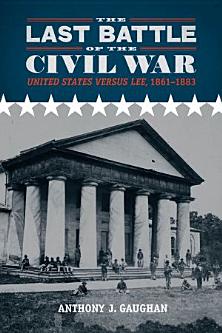
LastbattlebookYou know how we’re always saying that the provisions in the Takings Clause are “self-executing,” that even in the absence of a waiver of sovereign immunity, the Tucker Act, and section 1983, property owners would still be able to maintain a claim for compensation? Well here’s an article that explains that how that rule was first articulated, and not in a dry academic way, but with a fascinating historical story.

It’s the tale of United States v. Lee, 106 U.S. 196 (1882). We knew the land that is now Arlington National Cemetery was once owned by Robert E. Lee, but we can’t say that we gave much thought to how it became public property. We always assumed that it had simply been seized as war booty from Lee during the Civil War, and that was that.

In The Arlington Cemetery Case: A Court and a Nation Divided, 37

Continue Reading Arlington National Cemetery And The Takings Clause

Confirming yet again that the shopping mall is the focus of California culture, the California Supreme Court in Ralphs Grocery Co. v. United Food and Commerical Workers Union Local 8, No. S185544 (Dec. 27, 2012), held that a privately-owned walkway fronting a warehouse-type grocery store is a venue for the airing of grievances, even though it is not a “public forum” for speech under the California Constitution’s free speech provision. Thus, a labor union’s members have no constitutional rights to picket there. However, the court also held that the Moscone Act — a state statute prohibiting courts from issuing injunctions in labor disputes except in limited circumstances — protected union members’ (and no one else’s) rights to picket on this private property.

In other words, the grocery store owner has a right to exclude others from this property, but that right is trumped by the Moscone Act.

If

Continue Reading Cal Supremes Revisit Pruneyard, But Ignore The Takings Problem

That was quick. As we predicted (and urged), the Hawaii Supreme Court today without comment rejected the County of Maui’s application for a writ of certiorari, which asked the court to review the Intermediate Court of Appeals decision in in Leone v. County of Maui, No 29692 (June 22, 2012) (Supreme Court order here).

[Practice sidebar: Hawaii has one intermediate appellate court (so we don’t have lower court “splits,” and under Hawaii appellate procedure, the Supreme Court may “accept” or “reject” an “application” for cert based on whether the ICA “gravely erred.”]

In Leone, the ICA held that property owners alleging a Lucas regulatory taking are not required to seek an amendment to the Community Plan (in Maui County, the CP is like a General Plan in other jurisdictions) in order to ripen their takings claims. A CP amendment is a legislative act, and plaintiffs are

Continue Reading HAWSCT Rejects County’s Argument That Property Owner Must Change The Law To Ripen Takings Claim

We sure wish we could have attended the Cato Institute’s recent Constitution Day program in Washington, D.C., but here’s the next best thing, a video of the presentations on Property Rights, with a review of the recent Sackett and PPL Montana decisions by the Supreme Court, and an update about the state of property rights.

Speakers include our PLF colleague Damien Schiff, lawprof Jonathan Adler, and lawprof Ilya Somin.

We can’t embed the video, but you can watch it here on CSPAN’s site. Continue Reading From Cato Institute’s Constitution Day: Property Rights And The Supreme Court (Video)

It’s the right of homeless folks in L.A.’s “Skid Row” area to not have their personal belongings seized if they leave them unattended for a while, but we will take what we can get.

In Lavan v. City of Los Angeles, No.11-56253 (Sep. 5, 2012), the Ninth Circuit held:

We conclude that the Fourth and Fourteenth Amendments protect homeless persons from government seizure and summary destruction of their unabandoned, but momentarily unattended, personal property.

Read more below. More on the takings angle to the case from the Volokh Conspiracy.

Lavan v. City of Los Angeles, No. 11-56253 (9th Cir. Sep. 5, 2012)Continue Reading 9th Circuit Recognizes Property Rights

Florida land use and environmental law attorney Jake Cremer has posted the Brief in Opposition in Koontz v. St. Johs River Water Management Dist., No. 11-1447 (cert. petition filed May 30, 2012), the case asking whether the Nollan/Dolan nexus and proportionality tests  apply to a land-use exaction that takes the form of a government demand that a permit applicant dedicate money, services, labor, or any other type of personal property. We posted the cert petition here.

Jake writes:

The U.S. Supreme Court has not yet given much more guidance on exactions, and confusion has been the result. The Florida Supreme Court forged its own path, holding that the Nollan-Dolan test only applies to (1) exactions of real property (2) where a permit was actually issued and imposed an exaction. Consequently, in Florida, there are now relatively few restrictions on what a local government can ask

Continue Reading BIO In SCOTUS Florida Exactions Case: Fla Supremes Ruled Only Under Fla Law

On Thursday, August 2, 2012, at 3:30 p.m., as part of the ABA Annual Meeting, the ABA and the State & Local Government Law Section is sponsoring a free screening of “ Crime After Crime,” the award-winning documentary from director Yoav Potash chronicling two San Francisco Bay Area land use lawyers who volunteer to provide their services to try and help free a woman who has been imprisoned for 20 years. We saw the film last year, and loved it. It was one of the best we have seen in a while:

“Crime” and “land use lawyers” are phrases not usually heard together; in most cases, the worlds of criminal law and land use never intersect, and lawyers for developers and property owners don’t have much occasion to visit the “Attorney’s Room” at the state pen. But in the documentary film Crime After Crime, two land use lawyers including our State and Local Government Law Section colleague Nadia Costa (Vice-Chair of the Section’s Land Use Committee), plunge into that unfamiliar milieu.

In 1983, Deborah Peagler, a woman brutally abused by her boyfriend, was sentenced to 25 years-to-life for her connection to his murder. Twenty years later, as she languished in prison, a California law allowing incarcerated domestic-violence survivors to reopen their cases was passed. Enter a pair of rookie land-use attorneys convinced that with the incontrovertible evidence that existed, they could free Deborah in a matter of months.

More details on the case here. Read my complete review here. Here are the details of the screening:

Location: DePaul University College of Law, 25 E. Jackson Blvd, Chicago, Room 241.

Cost: Free.

CLE Credits: Following the screening, we will be presenting a CLE on “The Cost of Wrongful Convictions” featuring Director Potash, Nadia Costa (one of the lawyers featured in “Crime After Crime”), Craig Watkins (District Attorney, Dallas), and Emily Miller (Better Government Association, Chicago). The panel will be moderated by our SLG Section colleague Donna Frazier.

Hope you can join us if you are attending the Annual Meeting, or are just in Chicago.
Continue Reading ABA Annual Meeting, Chicago: Free Screening Of “Crime After Crime”