


Professor Richard Epstein, in his own inimitable and unequivocal style, opines on rent control and the Harmon cert petition in a Federalist Society podcast. A must-listen. Here’s the description:

In March 2011, the Second Circuit Court of Appeals issued summary judgment in Harmon v. Markus, a challenge to New York’s rent stabilization law by Mr. John Harmon, whose townhouse has been occupied for years by tenants paying rent equal to about 60% of market value. The Second Circuit ruled that “government regulation of the rental relationship does not constitute a physical taking” in light of the Supreme Court precedent, and that Mr. Harmon was therefore not entitled to just compensation. The Supreme Court has asked New York City and the tenants to file a response to the certiorari petition filed by Mr. Harmon. On this previously recorded conference call, Prof. Richard Epstein provides analysis of the case and

Continue Reading Federalist Society Podcast On New York Rent Control Takings Challenge With Professor Richard Epstein

We’ve been meaning to post this interesting and important case, but it got lost in the shuffle. Thanks to a colleague for the reminder. 

Try explaining that headline to anyone but a land use lawyer, and they would think you are a little bit crazy. What is so odd about a federal court actually exercising its core jurisdiction to consider whether a local government has violated someone’s federal constitutional rights?

As readers of this blog know, the one-two punch of Williamson County Regional Planning Commission v. Hamilton Bank of Johnson City, 473 U.S. 172 (1985), and San Remo Hotel, L.P. v. City and County of San Francisco, 545 U.S. 323 (2005), renders a federal forum for federal takings and related claims nearly impossible unless the stars align just right. In R&J Holding Co. v. Redev. Auth. of County of Montgomery, No. 10-1047 (Dec. 9, 2011), they apparently

Continue Reading There, That Wasn’t So Hard, Was It? Third Circuit Actually Lets Landowner Raise Federal Constitutional Claims In Federal Court

Here are the links to the cases and other items discussed today at the International Municipal Lawyers Association webinar with Dan Mandelker and Dwight Merriam. Most of these cases are also in your written materials.

  • South Carolina Bar’s


Continue Reading Links From Today’s IMLA Regulatory Takings Webinar

What we’re reading today:

  • Court weighs handling of suit over DOT rules for future highways – North Carolina colleague Matthew Bryant argued an appeal yesterday in the court of appeals regarding the class action-worthiness of a case in which the Dep’t of Transportation effectively blighted a huge swath of land by identifying it as a future highway, and then did nothing to acquire it. More on the appeal (Beroth Oil Co. v. North Carolina DOT) here
  • The Federalist Society’s view of the oral arguments in Filarksy v. Delia. We filed an amicus brief for the ABA supporting the petitioner in that case, which involves the availability of qualified immunity for private-practice lawyers who work for state and local governments, but whom are not employed by those entities. 


Continue Reading Thursday Round-Up

On Saturday, February 4, 2012, from 10:00 am to noon at the Sheraton New Orleans, the American Bar Association and the State & Local Government Law Section is sponsoring a free screening of “ Crime After Crime,” the award-winning documentary from director Yoav Potash. I saw the film last year, and loved it:

“Crime” and “land use lawyers” are phrases not usually heard together; in most cases, the worlds of criminal law and land use never intersect, and lawyers for developers and property owners don’t have much occasion to visit the “Attorney’s Room” at the state pen. But in the documentary film Crime After Crime, two land use lawyers including our State and Local Government Law Section colleague Nadia Costa (Vice-Chair of the Section’s Land Use Committee), plunge into that unfamiliar milieu.

Read my complete review here.Continue Reading ABA Midyear, New Orleans: Free Screening Of “Crime After Crime” (Feb. 4, 10 am)

In City of Dallas v. Stewart, No. 09-0257 (Jan. 27, 2012), the Texas Supreme Court provided a good reminder of the importance of property rights and due process, even when protecting rights may inconvenience the government. In that case, the court held that a determination by a city agency that a home was a public nuisance and should be demolished, was not entitled to preclusive effect (that’s “res judicata” to us Old Schoolers) in a subsequent takings lawsuit by the homeowner.

The facts of the case are pretty straightforward: Ms. Stewart abandoned her house and allowed it to fall into disrepair, and she ignored notices from the city. The Dallas Urban Rehabilitation Standards Board, the agency charged with enforcing the city’s zoning ordinances, concluded that the house was a public nuisance and ordered it demolished. It rejected Stewart’s request for a rehearing and obtained a judicial demolition warrant, after

Continue Reading Texas: “The protection of property rights, central to the functioning of our society, should not – indeed cannot – be charged to the same people who seek to take those rights away.”

Roxie_logoSan Francisco Bay Areans: come join us at the Roxie Theater (3117 16th Street between Valencia and Guerrero, San Francisco) tonight for screenings of Battle for Brooklyn, the Oscar-shortlisted documentary film about the Atlantic Yards eminent domain case. Two shows, 7:00 and 9:00 p.m. Details, including ticket purchase here.

I’ll be there to answer questions on the legal aspects of the film, as well as discuss its relevance to California, where redevelopment and eminent domain abuse are front page stories due to the California Supreme Court’s recent decision upholding the Legislature’s abolishment of the state’s 400+ redevelopment agencies.

Also showing is “The Tragedy of Eminent Domain: The destruction and survival of a New York City neighborhood.” This short tells the story of how a project called “Manhattantown” destroyed a historic African-American community on the Upper West Side in the 1950s. Manhattantown set the model

Continue Reading Tonight: San Francisco Screenings Of “Battle For Brooklyn” At The Roxie

Here’s the last brief in Filarksy v. Delia, No. 10-1018 (cert. granted Sep. 27, 2011), the case involving the immunities that lawyers may be entitled to claim in civil rights actions under 42 U.S.C. § 1983. We filed an amicus brief in the case on behalf of the American Bar Association. The other merits and amici briefs are posted here.

Oral argument is set for January 17, 2012.

Reply Brief for the Petitioner, Filarksy v. Delia, No. 10-1018Continue Reading Final Brief In Filarsky: A Private Lawyer Retained To Represent Government Is Entitled To Claim Qualified Immunity

Once again, our old friend and colleague Paul Schwind is following an interesting ongoing case. We’ve been tracking the “Bridge Aina Le`a” litigation, but have not had the time to digest the latest developments in a comprehensive fashion and Paul attended the recent federal court hearing in the federal phase, and has kindly provided us with the details. 

The litigation is a series of two lawsuits that originated in state court in the Third Circuit (Big Island), one an original jurisdiction civil rights lawsuit, the other an administrative appeal (that’s a writ of administrative mandate for you Californians). The State removed the civil rights lawsuit to U.S. District Court in Honolulu and promptly moved to dismiss, and this portion of the case nearly caused us to flash back to our Federal Courts class in law school, since it raised a host of procedural questions such as the

Continue Reading Guest Post: Federal Courts Flashback – Takings And Vested Rights Challenge To Land Use Commission

Harmon

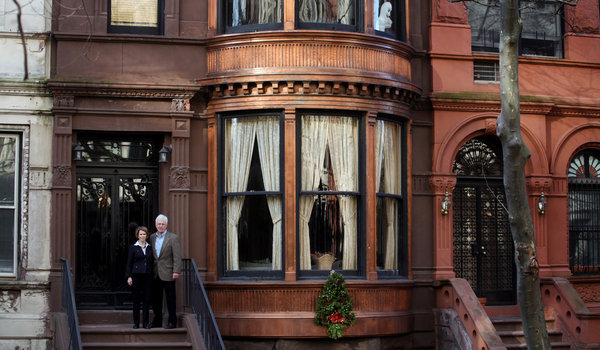
In Landlord’s Uphill Fight to Ease Rent Restrictions, The New York Times reports on the Harmon cert petition (we posted the petition and the amici briefs in that case here), a challenge to New York City’s rent control ordinance.

We won’t rehash our thoughts on the case, but wanted to point out what we thought was the most revealing passage from the Times article:

Mr. Harmon said he had appealed to his assemblywoman, Linda B. Rosenthal, a strong supporter of rent regulations. Ms. Rosenthal said Mr. Harmon had asked for an exception to rent regulations for his building, which she found untenable because it would, she said, extend to thousands of other people in “the vanishing middle class.”

“I understand he thinks he could make more money, that he is being deprived,” she said. “But I have so many constituents who would willingly trade his problems for theirs.”

Continue Reading It’s Others’ Property, You Just “Own” It*