


The Washington Post reports that “Bob Fletcher, who saved farms of interned Japanese Americans, dies at 101,” and tells one small and little-known part of America’s internent of Japanese Americans during the Second World War. 

Once the evacuation was ordered and the internments began, Fletcher “quit his job [as a state agricultural inspector] and went to work saving farms” owned by three Sacramento-area families. He worked the land, and paid the mortgages and taxes. Unlike many of their neighbors, these families’ farms were there when they were released. Many Japanese American families (including ours, on mom’s side of the family, who lost their Sacramento-area farm) lost everything when they were transported to the camps, because unlike the farms that Fletcher saved, theirs were gone when they returned, lost to squatters, the banks, or the tax man.

For more on the legal aspects of the internment, see “Unfinished
Continue Reading Losing One Of The Good Guys

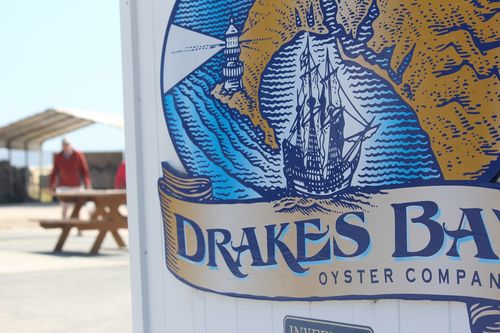
Drakes_bay_11

When we originally posted about Drake’s Bay Oyster Co. v. Salazar, No. 13-15227, an appeal now awaiting the Ninth Circuit’s ruling (oral argument video here, key briefs here), we knew further research on the issue was in order, perhaps by making a site visit. Yesterday, we had the opportunity to do just that, and ascertain for ourselves whether there’s room in the environmental community for what appears to be a pretty “green” business. As some of you know, I’ve been waylaid for the past few weeks, and it was the first day in many that I felt up to taking a field trip.

So off to Drake’s Bay it was. Following are some photos, as well as a short video showing the processing line, and a longer video with background on the issues. 

Here is our initial post on the case with the complaint, and our follow

Continue Reading A Visit To Drake’s Bay Oyster Farm, Epicenter Of A California Food Fight

Here’s the video of today’s Ninth Circuit oral arguments in Drake’s Bay Oyster Co. v. Jewell, the case about an oyster farm in Marin County’s Point Reyes National Seashore, and Interior Secretary Ken Salazar’s decision to not renew its license. The Ninth Circuit has posted the briefs of the parties and amici here.

Here’s our initial post on the case, and here’s our follow up (about one of the amicus briefs).

Here’s a plain language preview of the issues and the arguments. 

Predictions? It seems to us that two of the judges are skeptical of the farm’s arguments, and one may be inclined to agree, but there was nothing we saw on the video that would lead us to think the outcome is obvious. Continue Reading Oral Argument Video In Ninth Circuit Oyster Beef

Here’s the opinion of the California Court of Appeal (1st District) in an appeal we’ve been following, Lockaway Storage v. County of Alameda, No. A30874 (May 9, 2013), affirming that the County of Alameda is liable for a temporary regulatory taking under Penn Central, and awarding the property owners nearly three-quarters of a million in attorney fees.

The entire opinion is worth reviewing, but here’s the short story. Lockaway purchased agriculturally-zoned land in the East Bay area for use as a boat and RV storage facility, an alternate conditional use in ag-zoned land. For over a decade, the property had been used as such pursuant to a series of Conditional Use Permits. In 2000, however, the voters of the county approved an initiative which prohibited the development of storage facilties, unless approved by public vote. The ordinance contained a provision allowing “minimum development” if the prohibition would deprive

Continue Reading Cal App Affirms Penn Central Temporary Regulatory Taking

Here’s the Reply Brief in Horne v. United States Dep’t of Agriculture, No. 12-123 (cert. granted Nov. 20, 2012), the case asking whether in an enforcement action by the USDA, California raisin farmers can raise the defense that the requirement they turn over to the government a certain percentage of their yearly crop would be a taking.

The brief responds to the USDA’s brief, and argues that the issue before the Court is not “jurisdictional,” which means it could be raised any time, much like the USDA did here, even after the Ninth Circuit issued its opinion. Rather, this is a choice of remedies ripeness question subject to “forfeiture.” Barista’s note: we’re happy to see what is commonly referred to as “waiver” (a knowing and intentional relinquishment of a known right) properly labeled as “forefeiture” (relinquishment of a right by operation of law), because in civil litigation when

Continue Reading Reply Brief In California Raisin Takings Case (Argued Today): Don’t Confuse Constitutional Rights With Remedies

Yesterday, we posted our thoughts about the upcoming (March 20) Supreme Court oral arguments in Horne v. United States Dep’t of Agriculture, No. 12-123 (cert. granted Nov. 20, 2012), the case asking whether in an enforcement action by the USDA, California raisin farmers can raise the defense that the requirement they turn over to the government a certain percentage of their yearly crop would be a taking.

Here are a few more perspectives on the arguments:

  • Supreme Court will divine the legal stakes in California raisin wars – Michael Doyle at McClachy: “Dissident California raisin growers will soon get their day in the Supreme Court sun, with a case that’s juicier than it seems. Libertarians are weighing in. So, from the other side, is Sun-Maid, the largest single marketer of raisins in the world. Texas is siding with the dissidents, as is the U.S. Chamber of Commerce.Add it up


Continue Reading More California Raisin Takings Case Previews

Koontz Sets The Stage

The apparent sticking point during the January oral arguments in n Koontz v. St Johns River Water Mgmt Dist., No. 11-1447 (cert. granted Oct. 5, 2012), came to light via Justice Scalia’s questioning of the property owner’s counsel about whether anything had been “taken” when a property owner refused to accept a development permit conditioned on him paying for improvements to public land miles away from his property, because doing so would violate the unconstitutional conditions doctrine of Nollan/Dolan. For how could the owner claim that his property was taken when he didn’t accept the permit? The issue was succintly stated by Justice Kagan when she asked point-blank, “where is the taking?” (see p. 11 of the Koontz transcript).

We’re still waiting for the opinion in that case so don’t have the Court’s answer just yet, but Part II of the

Continue Reading Horne v. USDA Oral Argument Preview: Is It The Takings Clause, Or Only The Just Compensation Clause?

Undercutting the trope that the lawsuit by a Marin County, California oyster farm to keep operating is all a right-wing plot (see also this story), famed Berkeley chef and food guru Alice Waters has asked the Ninth Circuit to file an amicus brief in support of Drakes Bay Oyster Company in its appeal of the District Court’s denial of its request for a preliminary injunction. As we noted here, the Secretary of the Interior denied the Company’s efforts to renew its license for its decades-old farming operation in the Point Reyes National Seashore. The Ninth Circuit has issued an injunction pending appeal, and ordered expedited calendaring.

Joining Waters on the brief is another nearby oyster farmer (located on private land), a San Francisco restaurant, the California Farm Bureau and two county farm bureaus, and “Food Democracy Now,” “Marin Organic,” and the “Alliance For Local Sustainable Agriculture.”

Continue Reading Food Fight: Environmentalist Top Chef Supports Oyster Farmer Against Other Enviros In Ninth Circuit

Earlier, we posted the initial briefs in Big Oak Farms, Inc. v. United States, a case now pending in the Court of Federal Claims. Or, more correctly, perhaps being revived in the CFC because it was dismissed earlier.

The property owner in Big Oak Farms is seeking compensation for the flooding of its land in 2011 after the Corps of Engineers blew up a levee on the Mississippi River in order to, in the plaintiff’s words, “sacrifice Plaintiffs’ land to superimposed water, sand, and gravel in order to benefit the public diverting high water away from other personal and real properties in and around Cairo, Illinois.” Video here.

The Big Oak Farms briefs were the first briefs filed in which the parties attempted to apply the Supreme Court’s ruling in Arkansas Game and Fish Comm’n v. United States, No. 11-597 (Dec. 4, 2012). These were filed even

Continue Reading Response Briefs On Impact Of SCOTUS Flood Takings Opinion