IMG_20190608_141839_1

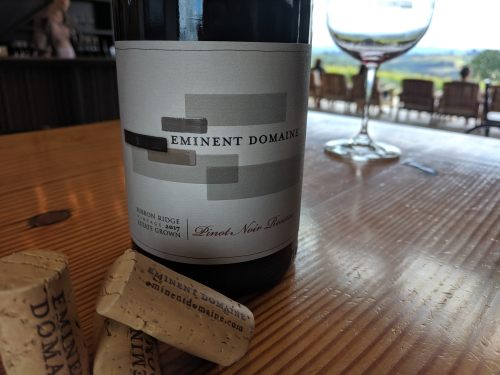
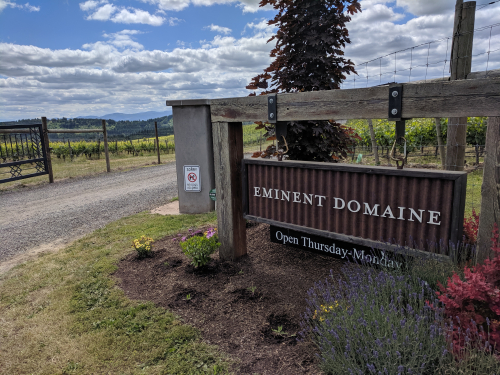
The title of this post isn’t poetic or figurative (like the windmills of your mind), it’s literal: for a field trip after the recent Oregon Eminent Domain Conference, we paid a visit to a nearby winery which — given its name, “Eminent Domaine” — we naturally could not resist. Besides, we already like their wines

The winery and estate vineyards are only a short drive from downtown Portland. Go past suburban Tigard (of Dolan v. City of Tigard infamy). Beyond the metro urban growth boundary. Avoid the guy living in an old jetliner parked in the woods.

Turn off the main road. 
IMG_20190608_160230

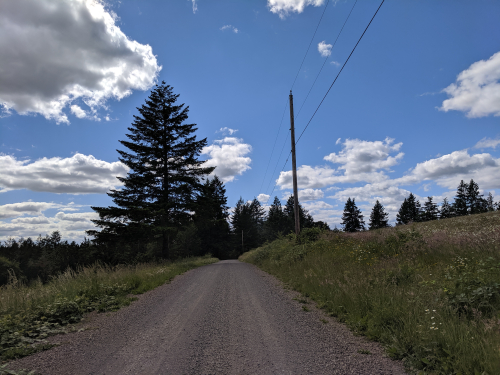
After leaving the pavement, you’ll end up on a gravel road which continues on just long enough for you to question whether you’ve perhaps strayed off the correct path. 
IMG_20190608_152129

You haven’t. You’ve just entered the Ribbon Ridge AVA, and in

Continue Reading A Detour To The Vineyards Of Eminent Domaine
The title of this post may have you wondering, especially the part about how a regulation that invites others to physically enter private property, is determined by a court to not be a physical taking. (The court also hints at looking at a physical taking under Penn Central, and not by applying per se rules.) 

At issue in the Ninth Circuit’s 2-1 opinion in Cedar Point Nursery v. Shiroma, No. 16-16321 (May 8, 2019) was a regulation adopted by California’s Agricultural Labor Relations Board which requires agricultural employees to open their land to labor union organizers. The regulation is framed as protecting the rights of ag employees to “access by union organizers to the premises of an agricultural employer for the purpose of meeting and talking with employees and soliciting their support.”

The regulation, as the Ninth Circuit majority pointed out, “is not unlimited,” and regulates the “time

Continue Reading PruneYard Undone: California’s Union Easement – Which Invites Labor Organizers To Enter Private Property – Isn’t A Physical Taking

We’re not quite sure what to make of this story (“The Raisin Situation“) in the New York Times, about the situation in Fresno, California, after the Horne case. You remember that one, don’t you? All about whether USDA’s seizure of raisins in order to maintain the price was a taking. 

The piece tackles a serious subject, the dwindling raisin market and the problems that have reverberated in Fresno (the raisin capital of the world), but like many stories about the raisin industry — Comedy Central did a report in which it described SCOTUS petitioner Marvin Horne as a “modern day Jesse James,” for example — this one is done in a tongue-in-cheek fashion (it appears in the “Style” section of the Times).

It reminds us of the 1980’s satirical miniseries “Fresno,” a comedic take on then then-popular nighttime soaps Dallas and Dynasty. 

But

Continue Reading The “2015 Supreme Court case that nearly leveled Fresno” – The Raisin Industry, Post-Horne

Nothing really can be done: the harsh reality is that CAFO’s (concentrated animal feeding operations) stink. But many state legislatures have concluded that farming and ranching are so important that the consequences (“externalities”) that naturally occur have to be accepted.

Right to Farm Acts, Indiana’s included, generally deprive neighboring property owners of their common law tort nuisance claims for the smell and noise, and other effects of having a nearby agricultural operation, often subject to certain conditions. One Indiana court summed up Right to Farm Acts as well as anyone when it noted, “so long as the human race consumes pork, someone must tolerate the smell.” Shatto v. McNulty, 509 N.E.2d 897, 900 (Ind. App. 1987). 

In Himsel v. Himsel, No. 18A-PL-645 (Apr. 22, 2019), that same court has now concluded that depriving neighboring landowners of their nuisance tort claims is not a taking. The opinion

Continue Reading Indiana’s Right To Farm Act Isn’t A Taking

Check out this recent article by lawprof Timothy Mulvaney, “Non-Enforcement Takings.” We’re used to situations in which government regulation results in a takings claim, but Professor Mulvaney asks about cases in which the government’s inaction is argued to result in a taking.

Here’s the abstract:

The non-enforcement of existing property laws is not logically separable from the issue of unfair and unjust state deprivations of property rights at which the Constitution’s Takings Clause takes aim. This Article suggests, therefore, that takings law should police allocations resulting from non-enforcement decisions on the same “fairness and justice” grounds that it polices allocations resulting from decisions to enact and enforce new regulations. Rejecting the extant majority position that state decisions not to enforce existing property laws are categorically immune from takings liability is not to advocate that persons impacted by such decisions should be automatically or even regularly entitled to

Continue Reading Takings By Government Inaction?

Emotionheader

Here’s the printable brochure with the details on the 32nd Annual Land Use Institute in Detroit, April 19-20, 2018. We’ve plugged the program before so we won’t do so again, except to say that you really should attend because (1) it’s a very good program that won’t take much of your time (fly in for the Thursday afternoon program, stay a night, fly home on Friday evening); (2) Detroit is the place to be these days; and (3) it’s one of the best deals in CLE credits, with tuition as low as $400.

2018 Land Use Institute Brochure Detroit 5 2018

Continue Reading April 19-20, 2018: Land Use Institute, Detroit (Printable Brochure)

Keepout

What better way to bid farewell to 2017 than with a whopper case from the Hawaii Supreme Court? And we’re not exaggerating — this one is really big.  

Now you might think that given the amount of time this blog devotes to property interests and property rights, we’d be downright tickled when our home court — which may not be the friendliest court in the land for property owners and property rights — goes against expectations and actually recognizes a constitutional property right. A right that, as far as we can tell, no other court, state or federal, has ever recognized.

Despite the Hawaii Supreme Court’s recognition of a property right, however, we’re not at all on board, because In re Maui Electric Co., No. SCWC-15-0000640 (Dec. 14, 2017), concluded the Sierra Club possesses a constitutional property right in a “clean and healthful environment” entitling the organization to

Continue Reading How Do You Exclude Someone From A Clean And Healthful Environment? Hawaii Supreme Court Rules The Public Has A Property Right In The Environment

In Cappel v. Nebraska Dep’t of Natural Resources, No. S-16-1037 (Dec. 22, 2017), the Nebraska Supreme Court concluded the Department’s notices to Cappel pursuant to an interstate water compact which closed off his land’s ability to draw surface water from the Republican River for irrigating his crops was neither a physical nor regulatory taking. 

As you might expect, the central takings question which the court addressed was whether Cappel’s water allocations were “property.” The court held that because the closing notice was made pursuant to the Department’s obligations under the compact, “the water rights at issue were not a compensable property interest and the Cappels’ physical taking argument must fail.” Slip op. at 454. The court also dispensed with the regulatory takings claim by applying the Penn Central test. And you know what that means. 

Here’s the money quote, which reveals the court’s essential problem with the takings claims:

Continue Reading Nebraska: No “Property” In Water Rights Subject To Interstate Compact

Here are links to the cases and materials we spoke about today during our portions of the APA’s 2017 Planning Law Review webinar:


Continue Reading Cases And Links From Today’s American Planning Association’s 2017 Planning Law Review

HSBA 2017 Land Use Conference

To supplement your written materials for the 2017 Hawaii Land Use Conference, here are the decisions and other materials which we spoke about this morning at the 2017 Hawaii Land Use Conference:  


Continue Reading Notes And Links From Today’s Hawaii Land Use Conference Session On Reg Takings