


Williamson County gives everyone grief, and if you needed any more proof, here it is.  

In A Forever Recovery, Inc. v. Township of Pennfield, No. 13-2657 (Apr. 2, 2015), an unpublished opinion from the Sixth Circuit, the court upheld the district court’s award of attorneys’ fees and costs to a property owner who brought a takings claim in Michigan state court, only to see the defendant, the Township of Pennfield, remove the case to federal court and then move to dismiss the claim six days later, asserting it was not ripe under Williamson County

The district court rightly remanded the case back to state court, and held the Township liable for fees and costs under the removal statute which shifts fees in cases where the defendant doesn’t have an “objectively reasonable basis for seeking removal.” The court held that the Township removed only to delay the case
Continue Reading 6th Cir Schadenfreude Alert: Municipality Liable For Fees And Costs For Removing Takings Claim From State Court

Have you ever read one of those opinions where each piece seems okay, but as a whole the result just doesn’t sit well? The Idaho Supreme Court’s opinion in State of Idaho, Dep’t of Transportation v. Grathol, No. 40168 (Feb. 11, 2015) is just one of those.

You’ve no doubt heard a lot about “eminent domain abuse” in the past few years, and that’s what seemed to fuel the opinion. Except here, it wasn’t abuse of the property owner by the condemnor, but rather the other way around: the overall vibe of the opinion was that the court wasn’t too pleased with the property owner’s approach. It determined the appeal was “extreme and unlikely” and assessed the property owner the attorneys’ fees and costs the government incurred on appeal.

It also concluded that the property owner may have interposed “extreme and unlikely” defenses in the trial court, even though

Continue Reading “Eminent Domain Abuse” Turnaround In Idaho: Property Owner Liable For Condemnor’s Attorneys Fees For “Extreme And Unlikely” Appeal And Defenses

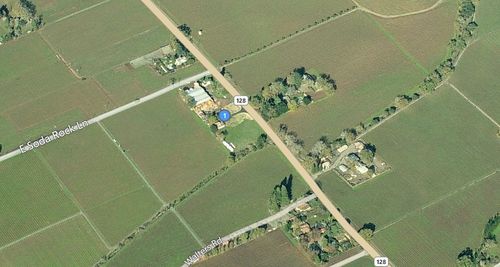
Sodarock

Beach cases from Hawaii. The South gets gator law opinions. Vermont, snow law.

To this list of “local flavor” cases, add Belle Terre Ranch, Inc. v. Wilson, No. A137217 (Jan. 13, 2015), an opinion by a California Court of Appeal resolving a boundary dispute between a Northern California winery and the owner a neighboring vineyard.

There’s a lot of discussion about old boundary descriptions, hundred year old surveys, and other stuff, but in the end the court of appeal concluded the trial court got it right when it determined that the winery did indeed encroach on the vineyard and enjoined it from future trespass. The court of appeal had no quarrel with the trial court’s assignment of $1 as nominal damages.

The interesting part of the opinion, however, is the court’s reversal of the attorneys’ fee award of $117,000. The court held that the statute which the plaintiff

Continue Reading Cal App: Award Of $1 Not Enough To Support Attorney Fee In Vineyard Boundary Dispute

Under the Montana Constitution, a property owner who prevails in a condemnation matter is entitled to an award of “necessary expenses of litigation.”

In Wohl v City of Missoula, 2014 MT 310 11-25-2014, NO. DA 14-0161 (Nov. 25, 2014), the Montana Supreme Court concluded that property owners who ultimately prevailed after two appeals were entitled in the second appeal to recover the attorneys fees they incurred during the prior appeal. 

The Dissent posits that because we rejected Landowners’ cross-appeal on their alleged civil rights violations and ruled in favor of the City on the calculation of the underlying damage award in Wohl I, this somehow mitigates against Wohls’ entitlement to attorney fees. This argument ignores the fact that Landowners plainly satisfied the requirements of § 70-30-305(2), MCA, as noted above, thus making the award of the expenses of litigation to them mandatory under the statute. The Dissent cites no authority for

Continue Reading Montana Considers Attorneys Fees In Second Appeal

St. Charles Land Co. II, LLC v. City of New Orleans, No. 14-CA-101 (Dec. 23, 2014), involved the amount of compensation in an inverse case over 8.08 acres of New Orleans land used for the extension of an airport runway. The trial court determined just compensation at $30,740.

Here’s the heart of the opinion:

Upon review of the record in its entirety, we find the trial court committed manifest error in valuing the property at issue as unimproved wetlands and canal bottom outside the levee protection system, or “wet.” The first step in valuing appropriated land is to determine the highest and best use of the property. As discussed above, the current use of the property is presumed to be the highest and best use. However, the landowner may overcome this presumption by proving a different highest and best use based on a potential future use. See Exxon Pipeline

Continue Reading La App: Wetlands Should Have Been Valued As “High And Dry”

Most of you already know that under the Fifth Amendment’s Takings Clause, the fees expended by a property owner to recover just compensation are not recoverable as part of just compensation. That has never made much sense to us, for how does a condemnor fulfill its obligation to put the property owner in as good a position pecuniarily as if her property had not been taken, if the property owner must bear the cost of obtaining just compensation when the condemnor has not offered it? As a practical matter, this alone keeps many property owners from challenging a condemnor’s offer, which results in systematic undercompensation. Some states have deemed fee shifting a requirement of their state constitutions, while others have adopted statutes that allow fee-shifting (but those are matters of legislative grace). 

South Carolina is an example of the latter, and has a statute (scroll all the way to the bottom

Continue Reading Eminent Domain, Contingency Fees, And Fee-Shifting Statutes: A “Constellation Of Factors”

Today, the Hawaii Supreme Court issued a unanimous opinion in Oahu Publications, Inc. v. Abercrombie, No. SCWC-13-0000127 (July 31, 2014).

We represent the prevailing petitioner in the case, so won’t be adding much of anything to the court’s words.But if you are interested in government records laws and the interplay between attorneys’ fee recovery and the Rules of Appellate Procedure, read on.

The court writes:

We consider whether the Intermediate Court of Appeals (ICA) erred in denying Oahu Publications’ request for appellate attorneys’ fees and costs. In brief summary, Oahu Publications filed the underlying suit against The Honorable Neil Abercrombie, in his official capacity as Governor of the State of Hawaii, under the Uniform Information Practices Act (UIPA), Hawaii Revised Statutes (HRS) Chapter 92F, seeking to obtain the list of nominees considered for a vacancy on the Hawaii Supreme Court. After the parties filed cross-motions for summary judgment, the

Continue Reading HAWSCT Clarifies Procedure For Requesting Mandatory Attorneys Fees Under Open Records Laws

A federal court authorized court-appointed counsel in a criminal prosecution to retain Marcum for forensic accounting and litigation support services. There’s a federal statute which allows for payment for these services, and if the cost exceeds $2,400, the chief judge of the regional circuit must approve. The work Marcum performed went over that amount. By a lot. As in hundreds of thousands. The submitted budget was $4.5 million. Marcum didn’t get the Fifth Circuit’s chief judge’s sign off.

When Marcum received payment of some (but not all) of its invoices from the court, it sued in the Court of Federal Claims for a taking under the Tucker Act for the difference. 

No deal, held the Federal Circuit. In Marcum LLP v. United StatesNo. 14-5001 (June 13, 2014), the court held that the CFC Tucker Act lawsuit was a collateral attack on the Fifth Circuit’s determination of the fees

Continue Reading Federal Circuit: No Tucker Act Takings Claim For Court-Appointed Counsel Fees

Hawaii, like many other jurisdictions, has an open records law. Here, we call it “UIPA” (“yoo-pah” or “wee-pah”) becuase the statute is the Uniform Information Practices Act, and not “FOIA” or “FOIL.” But in substance, it’s mostly the same as our sibling jurisdictions: government records are strongly presumed to be public documents, available to the public upon request. And like many jurisdictions, Hawaii’s UIPA contains a fee-shifting requirement which provides that a complainant who prevails in litigation is entitled to recover attorneys fees and court costs from an agency which wrongly kept documents secret. 

Last week, the Hawaii Supreme Court agreed to review a case about UIPA and the fees and costs incurred by a prevailing complainant while on appeal. Specifically, the case is about the timing of the request for appellate fees and costs. We represent the petitioner in the case, and so won’t be saying much of

Continue Reading HAWSCT To Consider Appellate Fees In Open Record Case

The Hawaii Supreme Court has been on a roll lately, giving us a series of decisions clarifying appellate procedure. So in the past couple of months, we’ve got cases about appealability, dismissing appeals for a brief not conforming to the rules, and what is a final appealable order. Good stuff for those of us who practice a lot in the appellate courts. 

Here’s the latest (and bonus for us, it’s a land use case). It addresses what remedy should be applied by a court of appeals when a case becomes moot while on appeal, and what a court should do with the appealed-from judgment: leave it in place even though it has been rendered academic, or vacate it and wipe it off the books as if it never existed at all? 

The court framed the issue and its conclusion in Goo v. Arakawa, No. SCWC-30142 (Feb.

Continue Reading How Do You Solve A Problem Like … Appellate Mootness? More Process!