


Court of Federal Claims | Federal Circuit

Thanks to Columbia lawprof Ronald Mann for forwarding his reply brief in AmeriSource Corp. v. United States, No. 08-497 (cert. petition filed Oct. 15, 2008). Responding to the arguments in the federal government’s brief in opposition, the reply argues:

The Government’s brief in opposition to the petition underscores the need for review by this Court. It declines to defend the reasoning of the court below. It offers a new rationale that is neither consistent with the reasoning of the lower court nor defensible on its own terms. Finally, despite the Government’s efforts to minimize the importance of the decision, it remains undisputed that the decision below grants the Federal Government a blank check to confiscate tangible property without any duty of compensation, from the only court in which such actions can be challenged.

Brief at 1. In AmeriSource, a pharmaceutical company whose legalprescription drugs were seizedas evidence

Continue Reading Reply Brief In AmeriSource: Is Destruction of Evidence Seized From Innocent Third Party A Taking?

Here are the links to the cases that I spoke about in my session in today’s seminar “Supreme Court, Regulatory Takings and Eminent Domain Update.”  Not all of the cases we discussed today are included below, so if you would like a link or more information about a case that is not listed, please email me at rht@hawaiilawyer.com and I will send it to you.

The majority opinion by Justice Acoba, joined by Justices Nakayama and Duffy is posted here:

We hold that (1) a landowner in a condemnationaction is entitled to damages under HRS § 101-27 where the property atissue is not finally taken in the context of a particular condemnationproceeding, irrespective of whether the government attempts to take theland through subsequent condemnation proceedings; (2) abatement doesnot apply where the relief sought in two concurrent actions is not thesame; and (3) although our courts afford substantial deference to thegovernment’s asserted public purpose for a taking in a condemnationproceeding, where there is evidence that the asserted purpose ispretextual, courts should consider a landowner’s defense of pretext. Therefore, (1) automatic denial of statutory damages under HRS §101-27in Condemnation 1 is vacated and the case remanded for a determinationof damages, (2) the court’s conclusion that Condemnation 2 was notabated by Condemnation 2 is vacated and the case remanded for adetermination of whether the public purpose asserted in Condemnation 2was pretextual.

Slip op. at 5. Here’s the concurring and dissenting opinion by Chief Justice Moon joined by Justice Levinson. The briefs in the case are available here:  Opening Brief, Answering Brief of the County of Hawaii, Reply Brief. Disclosure: we represent the property owner.

  • No private right of action to enforce zoning – The Hawaii Intermediate Court of Appeals, in Pono v. Molokai Ranch, Ltd.,119 Haw. 163, 194 P.3d 1126 (2008), held that a private party had nostanding to enforce the state’s land use laws. The Hawaii Supreme Courtrejected certiorari review of the case.  Disclosure: we represent thelandowner. More here.

Continue Reading Materials From 2/20/2009 Land Use Seminar

The Solicitor General has filed the United States’ Brief in Opposition in AmeriSource Corp. v. United States, No. 08-497 (cert. petition filed Oct. 15, 2008).

In that case, a pharmaceutical company whose legal prescription drugs were seizedas evidence against a third party by the federal government which thenlet the expiration date pass rendering the drugs worthless, sought compensation in the Court of Federal Claims. The petition presents a single Question Presented:

Whetherit is a taking compensable under the Fifth Amendment for the Government to seize (and not return) an innocent third party’s propertyfor use as evidence in a criminal prosecution, if the property is notitself contraband, is not the fruits of criminal activity, and has notbeen used in criminal activity.

The government’s brief frames the question slightly differently:

Whether the government’s seizure of personal property for use as evidence in a criminal matter effected a taking requiring just compensation under

Continue Reading Federal Government’s Brief In Opposition In AmeriSource: Is Destruction of Evidence Seized From Innocent Third Party A Taking?

Head’s up on an interesting case from the Court of Federal Claims, Resource Investments, Inc. v. United States, No. 98-419L (Court of Federal Claims, Jan. 23, 2009), a massive opinion (84 single-spaced pages) with what at first glance seems to delve into just about every regulatory takings theory known: temporary takings, categorical takings, partial takings, parcel-as-a-whole, Mahon, Penn Central, First English, Lucas, Tahoe-Sierra, Seiber, delay, and ripeness. And those are just the subjects listed on the caption.

We’re not going to digest the entire opinion here, just hit some of the highlights. The short story is that the U.S. Army Corps of Engineers wrongfully asserted jurisdiction over property in Washington state proposed to be used for a landfill, and asserted that until the owner procured a section 404 Clean Water Act permit, it could not construct the landfill. The Ninth Circuit ultimately agreed

Continue Reading CFC: Trial Needed On Whether Wrongful Assertion Of Clean Water Act Jurisdiction Is “Extraordinary Delay”

In Zaid v. United States, No. 08-020C (Jan 22, 2009), the Court of Federal Claims held that an attorney who had a one-third contingent fee arrangement with his client did not have a claim for a taking when Congress placed a 10% fee limitation in two private bills.

Attorney Zaid represented two FBI informants who infiltrated the American Communist Party and assisted the FBI for 22 years. The were promised payment but received none. After unsuccessfully representing themselves, they retained Zaid and agreed that he would take 1/3 of any recovery as his fee.

The attorney was ultimately successful, procuring from Congress two private bills to pay the informants $1 million each. A private bill is special legislation providing some benefit to a specific individual. More about private bills here. Unfortunately for the attorney, in the private bills, Congress included a provision that capped his fee at 10%

Continue Reading CFC: No Taking Of Attorney’s Contingency Fee Agreement By Congressional Limitation Of Fees

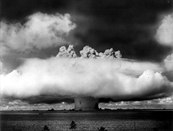
Boom How’s this for a raw deal: not only does the federal government seize both your land and your home, but it also takes your entire country with the intention of detonating multiple thermonuclear weapons where you once lived. Meaning you won’t be able to return to the homeland you loved for oh, let’s just say a very long time

Thirty years pass, and after you sue the government for a taking, it settles the dispute by entering into an agreement which creates a tribunal to settle all claims, payable from a trust fund. The trust fund, however, is woefully underfunded and could not possibly satisfy your claims and those of your compatriots (of the money in the trust fund, only 1/3 is designated to actually pay the victims; the other 2/3 is set aside to support the tribunal’s operations). Nonetheless, the tribunal awards you and your neighbors nearly $1

Continue Reading Federal Circuit To Bikini Islanders: Get In Line Behind The Auto Companies, The Banks, And Executive Bonuses

Smokey [Update: wildlandfire readers, see the bottom of the post.]

In a case we first analyzed here when the lawsuit was dismissed by the Court of Federal Claims, the U.S. Court of Appeals for the Federal Circuit in Cary v. United States, No. 2008-5022 (Jan. 16, 2009) held that the federal government was not liable in inverse condemnation for taking property damaged by Southern California wildfires in 2003.

The Federal Circuit affirmed the CFC’s judgment on the pleadings, holding that the owners of the damaged property did not allege — and could not show — that the government intended to invade a property interest when it failed to control the “Cedar Fire,” which began when “a deer hunter lost in the forest lit a signal fire to aid his rescue.” Slip op. at 2. It was a tragedy of immense proportions as fifteen people were killed, more than

Continue Reading Federal Circuit: No Taking For Forest Fire

When the case is captioned “Jerry McGuire v. United States,” and involves an inverse condemnation claim seeking compensation from the government, how could anyone resist making a reference to Jerry Maguire, the 1996 Cameron Crowe film that added “show me the money” to the lexicon?  I couldn’t, nor, apparently, could others.

In McGuire v. United States, No. 06-15812 (9th Cir. Dec. 24, 2008), the government might have to show Jerry the money, but not in a district court. The Ninth Circuit held that an inverse condemnation claim brought by McGuire against the federal government (the Bureau of Indian Affairs) for removing a bridge connecting two parcels of land that he leased from the Colorado Indian River Tribe, could only be heard in the Court of Federal Claims.

Williamson County Final Decision

After the bridge was removed, McGuire filed for bankruptcy protection, and brought

Continue Reading Show Me The Money (In The Court of Federal Claims), Williamson County Ripeness, And A Possible Circuit Split

A very important decision today from the US Court of Appeals for the Federal Circuit.  In Casitas Municipal Water District v. United States, No. 2007-5153 (Sep. 25, 2008), the court held that contractual water rights were taken when the federal government required the landowner to contruct a fish ladder and divert water in order to protect endangered steelhead trout.  The court held that the requirement resulted in a physical diversion of water for public use, and that “Casitas will never, at the end of any period of time, be able to get the water back.  The character of the government action was a physical diversion for public use — the protection of an endangered species.” Slip op. at 30. 

More to follow after a chance to review the opinion in more detail.  Continue Reading Federal Circuit: Government Diversion of Water For Fish Ladder is Per Se Taking

So the federal government tells you that the device you are making is not a “machine gun” and you go ahead and start to manufacture them.  Times change, though, and three years later “upon further review” (as they say in the NFL), the government tells you that the device is is an illegal “machine gun” and that you can’t sell it to anyone but law enforcement agencies.

In Akins v. United States, No. 08-136C (July 24, 2008), the Court of Federal Claims dismissed a claim that the government’s reversal of position amounted to a taking of property without compensation. 

The plaintiff had obtained a patent from the U.S. Patent and Trademark Office for a device to increase the rate as which a semi-automatic rifle fires.  (Go here to view the patent.)  In other words, it would make a rifle shoot faster.  The Bureau of Alcohol, Tobacco, Firearms and Explosives

Continue Reading Three Times The Pain, And Your Own Self To Blame*