


New York State Senator Bill Perkins has filed an amicus brief in Tuck-It-Away, Inc. v. New York State Urban Dev. Corp., No. 10-402 (cert. petition filed Sep. 21, 2010), the case in which upper Manhattan property owners have asked the U.S. Supreme Court to review the decision of the New York Court of Appeals in the Columbia “blight” case, Kaur v. New York State Urban Development Corp., No. 125 (June 24, 2010)

This the case in which the Court of Appeals held that de novo judicial review of the factual record leading to an exercise of the eminent domain power was improper, and whether property can be taken because it allegedly is “substandard or insanitary” is a question for taking agencies, not courts. The record in that case contains fairly convincing evidence that the proffered public use for the takings were not the actual reason, and the Appellate
Continue Reading Another Amicus Brief In Columbia Eminent Domain Case: Redevelopment Takings “[D]isproportionately impact … racial and ethnic minorities.”

The Pacific Legal Foundation has filed an amicus brief in Tuck-It-Away, Inc. v. New York State Urban Dev. Corp., No. 10-402 (cert. petition filed Sep. 21, 2010), the case in which upper Manhattan property owners have asked the U.S. Supreme Court to review the decision of the New York Court of Appeals in the Columbia “blight” case, Kaur v. New York State Urban Development Corp., No. 125 (June 24, 2010).

This is the case in which the Court of Appeals held that de novo judicial review of the factual record leading to an exercise of the eminent domain power was improper, and whether property can be taken because it allegedly is “substandard or insanitary” is a question for taking agencies, not courts. The record in that case contains fairly convincing evidence that the proffered public use for the takings were not the actual reason, and the Appellate Division

Continue Reading Amicus Brief In Columbia Eminent Domain Case: What Level Of Scrutiny Does Kelo Require?

Here are the slides that I used and links to the cases I discussed in “The Whacky and Wonderful World of Eminent Domain After Kelo.”

My presentation was entitled “Schlimmbesserung – Eminent Domain for Redevelopment.” Schlimmbesserung is one of those wonderful German compound words that have no direct translation into English, and means “worsening by improvement.” That term summed up for me how several of the more notorious efforts to use eminent domain in redevelopment efforts have fared (e.g., Poletown, Kelo). Professor Gideon Kanner recently posted some thoughts on “redevelopment blunders” here. The Owners’ Counsel of America’s blog has a summary of the seminar here.

Joining me on the panel was Andrew W. Schwartz, a partner in San Francisco’s Shute, Mihaly & Weinberger, who suggested that redevelopment was good, and that eminent domain was a necessary part of the process when market forces break

Continue Reading Materials And Links From The Webconference “Eminent Domain After Kelo”

11.LULHI Mark your calendars for January 13 and 14, 2011 for the 5th Hawaii Land Use Law Conference, to be held in Honolulu. Yes, it’s a few months away, but this is the Big One, it only comes around every two years, and you don’t want to miss it. 

The program chairs are Professor David Callies and land use attorney Ben Kudo, and they have assembled an expert and diverse faculty, including keynote speaker Professor Gideon Kanner (no stranger to readers of this blog).

  brochure

, which contains all the details and a registration form.

Here’s the program description:

The Hawai`i system of land use is complex and private land use is highly regulated. Attorneys and legal staff, planners, government officials, land owners and developers need to understand the complex federal, state and local requirements and procedures.

An expert faculty of land use practitioners, planners and regulators will explain the

Continue Reading January 13 & 14, 2011: 5th Hawaii Land Use Law Conference

On Thursday, October 21, 2010, from noon to 1:00 p.m. EDT, please tune in for the free web conference “The Whacky and Wonderful World of Eminent Domain After Kelo.”

I’m not sure I can live up to making eminent domain “whacky and wonderful,” but I will be speaking about what the Court in Kelo really decided, and how courts in the intervening five years have viewed the decision. We will be looking at cases from New York, D.C., Hawaii, and Pennsylvania, among others.

Joining me on the panel will be Andrew W. Schwartz, from San Francisco’s Shute, Mihaly & Weinberger. The session will be moderated by John Clapp, Ph.D. of the UConn Center for Real Estate, and Michele Maresca, a land use attorney at Robinson and Cole in Hartford. Here’s the description of the program:

Kelo v. City of New London has been viewed by property rights

Continue Reading 10/21/2010 Webconference: Eminent Domain After Kelo

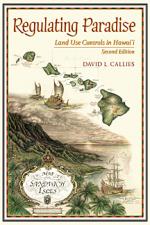
Regulatingparadise University of Hawaii lawprof David L. Callies needs no introduction to the readers of this blog. He’s one of the deans of the national and international land use bar and professoriate, but those of us who practice land use law in Hawaii consider him our special mentor (dare I say guru?) when the topic of Hawaii land use law is raised. Virtually every dirt lawyer practicing here has studied under or with him.

Those of us who consider this area of law our calling have for years looked forward to an update of Regulating Paradise, his seminal book on Hawaii’s complex and multi-layered system of land use and regulation.

Well wait no further. The University of Hawaii Press has published the second edition of Professor Callies’ essential work. Purchase your copy here (a mere $22). Here’s the Introduction.

We haven’t had an opportunity to pore through the nearly 400 pages of text (illustrated with the irreplaceable Corky Trinidad‘s editorial cartoons), so a more complete review will follow once we’ve had a chance to do so. In the meantime, voices more eminent than our own have weighed in:

“A masterful analysis of [Hawai‘i’s] land use laws.” —Daniel R. Mandelker, Stamper Professor of Law, Washington University, St. Louis

“Essential reading for all who seek to understand how land use is regulated in Hawai‘i or to apply the lessons learned there to other states.” —Dan Tarlock, Distinguished Professor of Law, Chicago-Kent College of Law

“A must-read for both neophyte and veteran legal practitioners. Callies’ in-depth and insightful explanations and commentaries on Hawai‘i’s complex land use and planning laws provide a road map for understanding the state’s multi-layered regulatory scheme.” —Benjamin A. Kudo, Ph.D.

“With this magnificent new work, and its far ranging, comprehensive analysis – from the feudal land holdings of the monarchy to regulating McMansions – Professor Callies teaches and entertains us with tales of success and failure in Hawaiian land use and development law. There are lessons here for every one of us, all across this country.” —Dwight Merriam, Robinson & Cole

If the second edition is anything like the first, Regulating Paradise will occupy an frequently-used spot on our back bookshelf. More to follow.
Continue Reading New Book: Callies, Regulating Paradise – Land Use Controls In Hawaii (2d ed. 2010)

In a case that could write the next chapter in the Kelo saga, the property owner recently filed this cert petition asking the U.S. Supreme Court to review the decision of the New York Court of Appeals in the Columbia “blight” case, Kaur v. New York State Urban Development Corp., No. 125 (June 24, 2010).

This is the case in which the Court of Appeals held that de novo judicial review of the factual record leading to an exercise of the eminent domain power was improper, and whether property can be taken because it allegedly is “substandard or insanitary” is a question for taking agencies, not courts. As we noted in several posts criticizing the decision (see here and here) and in a post lauding the Appellate Division’s decision (which struck down the taking as pretextual), “in other words, ‘blight’ is whatever the agency says it is. Just

Continue Reading Cert Petition In Columbia “Blight” Case: Are There Any Limits To Eminent Domain In New York?

We all live under the threat the government may exercise eminent domain and take our property, and must live with that cloud, unless the threat becomes more concrete. Only then can we run to court to complain about it. While the U.S. Court of Appeals for the Seventh Circuit didn’t expressly hold so, that idea underlay its decision in Rock Energy Cooperative v. Village of Rockton, No. 10-1106 (Aug. 10, 2010) (sounds like something out of “The Flintstones,” no?).

In that case, Rock Energy sought a declaratory judgment from the federal district court that the Village does not have the authority to purchase or condemn its property. We leave the details for you to review, but here is the most interesting part of the decision in our view:

We begin with Rock Energy’s eminent-domain theory. The company would like us to believe that its Alliant assets are

Continue Reading Seventh Circuit: Threat Of Eminent Domain No “Sword Of Damocles,” So Declaratory Judgment Suit Premature

This just in: the Minnesota Supreme Court has issued an opinion in a case we’ve been watching, Eagan Economic Development Authority v. U-Haul Co. of Minnesota, No. A08-767 (July 29, 2010). This is the case in which the Court of Appeals invalidated a quick-take because the redevelopment authority — which attempted to take property to “reawaken the spirit and vitality of [that] part of Eagan” (and, less soul-stirringly, to “replac[e] a market obsolete regional shopping center”) — could not condemn property without first having a binding development agreement in place. 

The Supreme Court reversed. The court held:

The Eagan Economic Development Authority is bound by the prohibitions and requirements of the “Redevelopment Plan for the Establishment of the Cedar Grove Redevelopment Project Area” it prepared, adopted, and submitted to the Eagan City Council for approval, which approval was granted.

Subsection 1-8 of the “Redevelopment Plan for the Establishment of

Continue Reading Minn Supremes: Property Can Be Taken To “Reawaken The Spirit And Vitality” Of City Without Statutory Development Agreement In Place

Here’s a round-up of reports and analysis of yesterday’s opinion by the New York Court of Appeals in the “Columbia U. blight” case, Kaur v. New York State Urban Development Corp., No. 125:


Continue Reading Friday’s Columbia “Blight” Case (Kaur) Links