


One of the bigger developments, at least in Hawaii law, came in the last week of the year. We’re talking about the Hawaii Supreme Court’s decision in County of Hawaii v. C & J Coupe Family Limited Partnership, No. 28882 (Dec. 24, 2008) (and we’re not just hailing the case because we’re the attorneys for the landowner).

Note: for those attending the Eminent Domain and Land Valuation Litigation conference, this is the case Professor Kanner mentioned in the morning session as being not reported yet.   See below for the link to the slip opinion.

The Court held that government, not property owners, bears the financial risk that a condemnation fails and, importantly, joins a number of courts in holding that the government’s proclamation that a taking is for public use is not immune from judicial inquiry. All five Justices agreed that under Haw. Rev. Stat. § 101-27(1993), the

Continue Reading 2008 Land Use In Review: Public Use And Pretext In Eminent Domain
Following up on this post, where we pointed out several errors in a headline and subheadline in a Honolulu Star-Bulletin story on the Hawaii Supreme Court’s landmark eminent domain decision in County of Hawaii v. C & J Coupe Family Limited Partnership, No. 28882 (Dec. 24, 2008), the Star-Bulletin has posted corrections and clarifications, here:

» A lawsuit remains active by members of the Coupe family in Kona,seeking to block county condemnation of part of their land for ahighway near the Hokulia development. A Page 4 headline in the Hawaiisection Saturday said the suit was dismissed by the state SupremeCourt. Also, future hearings on the case will not involve ethicalallegations, as was stated in a subheadline on the same story.

While still not 100% accurate — the County of Hawaii instituted the lawsuits against the property owners, not the other way around — it’s heartening to see

Continue Reading Thank You, Star-Bulletin: Corrections And Clarifications

I usually try to not take too seriously the headlines attached to a newspaper story or op-ed. After all, an editor — and not the reporter or op-ed author — may have written the headline, and it may be designed to grab a reader’s attention or focus on a part of the story the editor thinks important. 

But a headline should at least be in the ballpark, factually. 

However, after reading the headline in a Honolulu Star-Bulletin story on the recent Hawaii Supreme Court decision in the Kona bypass condemnations, “Suit to block highway is dismissed” I was left wondering whether there was another case going on over the Hokulia road that I didn’t know about.  Turns out no, there’s just the two, the headline just got it very, very wrong.   

First, the facts. On December 24, 2008, in County of Hawaii v. C & J Coupe

Continue Reading Headline On Kona Condemnation Cases – Not In The Ballpark

Bulldozed_home Thanks to Alan Ackerman for alerting us to the latest horrible development in the eminent domain cases out of Freeport, Texas.  Recall that in Western Seafood Co. v. United States,No 04-41196 (5th Cir., Oct. 11, 2006), the court held that aprivate-to-private transfer for economic development that wasaccomplished as part of a “carefully considered development plan”passed muster.

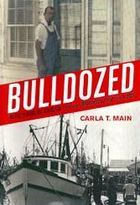
That wasn’t the end of the story, since Carla T. Main authored a fantastic book about the case and the Gore family, whose property was taken.  We reviewed “Bulldozed: ‘Kelo,’ Eminent Domain, and the American Lust for LandhereAnd we weren’t the only ones who liked it.

Now, according to this report, Ms. Main has been sued for defamation by the developer who was the subject of Bulldozed.  Also included in the suit is University of Chicago law professor and eminent domain scholar Richard Epstein

Continue Reading “No, I’m Spartacus!”

I don’t pretend to be an expert on the California Environmental Quality Act — 1700-page treatises are devoted to CEQA’s nuances — but I know enough to realize that the California Supreme Court’s decision in Save Tara v. City of West Hollywood, No. S151402 (Oct. 30, 3008) is an important one. The court framed the issue:

Under the California Environmental Quality Act (CEQA) (Pub. Resources Code, § 21000 et seq.),1 a public agency must prepare an environmental impact report (EIR) on any project the agency proposes to “carry out or approve” if that project may have significant environmental effects (§§ 21100, subd. (a), 21151, subd. (a)). We address in this case the question whether and under what circumstances an agency’s agreement allowing private development, conditioned on future compliance with CEQA, constitutes approval of the project within the meaning of sections 21100 and 21151. We conclude that under some circumstances

Continue Reading When Considering The Environmental Impacts of Tara, Tomorrow is Not Another Day

A worthwhile article in the latest edition of The Urban Lawyer about settling land use disputes with processes that may not adhere strictly to the usual permit consideration procedures.  Here’s the summary from the ABA’s site:

Paul D. Wilson, Of Synagogues and Nude Juice Bars: Can a Municipality Settle Land Use Litigation Without a Permitting Process?, 40 Urb. Law. 535 (Summer 2008).This article examines conditional use permits and the appropriatenessof settlement agreements between municipalities and controversialzoning permit applicants. The author examines a recent ninth courtdecision, League of Residential Neighborhood Advocates v. City of LosAngeles, in which the court struck down a settlement agreement betweena city and an Orthodox Jewish synagogue wishing to locate in aresidential zone, finding that the settlement was not a substitute fora conditional use-permit. The author then examines several analogouscases which present variations of the issue and possible solutions formunicipalities.

The Urban Lawyer is

Continue Reading Settling Land Use Litigation: Private Agreements and Public Process

West Hawaii Today reports on yesterday’s oral arguments in the Supreme Court of Hawaii in County of Hawaii v. Richards, the appeal from two eminent domain actions on the Big Island of Hawaii.   [Disclosure: my Damon Key colleagues Ken Kupchak, Mark Murakami, and Christi-Anne Kudo Chock and I represent the property owners.]

“These arguments are not about a road. They’re about the law,” said Robert Thomas, an attorney for the trust. “Thegovernment in cases of eminent domain has a huge advantage. It createsthe facts. … If they lose, they’re not prohibited from trying againand again and again.”

. . . .

Hawaii County lost its first condemnationlawsuit when a Circuit Court judge found the condemnation served moreof a private purpose for Oceanside than a public purpose, as isrequired before government can take land by force. The county, under anew County Council, amended its condemnation plan, adding another

Continue Reading Oral Arguments in Kona Eminent Domain Abuse Appeals: Damages for Failed Condemnations, Abatement, and Pretext

You have to wait until the government enacts a lousy law before you can run to court to challenge it.

That’s the lesson from Stonehouse Homes v. City of Sierra Madre, No. B195552 (Oct. 9, 2008), in which California’s Second District Court of Appeals held that a lawsuit challenging the city’s “moratorium resolution” was not ripe for judicial review.  In the moratorium resolution, the city stated it was considering amending an existing zoning ordinance regarding minimum lot sizes in the city’s “Hillside Management Zone.”  The city is “located in the steep hillsides of the San Gabriel Mountains northeast of Pasadena.”  Slip op. at 2. 

The complaint alleged the moratorium resolution violated the plaintiff’s due process rights, among other issues.  The city demurred because the resolution was not a law, but rather was a notice of a potential change in the city’s zoning code.  Slip op. at 5.  The trial

Continue Reading California Court of Appeals: Development Moratorium Challenge Not Ripe

The Supreme Court of Hawaii has scheduled oral arguments in County of Hawaii v. Richards,No. 28882, the consolidated appeal from two eminent domain lawsuitsfiled by the County in 2000 and 2005.  The issues in the case include:

  • application of Haw. Rev. Stat. § 101-27(1993), the statute that provides that the government must make aproperty owner whole and pay damages when an attempt to take propertyby eminent domain is discontinued or dismissed
  • whether the government may concurrently prosecute more than one condemnation lawsuit to take the same property, at the same time
  • the standards for demonstrating that the government’s claim of public use is pretext to hide private benefit

The briefs are posted here, and a summary of the case and the trial court’s findings are here.  The argument will be held on Thursday, October 16, 2008, at 9:00 a.m. in the Supreme Court courtroom at the Continue Reading Oral Argument Scheduled in Kona Eminent Domain Appeals: Damages for Failed Condemnations, Abatement, and Pretext