


In Klemm v. American Transmission Co., No. 2009AP2784 (Aug. 10, 2010), the Wisconsin Court of Appeals held that in order to obtain litigation expenses under a state statute which provides that a property owner may recover expenses if a condemnation award exceeds the “jurisdictional offer” by at least $700 and at least 15%, there must be a “jurisdictional offer” made. Seems simple enough, right?

The property owner and the trial court didn’t think so, and here’s why: ATC wanted to place an electricity transmission line across the Klemm’s land. Rather than fight the taking, the Klemms “agreed to the $7,750 compensation ATC offered in negotiations, with the understanding they had the right to appeal the amount.” Slip op. at 1. They did, and the condemnation commission awarded them $10,000. They asked for, and were awarded, litigation expenses pursuant to a statute which provides that litigation expenses shall be awarded
Continue Reading Wisconsin App: When Statute Requires “Jurisdictional Offer” As Prerequisite To An Award Of Expenses, You Must Have A Jurisdictional Offer

Mark you calendars: from August 25-28, 2010 in Santa Fe, New Mexico, ALI-ABA is putting on the annual program, Land Use Institute: Planning, Regulation, Litigation, Eminent Domain, and Compensation.

We won’t be able to attend this year, but we have in the past, and the program and the faculty is first-rate. Go here for details, agenda, faculty list, and registration information. Continue Reading Land Use Institute – ALI-ABA Program – Aug. 25, 2010, Santa Fe

Mark you calendars: from August 25-28, 2010 in Santa Fe, New Mexico, ALI-ABA is putting on the annual program, Land Use Institute: Planning, Regulation, Litigation, Eminent Domain, and Compensation.

We won’t be able to attend this year, but we have in the past, and the program and the faculty is first-rate. Go here for details, agenda, faculty list, and registration information. Continue Reading Land Use Institute – ALI-ABA Program – Aug. 25, 2010, Santa Fe

This just in: the Minnesota Supreme Court has issued an opinion in a case we’ve been watching, Eagan Economic Development Authority v. U-Haul Co. of Minnesota, No. A08-767 (July 29, 2010). This is the case in which the Court of Appeals invalidated a quick-take because the redevelopment authority — which attempted to take property to “reawaken the spirit and vitality of [that] part of Eagan” (and, less soul-stirringly, to “replac[e] a market obsolete regional shopping center”) — could not condemn property without first having a binding development agreement in place. 

The Supreme Court reversed. The court held:

The Eagan Economic Development Authority is bound by the prohibitions and requirements of the “Redevelopment Plan for the Establishment of the Cedar Grove Redevelopment Project Area” it prepared, adopted, and submitted to the Eagan City Council for approval, which approval was granted.

Subsection 1-8 of the “Redevelopment Plan for the Establishment of

Continue Reading Minn Supremes: Property Can Be Taken To “Reawaken The Spirit And Vitality” Of City Without Statutory Development Agreement In Place

There are a host of issues in DSG Evergreen v Town of Perry, No. 2009AP727 (Wis. Ct. App. July 22, 2010) (the appellant raised seven grounds for appeal in this condemnation case), but this is the one that caught our eye. The property owner claimed that the town could not condemn its 1.5 acre parcel because it would create a lot that violated the county’s minimum lot size for agriculture-exclusive parcels. Under the county land use ordinance, unless an ag parcel fronts a public road, it must be at least 35 acres. See slip op. at 12. The court held that yes, the parcel did fall below the 35-acre minimum size because it did not front a public road, but that it was the property owner who created the problem with it “swapped property with its neighbor after the appraisal.” Id. at 13. Thus, the court concluded, the

Continue Reading Wisconsin Ct App: Property Owner’s “Check” Is Subject To Town’s Condemnation “Checkmate”

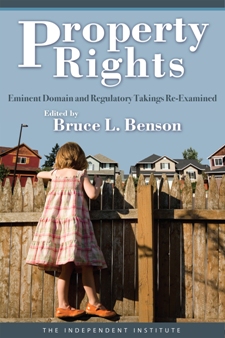
Property_1800 I recently picked up a copy of Property Rights – Eminent Domain and Regulatory Takings Re-Examined (Bruce L. Benson, ed., Independent Institute 2010), available on-line here.

At 299 pages and with 13 entries, I haven’t had a chance to read the whole thing yet. But after an initial skim, a few of the chapters stand out: Steven Eagle on Assembling Land for Urban Development – The Case for Owner Participation, Ilya Somin on The Limits of Backlash – Assessing the Political Response to Kelo, and Scott Bullock on The Inadequacy of the Planning Process for Protecting Property Owners From the Abuse of Eminent Domain for Private Development

We will post more as we get further into the book, but for now, here’s the publisher’s summary: 

The U.S. Supreme Court decision, Kelo v. New London, has become a dramatic focal point for the broad use of eminent

Continue Reading New Book: Property Rights – Eminent Domain and Regulatory Takings Re-Examined (2010)

We have no idea what these cases might be about, or whether there is any substance behind the property owners’ objections, but these are headlines no condemnor could possibly like:

  • Bedford County Widow Sued (via wjactv.com) – “A Bedford County widow is being sued for trying to keep Columbia Gas Transmission off her property. The Texas-based company is using eminent domain to gain access to 67-year-old Mary Ellen McConnell’s 125-acre farm.”
  • Granny Vows To Fight For House (via wyff4.com) – “On the other side of Stenhouse Rd, 85-year-old Juanita Sullivan worries about eminent domain.”

Might as well say they’re trying to take property from cute, fluffy kittens.


Continue Reading Headlines No Condemnor Likes To See

A rule of law set out over 100 years ago and which remains (as we say) good law qualifies as “well-established” by any standard. Village of Norwood v. Baker, 172 U.S. 269 (1898) set forth the rule that a special assessment for municipal improvements is only constitutional if the improvements result in the property being assessed enjoying special benefits, and then only to the extent of the benefit. If the benefits are merely those which inure to the public at large, or if the assessment exceeds the benefit conferred, the assessment is invalid.

Think of it as an “anti-givings” requirement: the cost of public benefits get absorbed by the public as a whole, but if property gets some benefit over and beyond those public benefits, it is fair to ask the property owner to pay. Otherwise, it’s a no-go.

In Hubbard v. City of Pierre, No. 25312-a-JKM (June

Continue Reading Curb Appeal In South Dakota: No Special Benefit To Property Means That Special Assessment Is A Taking

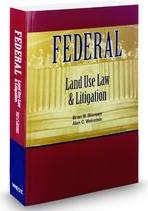
P13513986-160025L I’ve just received my copy of the 2010 revision of Federal Land Use Law & Litigation by Brian W. Blaesser and Alan C. Weinstein (West, $225).

Here’s the description of the book from West’s site:

Examines all federal, constitutional, and statutory limitations on local land use controls, discussing cases, regulations, liability, defense strategies, doctrines, and antitrust restrictions. Comprehensively reviews Supreme Court and lower federal court decisions that consider the constitutionality of land use regulations. Discusses complicated free speech issues affected by federal land use law, and municipalities exercising home rule powers. Examines issues such as: constitutional and statutory limits, First Amendment limitations on land use controls, federal remedies and attorney’s fees, liability and immunity issues, litigation guidelines, zoning, subdivision controls, growth management, model complaints, and selected constitutional and statutory decisions.

Federal Land Use Law & Litigation is an eminently useful single-volume research and reference guide. It’s well-organized, and although it

Continue Reading Book Review: Federal Land Use Law and Litigation, 2010 edition

Two unreported opinions arising out of cases from New Jersey. We won’t be reviewing them  (they are not precedential after all), but you may want to check them out if you are interested in public use and redevelopment (case #1), or inverse condemnation by permit denial (case #2):

  • RLR Investments, LLC v. Town of Kearny, No 09-3100 (3d Cir., July 2, 2010) (“This appeal is centered on the “public use” requirement for the governmental taking of private property. The appeal presents a number of overlapping and interrelated claims set out in a ten count complaint. We conclude that the District Court’s judgment in favor of the governmental entry should be affirmed.”).


Continue Reading New Jersey Monday