The New York Appellate Division’s opinion in Huntley Power, LLC v. Town of Tonawanda, No. 22-011460 (June 9, 2023), is typically short (6 pages, including a dissent).

The town instituted eminent domain proceedings to take Huntley’s riverfront property, including an electric plant decommissioned in 2016, and water intake structures. The asserted public use is “revitalizing and redeveloping the former industrial property, which was a blight on the Town, and maintaining the critical raw water supply to significant industrial employers in the Town[.]” Slip op. at 2.

That was enough for the court to “reject reject petitioner’s contention that the condemnation will not serve a public use, benefit, or purpose[.]” Id. Rational basis, and so forth.

Nor was the condemnation “excessive,” because it allegedly took more than it needed.” There’s no obvious abuse — or at least any abuse that would qualify as an abuse of discretion. Slip op. at

Continue Reading NY App Div: OK To Condemn Blighted Property To Sell To Private Developer
Before you get too excited by the headline and think this is a Kelo issue, a word of caution: this short one from the Oklahoma Supreme Court is on a really niche topic: private condemnations that permit the private owner of property to institute a private-benefit taking to force a neighbor to sell an interest in its property if doing so is necessary

Childers v. Arrowood, No. 119815 (June 20, 2023), involved whether it is proper under Oklahoma’s private taking statute for the owner of property that isn’t landlocked and can physically access the outside world but has no utility service, to condemn an easement over an adjacent parcel to obtain such service.

Until 2008, Childers’ property was landlocked. But their predecessor-in-title secured an express access easement from the owner of the neighboring property, solving that problem. But then new owners bought the dominant parcel, and want to

Continue Reading Oklahoma: Private Necessity Takings Are OK, And Don’t Require A Public Use Or Purpose

At first, the Iowa Supreme Court’s opinion in Juckette v. Iowa Utilities Board, No. 21-1788 (June 16, 2023) looks like a promising read. The issue — is a utility expanding its use of an express road easement to install electric lines a taking? — is one that we’ve been following.

But by the time you get to the end of the short opinion (10 pages), you realize the court didn’t decide much, other than yeah, the utility has the statutory authority to use the easement this way. The court can’t reach a decision on whether that’s a taking for public use. Not because there’s some problem with the case or the way it was presented, but because one of the Justices on the seven-member court sat it out and the remaining six couldn’t agree. Affirmed by an equally divided court, 3-3. 

This apparently is not that unusual in

Continue Reading Iowa Supreme Court Can’t Decide Much Of Anything In Power To Take Challenge

Magna_Carta_(British_Library_Cotton_MS_Augustus_II.106)

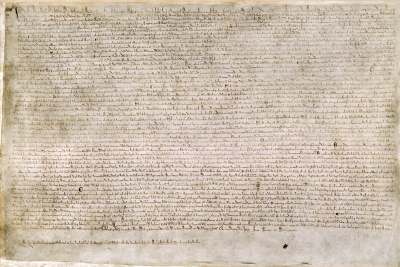
808 years ago today* on a grassy plain down by the river, the barons convinced bad King John to affix his seal to Magna Carta. Or the Magna Carta. Or Magna Charta. However you want to grammarize it. (And no, he didn’t “sign” it, they didn’t do things like that back then.)

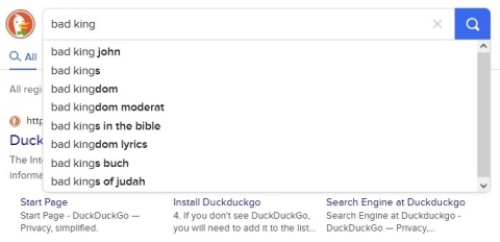
And boy was that guy bad even by the standards of medieval royals: when you type “bad king…” in your search engine, the first suggested search is “bad king … John.”

Badkingjohn

There’s a lot of good stuff in Magna Carta — and a lot of stuff that has been rendered irrelevant or quaint by the passage of time, and even some stuff that we’d consider cringe-worthy today (see art. 10, for example).

But we takings geeks all know and continue to appreciate article 28:

Nullus enarius aries, vel alius ballivus noster, capiat enar vel

Continue Reading Happy 808th (The) Magna Carta (Charta) Day!

Here’s what we’re reading this Tuesday:

Worth checking Continue Reading Tuesday Round-Up: Sackett, Tyler, Defending Zoning, Canada Property Rights … And More

Missed our law firm colleagues Jeff McCoy, Damien Schiff, and Christina Martin when they were live, talking about their SCOTUS wins in Wilkins v. United States (is the statute of limitations in federal Quiet Title Act cases a jurisdictional bar?), Sackett v. E.P.A. (scope of Clean Water Act wetlands jurisdiction), and Tyler v. Hennepin County (government’s keeping the excess value when seizing and selling a home to satisfy a property tax debt is a taking)?

We recorded it, so you can watch and listen at your leisure.

This is more than just a victory lap, the advocates offer their thoughts on the implications of the wins, and what might be next.

Bon appétit.Continue Reading ICYMI: “Property Rights Hat-Trick: Breaking Down PLF’s Supreme Court Victories” (vid)

Rindge

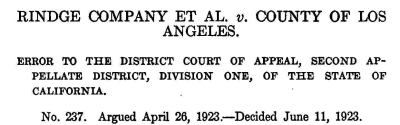
Continuing in our line of posts noting milestones in dirt law, we bring you Rindge Co. v. County of Los Angeles, 262 U.S. 700 (1923), decided 100 years ago today.

For any of you who have driven the Pacific Coast Highway through Malibu, you will know the site of this eminent domain case. As described by the Supreme Court in its opinion:

The plaintiffs in error are the owners of a large tract of land lying on the shore of the Pacific Ocean, known as the Malibu Ranch, extending in an easterly and westerly direction about twenty-two miles and varying in width from one-half mile to one and one-half miles. It lies at the base of a high and rugged mountain range which parallels the shore at a distance of from three to four miles, its northern line extending along the slope and foothills of this mountain

Continue Reading Has Not Aged Well – SCOTUS, June 11, 1923: “The necessity for appropriating private property for public use is not a judicial question.”

History of ED Event

Mark your calendars to join us on Wednesday, June 7, 2023 at 5pm Eastern Time, as the Eminent & Right of Way Club welcomes Professor Greg Jackson, host of the History That Doesn’t Suck Podcast.

We’re going to have a discussion about the history of eminent domain, what zoning looked like in the 19th Century, and if the Founders planned for the infrastructure we have today.

RSVP for this Lounge Event on the App (register for the (free) Clubhouse App here).

What’s this “Clubhouse” thing, you ask? More here on that. Come, join us!Continue Reading Upcoming Event: “The History [That Doesn’t Suck] of Eminent Domain” (Wed, June 7, 5pm ET – Free!)

Here’s the latest in a case we’ve been following since before it became one of ours.

In Gearing v. City of Half Moon Bay, No. 21-16688 (Dec. 8, 2022), the Ninth Circuit upheld the district court’s dismissal of a regulatory takings case, holding that federal courts should abstain from considering regulatory takings cases in favor of pending state court eminent domain actions, even when the condemnor instituted the state court action after the federal takings lawsuit was filed.

In the time since the Ninth Circuit issued the opinion, our law firm has joined up with our colleague Kristen Renfro who represented the owner in the court of appeals. That’s why we won’t be commenting further, and instead suggest you read the cert petition we filed today, chiefly authored by Counsel of Record Deborah LaFetra (lately of the Tyler v. Hennepin County takings case)

Here is the Question

Continue Reading New Takings Cert Petition (Ours): Can Govt Thwart Federal Court Regulatory Takings Claims By Seeking Abstention In Favor Of State Courts?

Here are what others are saying about Supreme Court’s recent ruling in Tyler v. Hennepin County, No. 22-166 (U.S. May 25, 2023), the case in which the Court unanimously held that the county’s keeping the excess equity in Ms. Tyler’s home over what she owed in property taxes and fees is an uncompensated taking of private property.

  • As usual, lawprof Ilya Somin was first out of the gate with “Major Unanimous Supreme Court Victory for Property Rights in Tyler v. Hennepin County” (“While the Supreme Court decision left some notable issues unresolved, it nonetheless sets a significant precedent. Most obviously, the jurisdictions that currently authorize home equity theft—some twelve states and the District of Columbia—will no longer be allowed to do so. In addition, the holding that states cannot just redefine property rights at will has important implications for other property rights issues. It makes it harder


Continue Reading Tyler Takings Round-Up