A very short (3 pages) opinion from the U.S. Court of Appeals for the Fifth Circuit in a takings case. In Bay Point Properties, Inc. v. Mississippi Trans. Comm’n, No. 18-60674 (Aug. 27, 2019), the court somewhat cryptically concluded that a property owner who asserted that it was not fully compensated in state court inverse condemnation case, could not then sue the state DOT in federal court for the difference.

If this case sounds somewhat familiar to you, it does to us also. We were counsel for the property owner on the cert petition which the opinion mentions. See slip op. at 2 (“So the property owner, after losing on appeal in state court and unsuccessfully seeking certiorari in the U.S. Supreme Court…”). 

Read the opinion. There’s not a whole lot there, except the court concluding that yes, Eleventh Amendment immunity prevents a state from being sued in
Continue Reading CA5: Even After Knick, You Still Can’t Sue A State In Federal Court For Money For A Taking

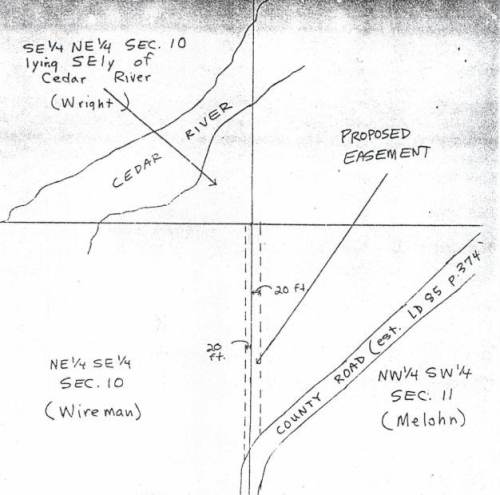
181437_RAGSDALE_v_WIREMAN_2151A2F856C99

Here’s an interesting twist on the process which, in some states, recognizes the ability of one private owner to condemn the property of a neighbor. Most often this arises when a landlocked parcel exercises eminent domain to take the property of a neighbor for access.

It always struck us a little odd that the sovereign power to take property for the public use or a public purpose can be used by private party A to involuntarily acquire the private property of B. These statutes operate somewhat like common law easements by necessity, so we never gave them that much thought. But over the years, we’ve seen some interesting cases from Pennsylvania (private takings still must serve a public purpose) and Colorado (condemning owner must have concrete development plans), for example. 

The unusual twist in the Iowa Court of Appeals’ opinion in Ragsdale v. Wireman, No. 18-1437 (Aug. 21, 2019)

Continue Reading “Private” Condemnors: Be Careful What You Wish For (You Might Just Get It)

Here’s the Brief in Opposition in a case (and issue) we’ve been tracking for a while (including filing several amicus briefs along the way, including this one). The BIO is the pipeline’s response to the cert petition on the question of whether  

Brief in Opposition to Petition for Writ of Certiorari, Givens v. Mountain Valley Pipeline, LLC, No. 19-54…

Continue Reading BIO In Pipeline Quick-Take-By-Injunction Case: The Injunction Is Correct, And It Is Too Late To Do Anything About It Because We’re Already Building

ALI Nashville 2020

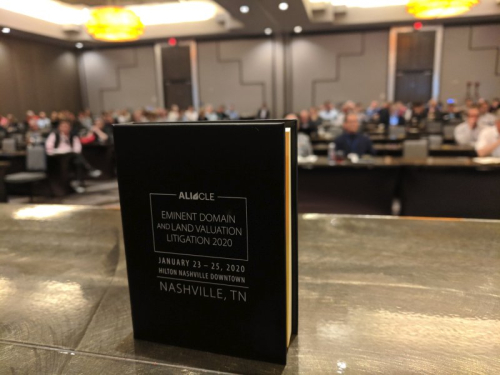
The final agenda and faculty list will soon be officially published, but we wanted to give you a preview of what is in store at the ALI-CLE Eminent Domain and Land Valuation Litigation Conference, January 23-25, 2020, at the Nashville Hilton (downtown, just a few steps away from everything that Nashville has to offer). 

Don’t miss out: in recent years, we’ve been at-or-near capacity, and the conference hotel has even sold out a couple of times. Visit the ALI-CLE website to register and hold your space

Here are some of the things we’ll be discussing: 

  • Making Sense of the New Rules After Knick v. Township of Scott: Where Do I Go, What Do I Do?
  • The Missing Link in Valuing Fixtures
  • When a River Runs Through it: Water Rights and Takings
  • Responding to Project Changes: Valuation When Government Action is Ongoing
  • Property Rights as Civil Rights: Seeking Justice Through


Continue Reading Get Ready: The 2020 ALI-CLE Eminent Domain And Land Valuation Litigation Conference Agenda Coming Soon

Here’s what we are reading this Tuesday:


Continue Reading Tuesday Takings Round-Up: Alien Takings; Zombies; Kelo, Philippines-Style; Kafka

20180823_102346_HDR

We’re about to get underway with the fall semester at William and Mary Law School, where we’re again teaching an upper-division course, Eminent Domain and Property Rights

We’ve more than doubled the size of last year’s enrollment, so it looks like the word is getting out. We cover not only eminent domain and just compensation, but takings (yes, we have a lot of new materials to cover there), civil forfeiture, a small bit of crossover with land use, local government, and related, property rights as civil rights, how property law is discussed in the public sphere, due process, and how to lawyer up these cases. And in early October, the opportunity to have some of the nation’s best property law scholars “guest lecture” during the Brigham-Kanner Property Rights Conference. Here’s the official description:

Property rights and the sovereign’s power of eminent domain have been essential components of

Continue Reading Law 608: Eminent Domain And Property Rights – Season 2

Quot

Don’t worry, you didn’t miss the U.S. Supreme Court issuing a major eminent domain case. Today’s post is about a decidedly older decision, Danforth v. United States, 308 U.S. 271 (1939). 

The reason we’re posting this decision now, eighty years after it was issued, is that a colleague recently passed on a note with a cite to the case. So we dusted off the opinion and read it (again). And when we did, this quote stuck out:

“Condemnation is a means by which the sovereign may find out what any piece of property will cost.”

Id. at 284.

The case involved a straight taking (not quick take). The question was when the “taking” actually takes place in such a case, and whether interest is due if the condemnor pays 100% of the adjudicated compensation when it is owed. The Court held:

Unless a taking has occurred previously in actuality

Continue Reading “Condemnation is a means by which the sovereign may find out what any piece of property will cost.”

Here is the motion asking the Hawaii Supreme Court for leave to file an amicus curiae brief (and the proposed brief) we filed earlier today in a case we’ve been following

The question is the applicable statute of limitations for regulatory takings claims under the Hawaii Constitution’s “takings or damagings” clause. The case started out in a Hawaii state court, was removed to the U.S. District Court by the State Land Use Commission. The district court dismissed the state takings claim under the statute of limitations. 

Hawaii has not adopted a statute of limitations expressly for takings or inverse condemnation claims. Thus, the question is what is the closest analogue claim. If there isn’t one, Hawaii has a “catch all” statute (six years) for civil claims. When the case reached the Ninth Circuit, that court certified the state law question limitations to the Hawaii Supreme Court. 

Our brief argues the

Continue Reading Amicus Brief: State Takings Claims Are Constitutional (Not Torts); Adverse Possession Statute Of Limitations Is Nearest Analogue

Here’s the amici brief we’re filing today on behalf of the Owners’ Counsel of America, New Jersey property owners subject to natural gas pipeline takings, the Institute for Justice, and the Cato Institute, in support of a cert petition which is challenging the federal courts of appeals which have upheld giving prejudgment possession of property to a private pipeline condemnor once a district has ruled in favor of the pipeline that it qualifies under the three predicates in the Natural Gas Act, 15 U.S.C. § 717f(h).

The issue is one we’ve covered before (in our amicus in support of an earlier petition on the same issue), but there are some new twists which make this case especially ripe for SCOTUS review. 

First, this isn’t some isolated problem, but of nationwide concern. This is at least the third cert petition recently on this subject. The problem isn’t going away.

Continue Reading New SCOTUS Amici Brief (OCA, NJ Prop Owners, IJ, Cato): Quick-Take-By-Injunction Scheme Shows Complete Lack Of Respect For The Law