The Pennsylvania eminent domain code requires a condemnor to file the declaration of taking within a year of its being authorized:

The condemnor shall file within one year of the action authorizing the declaration of taking a declaration of taking covering all properties included in the authorization not otherwise acquired by the condemnor within this time.

26 Pa. Consol. Stat. § 302(e). Condemning agency gets authorization, and it has a year to file the declaration of taking. We’re not Pennsylvania lawyers, but the cues are there: “shall,” “within one year,” and the like. Seems simple enough. 

Not so fast, according to the Pennsylvania Commonwealth Court. In In re Condemnation of Right-of-Way for State Route 0095, Section BSR, No. 1308 CD 2014 (Jan. 29, 2016), the court held that a condemnor can take pretty much as long as it wants, provided it “reauthorizes” the taking before the one-year time
Continue Reading Pennsylvania Condemnors: You Can Keep Property Owners Hanging On Indefinitely, Despite The One-Year Statutory Clock

Here’s what we’re reading today:


Continue Reading Tuesday Round-Up: Inversely Condemning Flint, “Well Nigh Conclusive?,” Parcel-As-A-Whole

As you probably are aware, Kelo v. City of New London has generated a ton of legal response: articles, books, cases. It has also rippled out to the broader culture with a movie and a book. At the recent ALI-CLE Eminent Domain conference, for example, we interviewed the producer of “Little Pink House,” the forthcoming feature film about the case. (We’ll share some soundbites from the interview soon, once we edit the podcast.) 

And now, music. A Connecticut group called “Swamp Yankee” has produced an EP, “Kelo v New London,” which, in addition to the title track (above), will contain cuts such as “Norwich,” “Dirge for Jewett City,” and “Shoreline East Rag.” Listen to the tracks here, where you can also order the

Continue Reading Kelo And The Cultural Zeitgeist: Movies, Music

Hoffer-wisconsin

Here’s a decision from the Wisconsin Supreme Court, similar to a recent case from the Oregon Supreme Court involving highway improvements which cut off existing access. 

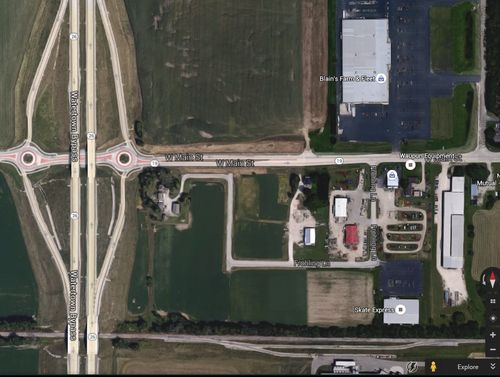
The issue in Hoffer Properties, LLC v. Wisconsin Dep’t of Transportation, No. 2012AP2520 (Feb. 4, 2016) was whether a property owner whose parcel enjoyed direct access to a state trunk highway via two driveways was entitled to compensation when a road project cut those driveways off, but still left the parcel with access via a side road.

The Wisconsin court’s approach isn’t the “hot mess” that the Oregon Supreme Court’s opinion is, even though it reached roughly the same result: as long as there is some access remaining after the taking, no compensation for the loss of the direct-access driveways.

Some quick background. Hoffer owned a parcel with two driveways on Highway 19. Six years before the taking, the DOT designated the highway

Continue Reading Wisconsin: Cutting Off Highway Access Is Not Compensable, If The Property Isn’t Totally Landlocked

We’ve posted a lot lately reporting on the 2016 ALI-CLE Eminent Domain and Land Valuation Litigation Conference, recently held in Austin. We have a couple of more posts for you before we turn to other things. Here is the first, a run-down of the blogs of faculty members, and others we were in the audience. If your blog is missing from this list, email me the link and I will update the post to include it.


Continue Reading The Blog Lineup From The 2016 ALI-CLE Eminent Domain Conference

Norfolk_sign

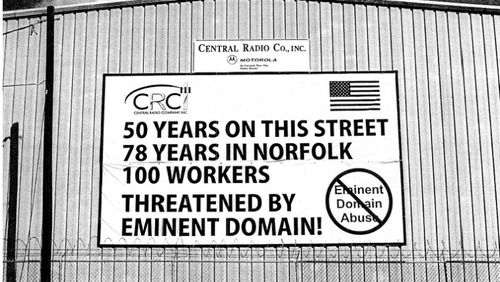
Talk about timing: Dana Berliner, Andy Gowder, and I were talking about the Central Radio case during a session on free speech and other First Amendment issues at the recent ALI-CLE Eminent Domain Conference, when we learned that at the same time we were speaking about the case, the U.S. Court of Appeals for the Fourth Circuit was issuing its opinion on remand from the Supreme Court. 

Bottom line: Norfolk, Virginia’s sign ordinance is an unconstitutional restriction on free speech. See slip op. at 1 (“Applying the principles of content neutrality articulated in Reed, we hold that the sign ordinance challenged in the plaintiffs’ complaint is a content-based regulation that does not survive strict scrutiny. Accordingly, we reverse the district court’s judgment with respect to the plaintiffs’ First Amendment challenge and remand that claim to the district court to award nominal damages to the plaintiffs and for consideration of other

Continue Reading Fourth Circuit: City Violated First Amendment By Banning Anti-Eminent Domain Sign

Here are the opinions in the cases discussed at today’s National Forum at the 2016 ALI-CLE Eminent Domain and Land Valuation Conference:


Continue Reading Decisions Discussed at ALI-CLE Eminent Domain National Forum

20160129_091552

The second day of the 2016 ALI-CLE Eminent Domain and Land Valuation conference went as well as the first. Here are some highlights:

  • Austin Mayor Steve Adler (pictured above), who is (was?) also an eminent domain lawyer, welcomed us to his city. 
  • We moderated a discussion between Andy Gowder and Dana Berliner about “First Amendment for Fifth Amendment Lawyers: Free Speech, Signs, Defamation, FOIA, and RLUIPA Claims,” how takings lawyers deal with these issues when they crop up in their cases. 
  • One update from that session: at nearly the same time that we were talking about Central Radio, the case about the Norfolk, Virginia “anti-eminent domain” sign, the Fourth Circuit issued its opinion on remand from the U.S. Supreme Court. We’ll have more in a full post soon, but here’s the bottom line for now: no, the City can’t ban the sign (“we hold that the sign


Continue Reading 2016 ALI-CLE Eminent Domain Conference, Austin: Second Day

A new cert petition filed earlier this week in a case from the Florida Court of Appeals that we’ve been following.

We’ve been following it because we filed an amicus brief when property owners sought cert review of an earlier decision by the same court which held the same thing: that the property owner subject to a quick-take had no property interest in the interest generated by the quick-take deposit. Remember in true quick-take jurisdictions like Florida, the condemnor is immediately vested with ownership and title of the property upon the deposit of estimated just compensation with the clerk of the court. Florida had a statute which allowed the clerks to pay a lion’s share of the interest on the deposit to the condemnor.

This new cert petition challenges the second court of appeals decision, and sets out this Question Presented:

Whether an unconstitutional taking of a protected property

Continue Reading New Cert Petition: Who Owns The Deposit In A Quick-Take?