


We recently posted a summary of the TransCanada pipeline issue (currently splashed across the front pages nationally) by our Owners’ Counsel of America colleague William Blake, a partner in the Lincoln office of Nebraska law firm Baylor Evnen

Today, in a highly anticipated decision (Thompson v. Heineman, No. S14-158 (Jan. 9, 2015), a majority of the justices of the Nebraska Supreme Court (four) concluded that the legislature’s efforts to get around the Public Service Commission’s authority is unconstitutional.

But in a quirk of Nebraska law, four-out-of-seven isn’t enough. Under the Nebraska Constitution (art. V, § 2), “[n]o legislative act shall be held unconstitutional except by the concurrence of five judges.” Here’s the court’s summary:

The State appeals from the district court’s judgment that determined L.B. 1161, which the Legislature passed in 2012 [which allows “major oil pipeline” carriers to bypass the regulatory procedures of the
Continue Reading Nebraska Supreme Court Justices Conclude TransCanada Pipeline Bypass Of PUC Is Unconstitutional – Just Not Enough Of Them

Here’s the property owners’ Reply Brief in Ramsey v. Commissioner of Highways, a case currently pending before the Virginia Supreme Court. 

This is the case about Virginia’s statutory requirements in eminent domain cases. As 

a prerequisite to a court exercising jurisdiction over a condemnation complaint, a state condemning agency must as an initial step present a statement of “the amount which [the condemnor] believes to be just compensation,” to the property owner, and must include an appraisal if an appraisal is required. 

The trial court viewed the required “statement” as a settlement offer, and prohibited the property owner from both telling the jury about the statement, and cross-examining the state’s appraiser about it. Even though the state’s initial statement of just compensation was $246,292, and later, its new appraiser at trial testified that just compensation was only $92,127. 

Disclosure: we filed an amicus brief in support of the property

Continue Reading Final Brief In Virginia Supreme Court Eminent Domain Case: DOT’s Precondemnation Statement Of Value Is Admissible

We’re going to start off 2015 slightly off-topic, a movie review. But rest assured, there is a small eminent domain connection.

Anyone who was around in the 1960s and 1970s remembers those paintings and prints of sad children with oversize eyes. They were ubiquitous. But they gave our young eyes dissonance. To us, “art” was whatever the adults said it was, and by any measure these paintings must have been art, because they were everywhere, and popularity equated to artistic quality, right? But at the same time, they were kitschy, and in a creepy way (not low-rent fun like our favorite kitsch, Dogs Playing Poker and Velvet Elvis).

The weird-but-true backstory behind the big-eyed paintings has recently hit the big screen, Tim Burton’s “Big Eyes” with Amy Adams as long-time Hawaii resident, painter Margaret Keane, and Christoph Waltz as her Svengali, husband Walter Keane. 

Hawaii

Continue Reading The “Big Eyes” Have It: Hawaii Courts Again In The Hollywood Spotlight

In Rutherford Elec. Membership Corp. v. 130 of Chatham, LLC, No. 13 SP 95 (Sep. 2, 2014), the North Carolina Court of Appeals reversed the dismissal of an eminent domain complaint filed by a private company that sought to take property located in two counties.

In cases where a private company seeks to condemn private property, North Carolina law allows the filing of a special proceeding in the county in which the property is located. The trial court dismissed the complaint because the property to be taken was partially located in the county of venue, and partially in another county, and the court concluded it lacked subject matter jurisdiction. The court refused to allow the condemnor to amend its petition to cover only the land located in the proper county

The court of appeals reversed, although it conceded that the process was “in conflict,” and urged the legislature to

Continue Reading NC App Considers Multi-Jurisdictional Eminent Domain

Under Nebraska eminent domain law, the condemnor is required to make a “good faith” effort to negotiate with the property owner before it files an eminent domain action. See Neb. Rev. Stat. § 76-704.01(6).

In Camden v. Papio-Missouri River Natural Resources District, No. A-13-266 (Aug. 26, 2014), the court concluded that the condemnor had not made these efforts. Here’s what occurred:

  • The NRD contacted the property owners, and made an offer of $67k for the desired easements.
  • The owner said “from now on, talk to my lawyer.”
  • The NRD did so, and sent the owners’ lawyer a revised proposed purchase agreement.
  • The owners, through their lawyer, rejected the offer. They valued the loss at $750k.
  • The owners also proposed an alternative to only monetary compensation.
  • The NRD responded that the counteroffer was unresonable, and thus stafff would not recommend the NRD board accept it, but suggested the


Continue Reading Neb App: Condemnor Did Not Make Jurisdictional Good Faith Effort To Negotiate

Clark v. Titus County, No. 06-14-00035 (Sep. 19, 2014) is a somewhat civil procedure oriented opinion, specifically about Texas’ “no-evidence” motion for summary judgment. But it’s a condemnation case, and there’s some good background from the court about the eminent domain process in Texas courts and how appraisers calculate fair market value.

Under Texas civil procedure, a “no-evidence” motion is based on the utter lack of evidence to support an essential element of the other side’s claim. The county filed such a motion, arguing that the property owners did not submit a “scintilla of probative evidence” about the taken property’s fair market value, specifically the value of fencing. Thus, the county asserted, the court was bound to accept the county’s valuation in its appraiser’s testimony, which among other things, was based on his estimate of the cost of fencing.

The court of appeals reversed. Although the owners did not

Continue Reading Tex App: “No-Evidence” Summary Judgment Wrongly Granted Where Property Owner Undercut Appraiser’s Assumptions

Westerville

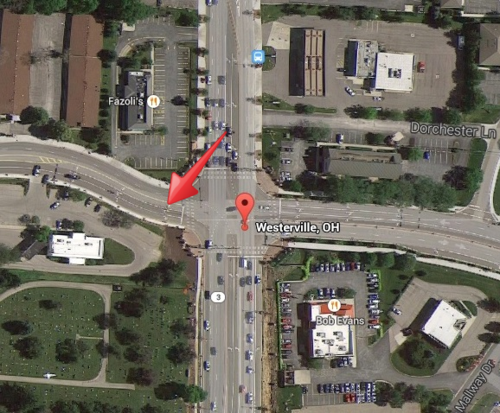
In City of Westerville v. Taylor, No. 13AP-806 (Aug. 12, 2014), the Ohio Court of Appeals concluded that it didn’t matter what professed “plans” the city had the property it took from Taylor, only that the city had taken fee simple absolute title.  

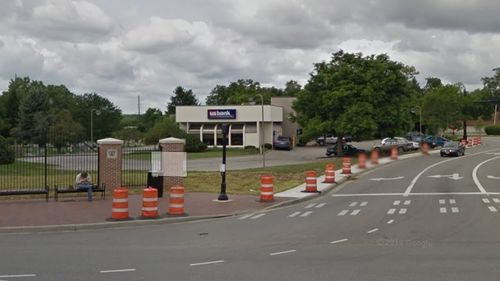
As part of a highway project, the city condemned a portion of the land shown above (red arrow), and here:

Southstatestreet

“In this case, the City appropriated two fee simple parcels from Taylor.” Slip op. at 2. Before the taking, Taylor’s property had two driveways. On appeal, the city argued that this didn’t change, because after the taking, “Taylor still had a right of access.” Id. at 4. 

The City argues that because the resolution appropriating the property in fee simple did not specify that it was taking all rights, title and interest in the property, Taylor retained his right of access to and from the property. The

Continue Reading Ohio App: You Took It, You Bought It – Taking Of “Fee Simple” Means Taking Of All Rights, Regardless Of Intent

Being a short opinion (2 pages), you could read the entirety of the New York Appellate Division’s decision in Eisenhauer v. County of Jefferson, No. 14-00510 (Nov. 14, 2014) more quickly than we could summarize it. 

But yes, the taking of private property for expansion of the runway at a public airport is a public use. 

Eisenhauer v. County of Jefferson, No. 14-00510 (N.Y.A.D. Nov. 14, 2014)

Continue Reading NY App Div: “Virtually Any Project That May Confer” Public Benefit Is Consistent With The Public Use Clause

The property owner/appellant raised a whole bunch of legal issues in City of Kansas City v. Powell, No. WD 76861 (Oct. 7, 2014), a case decided by the Missouri Court of Appeals, Western District. 

The city slated Ms. Powell’s house for condemnation because it wanted to build a new police station and crime lab. The court took 28 pages to reject each of Powell’s arguments on appeal, but what comes through between the lines is that she didn’t quite behave:

On September 9, 2012, a special process server attempted to serve Powell at 2718 Brooklyn Avenue with a summons for the condemnation hearing. The residence at 2718 Brooklyn belonged to Powell‟s mother, but at the time, the City believed Powell to reside there as well, based upon its perception that 2611 Brooklyn was in a state of rehabilitation and uninhabitable. A woman answered the door at 2718 Brooklyn and

Continue Reading Should Property Owners Play Nice With Condemnors?

Under the Montana Constitution, a property owner who prevails in a condemnation matter is entitled to an award of “necessary expenses of litigation.”

In Wohl v City of Missoula, 2014 MT 310 11-25-2014, NO. DA 14-0161 (Nov. 25, 2014), the Montana Supreme Court concluded that property owners who ultimately prevailed after two appeals were entitled in the second appeal to recover the attorneys fees they incurred during the prior appeal. 

The Dissent posits that because we rejected Landowners’ cross-appeal on their alleged civil rights violations and ruled in favor of the City on the calculation of the underlying damage award in Wohl I, this somehow mitigates against Wohls’ entitlement to attorney fees. This argument ignores the fact that Landowners plainly satisfied the requirements of § 70-30-305(2), MCA, as noted above, thus making the award of the expenses of litigation to them mandatory under the statute. The Dissent cites no authority for

Continue Reading Montana Considers Attorneys Fees In Second Appeal