


Here’s the latest in the Casitas case from the U.S. Court of Federal Claims. Casitas Municipal Water Dist. v. United States, No 05-168L (Dec. 5, 2011). This case highlights the importance of identifying the “property” right alleged to have been taken in these type of cases:

This case is before the court following a trial held to determine the compensation, if any, owed to plaintiff under the Fifth Amendment to the United States Constitution for the taking of its property. In an earlier round of litigation in this case, the Court of Appeals for the Federal Circuit ruled that operating restrictions on plaintiff’s water project imposed by the National Marine Fisheries Service “NMFS”) pursuant to the Endangered Species Act (“ESA”), 16 U.S.C. §§ 1531–44 (2006), should be analyzed as a physical taking where plaintiff was required to reroute a portion of the water it had diverted for its own
Continue Reading Court Of Federal Claims: Water Rights Takings Claim Not Ripe (Flashbacks To The Hawaii Water Rights Case)

Today’s post is by an old friend and colleague, Paul Schwind. He’s been following the federal litigation challenging the $4+ billion Honolulu rail project, and attended last week’s hearing. We asked him to write a guest post so the rest of us could come up to speed.

Update: December 13, 2011

In Honolulutraffic.com et al. v. Federal Transit Admin. et al., Judge Tashima issued his Order on December 12, denying Defendants’ Motion for Partial Judgment on the Pleadings. In essence, he followed the legal standard that requires that all doubts must be resolved in the light most favorable to the non-moving party (plaintiffs), where issues of material fact remain.  Therefore, the moving party (defendant) is not entitled to judgment as a matter of law. 

Judge Tashima pointed out that in this case, the full administrative record is not yet available to establish whether certain plaintiffs did not comment on

Continue Reading Guest Post: The Federal Court Challenge To Honolulu Rail Project

The EPA has filed its merits brief in Sackett v. EPA, No. 10-1062, the case in which Idaho property owners are asserting their right to challenge the agency’s assertion via a “compliance order” that a portion of their land are “wetlands” and that they violated the Clean Water Act.

The EPA’s brief asserts that the compliance order the Sacketts received, although it stated “EPA’s finding that petitioners had violated [the CWA] by discharging fill material into regulated wetlands without a permit,” Br. at 6, was merely an invitation to contact the EPA and work things out with the agency. According to the brief, the compliance order was only EPA’s “view” that the Sacketts had violated the CWA, and served only to inform them that “unless they took specified measures to achieve prospective compliance with the Act, the agency might seek penalties and/or injunctive relief through a judicial enforcement action.”

Continue Reading EPA Brief In Clean Water Act Case: Compliance Order Provides “Regulatory Guidance” And Is Not An Enforcement Order

The big news in Hawaii this week is the Asia-Pacific Economic Cooperation international summit, currently underway in Honolulu. Waikiki is on lockdown as leaders from 21 Pacific Rim nations, including U.S. President Obama and a lower level functionary from “Chinese Taipei,” come to town for a confab on free trade and economic cooperation in the region. Plus, they might have to dress up in the national costume of the host country. (Query: is aloha wear the “national costume” of the host United States? Not really, but it is a regional style, and making these stuffed shirts dress up like Elvis or Jack Lord seems like a hoot; we can’t wait to see Australia’s Julia Gillard in a muumuu.) Big stuff.

What do Hawaii’s leaders hope to accomplish by having the eyes of the world turned on us during the summit? In Opportunity comes ashore, the daily paper reports

Continue Reading Potemkin Village, Hawaiian Style?

palazzolo

From The Day comes the sad news that Anthony Palazzolo, the namesake of the U.S. Supreme Court’s decision in Palazzolo v. Rhode Island, 533 U.S. 606 (2001), has died.

Anthony Palazzolo, whose fight to develop his property in Misquamicut made its way to the U.S. Supreme Court, died Nov. 3 at the age of 91.

Palazzolo, a former auto wrecker and lifelong resident of Westerly, sued the state of Rhode Island for 17 years before ending his fight in 2005.

The case pitted environmentalists and property-rights activists from across the country. Environmental officials said Palazzolo’s plan to fill and develop his wetlands would “strangle” Winnapaug Pond, since the marsh is a habitat for fish and shellfish, and filters and cleanses waters that end up in the pond.

Read the entire story here.

My PLF colleague Jim Burling argued the case on behalf of Mr. Palazzolo. Continue Reading Anthony Palazzolo (1918-2011)

Been tied up finalizing one brief and drafting another, so haven’t had time to post, but here’s what we’re reading today:

  • Via the Land Use Law Prof blog comes notice of Professor Robert Ellickson’s latest article, on The Costs of Complex Land Titles: Two Examples from China. This is the paper he presented at the recent Brigham-Kanner Property Rights Conference in Beijing. His presentation and paper generated a lot of reaction from the other scholars in attendance, and was one of the high points of the conference.
  • A preview of the upcoming California Supreme Court oral arguments (Nov. 10, 2011) on the future of redevelopment in the Golden State, from the California Eminent Domain Report.
  • More from California,


Continue Reading Monday Reading

Yesterday, I gave an informal presentation to the Natural Resources Section of the Hawaii State Bar Association about the case currently pending in the U.S. Supreme Court regarding the ability of property owners to challenge a determination by the U.S. Environmental Protection Agency that their property contained “wetlands” under the Clean Water Act, Sackett v. United States, No. 10-1062 (cert. granted June 28, 2011).

We videotaped the session, and (if tech cooperates) we will post the video. But in the meantime, stream the audio below, or download the 45mb mp3 here:

Here are the links to the briefs that have been filed in the case (so far):

  • The amici brief filed by several states, including Hawaii, in support of the property owners.
  • Here are the cert stage briefs.

    Here‘s the Court’s docket report. We will post the

    Continue Reading Podcast: Sackett v. EPA – SCOTUS Preview: Immediate Judicial Review, Or Death By A Thousand Days?

    A reminder: on Tuesday, November 1, 2011, from noon to 1:00 p.m., I’ll be making a presentation to the Natural Resources Section of the Hawaii State Bar Association about the case currently pending in the U.S. Supreme Court about the ability of property owners to challenge a jurisdictional determination by the U.S. Environmental Protection Agency, Sackett v. EPA, No. 10-1062 (cert. granted June 28, 2011).

    The venue is the HSBA conference room, located on the 10th floor of Alakea Corporate Tower, 1100 Alakea Street. We’ll talk about the case, the arguments of the parties and amici (the State of Hawaii joined an amici brief in support of the property owners), and what the Court might do.

    We may also discuss other pending cases of interest, if there’s time. Please join us and bring your questions. Non-members are welcomed to join on a space available basis.

    Also, for those who are

    Continue Reading Tuesday State Bar Session On Sackett v. EPA

    You remember the Hawaii Superferry, don’t you? In case your memory doesn’t go back that far, here are our posts on the Hawaii Supreme Court’s first opinion, and here are our thoughts on the second. What brings up this case now is then-Governor (and present U.S. Senate candidate) Linda Lingle’s recent statement, quoted by Honolulu Civil Beat:

    “I want to be clear on this point and on the record. And I want you to share this with everybody you talk to: Remember that nothing was done wrong with Superferry — nothing,” Lingle said. “Let me elaborate. Some people talk about an EIS when they talk about the Superferry. There was never an EIS required of any interisland vessel. Not before and not since, that I’m aware of.”

    Civil Beat followed up with a “fact check,” asking whether her statements were true or not. CB concluded:

    Lingle said “nothing was

    Continue Reading Was Lingle “False” When She Said “Nothing Was Done Wrong with Superferry”?

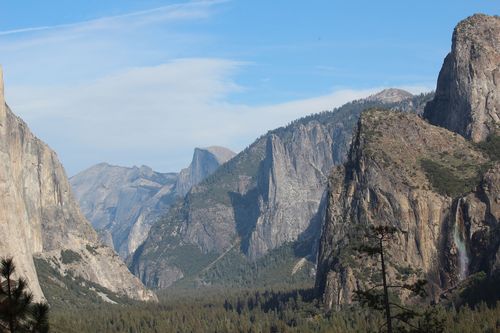
    IMG_6999

    “Yosemite,” according to California Place Names, Erwin Gudde’s seminal work on the origins of (surprise) California place names, means “they are killers.” It was “[e]vidently a name given to the Indians of the valley by those outside it.”

    I raise this historical tidbit because I must admit to feeling a little like “those outside it” when I was invited to speak about regulatory takings at the California State Bar’s Environmental Law Conference at Yosemite. I figured as a conference devoted to environmental law, it was a going to be a decidedly skeptical audience, given my advocacy for property owners and property rights. I accepted the invitation nonetheless, heartened that this conference wasn’t going to be an echo chamber and that they were at least open to hearing competing ideas.

    It turns out that my prediction about “they are killers” was not accurate — the audience, while not exactly

    Continue Reading Yosemite Seminar Summary – Regulatory Takings: Looking Back And Looking Forward