


11.LULHI Mark your calendars for January 13 and 14, 2011 for the 5th Hawaii Land Use Law Conference, to be held in Honolulu. Yes, it’s a few months away, but this is the Big One, it only comes around every two years, and you don’t want to miss it. 

The program chairs are Professor David Callies and land use attorney Ben Kudo, and they have assembled an expert and diverse faculty, including keynote speaker Professor Gideon Kanner (no stranger to readers of this blog).

  brochure

, which contains all the details and a registration form.

Here’s the program description:

The Hawai`i system of land use is complex and private land use is highly regulated. Attorneys and legal staff, planners, government officials, land owners and developers need to understand the complex federal, state and local requirements and procedures.

An expert faculty of land use practitioners, planners and regulators will explain the

Continue Reading January 13 & 14, 2011: 5th Hawaii Land Use Law Conference
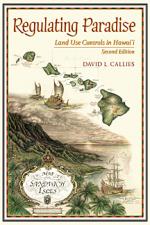
Regulatingparadise University of Hawaii lawprof David L. Callies needs no introduction to the readers of this blog. He’s one of the deans of the national and international land use bar and professoriate, but those of us who practice land use law in Hawaii consider him our special mentor (dare I say guru?) when the topic of Hawaii land use law is raised. Virtually every dirt lawyer practicing here has studied under or with him.

Those of us who consider this area of law our calling have for years looked forward to an update of Regulating Paradise, his seminal book on Hawaii’s complex and multi-layered system of land use and regulation.

Well wait no further. The University of Hawaii Press has published the second edition of Professor Callies’ essential work. Purchase your copy here (a mere $22). Here’s the Introduction.

We haven’t had an opportunity to pore through the nearly 400 pages of text (illustrated with the irreplaceable Corky Trinidad‘s editorial cartoons), so a more complete review will follow once we’ve had a chance to do so. In the meantime, voices more eminent than our own have weighed in:

“A masterful analysis of [Hawai‘i’s] land use laws.” —Daniel R. Mandelker, Stamper Professor of Law, Washington University, St. Louis

“Essential reading for all who seek to understand how land use is regulated in Hawai‘i or to apply the lessons learned there to other states.” —Dan Tarlock, Distinguished Professor of Law, Chicago-Kent College of Law

“A must-read for both neophyte and veteran legal practitioners. Callies’ in-depth and insightful explanations and commentaries on Hawai‘i’s complex land use and planning laws provide a road map for understanding the state’s multi-layered regulatory scheme.” —Benjamin A. Kudo, Ph.D.

“With this magnificent new work, and its far ranging, comprehensive analysis – from the feudal land holdings of the monarchy to regulating McMansions – Professor Callies teaches and entertains us with tales of success and failure in Hawaiian land use and development law. There are lessons here for every one of us, all across this country.” —Dwight Merriam, Robinson & Cole

If the second edition is anything like the first, Regulating Paradise will occupy an frequently-used spot on our back bookshelf. More to follow.
Continue Reading New Book: Callies, Regulating Paradise – Land Use Controls In Hawaii (2d ed. 2010)

The Supreme Court’s multiple opinions in Stop the Beach Renourishment v. Fla. Dep’t of Envt’l Protection, 130 S. Ct. 2592 (2010), although unanimous in concluding that the Florida Supreme Court’s decison was not a judicial taking, were not the last words on the subject. Six justices concluded that in the right circumstances, a decision by a state supreme court would violate the takings or due process clauses, while the remaining two justices concluded that some future case might be the right vehicle to decide whether a court decision could take property.  

Our suspicions that the case marked the opening of the judicial takings canon and not its closing were quickly confirmed. Last week, we posted this cert petition in another beach case from Hawaii that draws the takings question more precisely than Stop the Beach Renourishment, and earlier we asked “Why Isn’t This A ‘Judicial Taking?’

Continue Reading New Cert Petition: More Judicial Takings, This Time From Montana

The littoral property owners who won a partial victory in the Hawaii appellate courts have filed this cert petition asking the U.S. Supreme Court to review the decision of the Hawaii Intermediate Court of Appeals which concluded that ownership of beachfront property includes only a partial right to accreted land. In Maunalua Bay Beach Ohana 28 v. State of Hawaii, 122 Haw. 34, 222 P.3d 441 (Haw. Ct. App. 2009), the ICA held that held that “Act 73” (codifed here and here), the statute in which the legislature simply redefined accretion as public propertywas a taking, but accepted the State’s argument that Act 73 did not affect a taking of what it called “future” accretion, because the right is simply a contingent future interest.

In Act 73, the Hawaii Legislature changed over a century of common law and declared that title to shoreline land naturally accreted cannot

Continue Reading Cert Petition In Hawaii Beach Takings Case: Is The Right To Accretion A “Property” Interest?

Worth listening: this LexisNexis podcast. Details:

On this edition, Michael Allan Wolf, Richard E. Nelson Chair in Local Government Law at the Levin College of Law, University of Florida, discusses what real estate practitioners can learn from the U.S. Supreme Court’s decision in Stop the Beach Renourishment, Inc. v. Florida DEP and what it suggests about policies affecting the Oil Spill in the Gulf of Mexico. Topics include avulsion, accretion, and the possibility of “judicial taking.”

Continue Reading Podcast On The Judicial Takings Case (Stop the Beach Renourishment, Inc. v. Fla. Dep’t of Envt’l Protection)

You may have missed the live program, but it’s still not too late to get the podcast of a recent discussion of Stop the Beach Renourishment, Inc. v. Florida Dep’t of Environmental Protection, No. 08-11 (June 17, 2010), the Supreme Court case about judicial takings and beachfront property. Here’s the course description from ALI-ABA:

In an unusual takings case, Stop the Beach Renourishment, Inc. v. Florida Department of Environmental Protection, the Florida Supreme Court relied on state real property law to conclude that the objecting beachfront property owners lacked a valid property right, and thus the state could “renourish” the beaches. The beachfront owners appealed to the U.S. Supreme Court, asking it to recognize a new doctrine of judicial takings.

On June 17, 2010, the Supreme Court issued its opinion, which may be a partial victory for property-rights advocates. Chief Justice Roberts, and Justices Scalia, Thomas, and Alito all endorsed the idea that

Continue Reading Another Podcast On The Judicial Takings Case (Stop The Beach Renourishment v. Florida)

My Damon Key colleagues Mark Murakami and Tred Eyerly and I have posted our forthcoming essay Of Woodchucks and Prune Yards: A View of Judicial Takings From the Trenches on SSRN here, containing our thoughts on Stop the Beach Renourishment, Inc. v. Florida Dep’t of Environmental Protection, No. 08-11 (June 17, 2010), the “judicial takings” case. Mark, Tred, and I filed an amicus brief supporting the property owners in the case.

Here’s an excerpt from the Introduction to the article:

Justice Breyer must either (a) grapple with the artificial question of what would constitute a judicial taking if there were such a thing as a judicial taking (reminiscent of the perplexing question how much wood would a woodchuck chuck if a woodchuck could chuck wood?), or (b) answer in the negative what he considers to be the “unnecessary” constitutional question whether there is such a thing as a

Continue Reading Of Woodchucks and Prune Yards: A View of Judicial Takings From the Trenches

My Damon Key colleagues Mark Murakami and Tred Eyerly and I have posted our forthcoming essay Of Woodchucks and Prune Yards: A View of Judicial Takings From the Trenches on SSRN here, containing our thoughts on Stop the Beach Renourishment, Inc. v. Florida Dep’t of Environmental Protection, No. 08-11 (June 17, 2010), the “judicial takings” case. Mark, Tred, and I filed an amicus brief supporting the property owners in the case.

Here’s an excerpt from the Introduction to the article:

Justice Breyer must either (a) grapple with the artificial question of what would constitute a judicial taking if there were such a thing as a judicial taking (reminiscent of the perplexing question how much wood would a woodchuck chuck if a woodchuck could chuck wood?), or (b) answer in the negative what he considers to be the “unnecessary” constitutional question whether there is such a thing as a

Continue Reading Of Woodchucks and Prune Yards: A View of Judicial Takings From the Trenches

In County of Hawaii v. Ala Loop Homeowners, No. 27707 (July 9, 2010), the Hawaii Supreme Court held that certain state zoning laws are “environmental” laws that may be enforced by private plaintiffs. The court held “[w]e further conclude that article XI, section 9 of the Hawai’i Constitution creates a private right of action to enforce chapter 205 in the circumstances of this case.” Slip op. at 4. In What Does Right to Clean Environment Mean, Honolulu Civil Beat‘s Michael Levine reports on the case, and various reactions (including ours):

The right to challenge zoning rules in court will not be totally unfettered. Courts must still decide whether a plaintiff has standing. The majority opinion explained the difference between a right of action and standing:

“The private right of action inquiry focuses on the question of whether any private party can sue to enforce a statute, while

Continue Reading State Zoning Statutes As “Environmental” Laws – More On HAWSCT’s Ala Loop Decision

In County of Hawaii v. Ala Loop Homeowners, No. 27707 (July 9, 2010), the Hawaii Supreme Court held that certain state zoning laws are “environmental” laws that may be enforced by private plaintiffs. The court held “[w]e further conclude that article XI, section 9 of the Hawai’i Constitution creates a private right of action to enforce chapter 205 in the circumstances of this case.” Slip op. at 4. In What Does Right to Clean Environment Mean, Honolulu Civil Beat‘s Michael Levine reports on the case, and various reactions (including ours):

The right to challenge zoning rules in court will not be totally unfettered. Courts must still decide whether a plaintiff has standing. The majority opinion explained the difference between a right of action and standing:

“The private right of action inquiry focuses on the question of whether any private party can sue to enforce a statute, while

Continue Reading State Zoning Statutes As “Environmental” Laws – More On HAWSCT’s Ala Loop Decision