


An op-ed piece in today’s Star-Advertiser by Judge (Ret.) Walter Heen and U. Hawaii lawprof Randy Roth asks “What is OHA?

For those of you who don’t already know, “OHA” is the Office of Hawaiian Affairs, a governmental entity created by the 1978 amendments to the Hawaii Constitution. But what the acronym stands for is not the question they are asking. Rather, they ask whether OHA is a state agency, or is some kind of quasi-governmental trust:

The Hawaii State Constitution has established an Office of Hawaiian Affairs to own and manage property “in trust.” The Constitution further provides for an elected board of trustees.

In “Regulating Paradise,” University of Hawaii law professor David Callies has described OHA as “operating as a public trust.”

In “Who Owns the Crown Lands of Hawaii?“, the late Jon Van Dyke pointed out that OHA is “self-governing” and

Continue Reading What Is The Office Of Hawaiian Affairs, Asks Op-Ed. Short Answer: A “Public Agency”
Here’s the latest on the now-cancelled “Nai Aupuni” Hawaiians-only poll/election, described by one local commentator as having “the integrity of a Costco membership,” and by Election law maven Rick Hasen as the “Oprah” theory of elections after the organization cancelled the extended vote and invited all candidates to come to the convention once the U.S. Supreme Court enjoined the counting of ballots and certification of the election (in other words, all candidates were elected):


Continue Reading Latest On The Hawaiians-Only-Oprah/Costco-Everyone-Wins Election

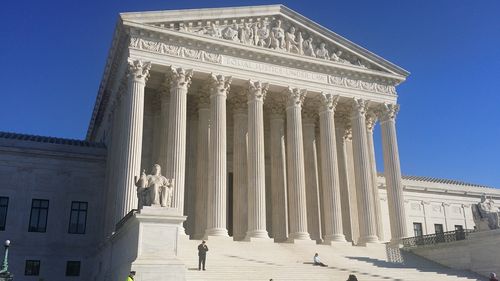
20151204_140514

Today, the Honolulu Star-Advertiser published an op-ed by me, Col. David Brostrom (U.S. Army, retired), Rep. Mark Takai, who represents Hawaii’s First Congressional District in the U.S. House of Representatives, and Andrew Walden, editor and publisher of Hawaii Free Press, about the case, argued this morning in the U.S. Supreme Court about who gets counted when state legislatures get reapportioned:

Hawaii might finally be forced to include military among ‘We the People’

By David P. Brostrom, Mark Takai and Andrew Walden

December 8, 2015

“We the People.”

The familiar opening of the U.S. Constitution, announcing our most cherished principles.

Big words, for sure.

But just who are “We the People?”

The U.S. Supreme Court is now considering that question in a Texas case in which Hawaii’s decades-long exclusion of active-duty military and families from the body politic is front and center.

In Evenwel v. Abbott, the court

Continue Reading Op-Ed: In SCOTUS One-Person, One-Vote Case, Hawaii Might Finally Be Forced To Include Military Among ‘We The People’

Hawaii is either 5 or 6 hours behind Eastern Time, depending on the time of year (we don’t adhere to Daylight Savings Time), so we’re a quarter-day behind the part of the country where a lot — if not most — of the important things legal, financial, and political occur. Scheduling conference calls can be a chore, too. But we’re used to it, and sometimes, being outside the national attention range can work to our advantage, and we can get away with things which — were they occurring elsewhere — would attract more scrutiny, and a more skeptical eye.  

At least that is the way it appears once you step outside the Hawaii bubble, and find out how others view things that we do.

We’re way outside the bubble this week in Washington, D.C. (a different sort of bubble altogether), doing some election law things — we’ll have some

Continue Reading The View Of The Nai Aupuni Election From Washington, D.C.

The latest news in a fast-moving election law case, about the validity of a Hawaiians-only election to choose delegates to a constitutional convention about the issue of Hawaiian national sovereignty: this morning, Associate Justice Anthony Kennedy issued this order which temporarily puts a stop to the counting of the ballots. An extraordinary move, but one which wasn’t exactly unpredictable, given the issues involved (which we noted here). 

More background on the case, and the Supreme Court filings of the parties in this post from SCOTUSBlog

More stories here:


Continue Reading Justice Kennedy Temporarily Halts “Hawaiians Only” Election

The headline of this post is clickbait, of course, since the California Court of Appeal didn’t formally file an amicus brief in favor of the government in Property Reserve, Inc. v. Dep’t of Water Resources, No. S217738, a case now pending in the California Supreme Court. But the court’s opinion in Young’s Market Co. v. Superior Court, No. D068213 (Nov. 19, 2015), published late last week, sure does seem like a brief in support of the Department of Water Resources in that case. 

Property Reserve is the case which has been briefed and is awaiting oral arguments, in which the California Supreme Court is considering whether precondemnation entries sought by the California Department of Water Resources conform to the “entry statute,” or are so extensive as to be takings triggering the protections of the eminent domain code. In that case, a different Court of Appeal

Continue Reading Court Of Appeal Files Pro-Condemnor Amicus Brief In Cal Supreme Court “Entry Statute” Case

Here’s a fascinating decision from the Ninth Circuit on our other area of interest, election law. 

Public Integrity Alliance, Inc. v. City of Tucson, No. 15-16142 (9th Cir. Nov. 10, 2015) was a challenge to Tucson’s unusual hybrid system of electing the city council. The primary election is a partisan primary, limited to residents of each of the city’s wards. Once elected in these ward-by-ward primaries, the candidates go on to an at-large general election, where everyone in the city is eligible to vote. This system was challenged as violative of equal protection, because it deprives city voters of the ability to vote in the ward-by-ward primaries.

In a 2-1 decision authored by Judge Konzinski, the Ninth Circuit agreed.   

Public Integrity Alliance, Inc. v. City of Tucson, No. 15-16142 (9th Cir. Nov. 10, 2015)

Continue Reading Election Law Detour: All Voters Must Be Allowed To Vote In Primary If It’s “Unitary” With General Election

Who gets counted for reapportionment purposes?

Everyone!

Please forgive the deviation (a pun for our election law colleagues) from the blog’s usual land use and takings fare, but frequent readers understand that we also have an interest in election law, and occasionally post up items of interest.

Today we filed this amici brief in Evenwel v. Abbott, No. 14-940, the case on appeal to the Supreme Court which asks which “population” states must use when reapportioning their state legislatures and drawing district boundaries. We’ve covered this case, as well as our own case in which we (unsuccessfully) challenged Hawaii’s practice of basing reapportionment on  “permanent residents” and excluding military personnel and their families. Our brief argues:

The parties in this case suggest answers to a deceptively simple question: who constitutes the body politic in the states? This question is one the Court has avoided answering explicitly for nearly half a century. Amici

Continue Reading Amici Brief In SCOTUS Reapportionment Case: Close Scrutiny For Anything Less Than Total Population

Here’s the latest in a case that we’ve been following, which was in both state and federal court, Bridge Aina Lea v. Land Use Comm’n

The litigation is a series of two lawsuits that originated in state court in the Third Circuit (Big Island), one an original jurisdiction civil rights lawsuit, the other an administrative appeal (that’s a writ of administrative mandate for you Californians). The State removed the civil rights lawsuit to U.S. District Court in Honolulu and promptly moved to dismiss, and this portion of the case nearly caused us to flash back to our Federal Courts class in law school, since it raised a host of procedural questions such as the effect of removal, whether certain defendants are “persons” under 42 U.S.C. § 1983, whether the federal court must abstain from addressing the federal takings claim, whether there is a state damage remedy for

Continue Reading Hawaii Federal Court Gets Rid Of Most Claims Against Land Use Commission, But Allows Takings And Vested Rights Claims To Go Forward

We’re in Chicago this week participating in the ABA Annual Meeting. While we really are looking forward to a slate of thrilling committee meetings, what we’re really anticipating is the CLE programming. Here are what we think are the highlights:

  • Looming Land Use Constitutional Issues –  Friday, July 31, 2:45 – 4:15 pm, Westin Chicago River North Grand Ballroom B –  Four hot land use issues: land use aspects of medical marijuana legislation; takings and exactions in San Francisco’s requirement for owners to pay departing tenants huge sums; Horne and takingsNew Jersey’s dune program. With Tony Della Pelle and Stephen Schwartz (one of the counsel for the Hornes), among others. 
  • The 2014 Supreme Court Term in Review – Friday, July 31, 2015, 10am – noon, Westin Chicago River North Promenade Ballroom C – “This panel of noted legal professionals, academics and journalists provides an overview of the Supreme Court


Continue Reading ABA Annual Meeting Programming: Takings, Land Use, Supreme Court, Election Law, Appellate Traps