


Here’s the preview of next week’s U.S. Supreme Court arguments in Koontz v. St Johns River Water Mgmt Dist., No. 11-1447 (cert. granted Oct. 5, 2012). That’s the case in which the Court will be addressing whether the “essential nexus” and “rough proportionality” standards of Nollan and Dolan are applicable only to exactions for land, or whether they are generally-applicable tests for all exactions.

In Wetlands regulation at heart of Fla. property rights dispute, Greenwire‘s Lawrence Hurley writes:

In late 1993 and early 1994, Coy Koontz Sr. applied for two permits from a Florida agency as he sought to build on wetlands he owned just east of Orlando.

Today, Koontz has been dead for 13 years, his family no longer owns the property and the permits have long been approved. And yet a legal dispute about the permitting process is about to be argued at the Supreme

Continue Reading Koontz Preview: Request For Exaction Is Not A “Suggestion,” But A “Velvet-Covered Hammer”

How, as an appellant, do you know you are in trouble? When an opinion starts like this, that’s how:

Although a residential subdivision proposed for construction in a bucolic Rhode Island town never saw the light of day, its ghost continues to haunt the parties. But apparitions rarely have substance, and this one is no exception. After careful consideration of the plaintiff’s complaint and the district court’s order of dismissal, we lay the ghost to rest.

The remainder of the opinion in Marek v. Rhode Island, No. 12-1460 (1st Cir. Dec. 27, 2012)  deals with whether a property owner suffered a taking when the State of Rhode Island and other parties granted a permit and approved construction by a neighboring owner of a road that allegedly encroached on the plaintiff’s land.

Among other arguments (as far as we can tell), the plaintiff raised a takings claim in federal court

Continue Reading First Circuit: Inverse Condemnation Claim In State Court An “Adequate Procedural Pathway” To Compensation

You know how we’re always saying that certain parties have an enviable record of success in the Hawaii Supreme Court? Well, now the statistics are official.

The latest edition of the University of Hawaii Law Review published an article by lawprof David Callies summarzing the decisions of the court during the tenure of now-retired Chief Justice Ronald Moon. The article sets forth the stark numbers (83% win rate, 65% reversal of the intermediate appellate court), and contains a sharp comment about the often-lengthy nature of the court’s opinions:

Second, the Moon Court decided some of thestate’s most important property and related environmental and Native Hawaiianrights cases in favor of the various non-governmental organizations bringingthem (Sierra Club, Earthjustice, Hawaii’s Thousand Friends, and the NativeHawaiian Legal Corporation) approximately eighty-two percent of the time,sixty-five percent of which reversed the Intermediate Court of Appeals (ICA).Third, the court increasingly rendered lengthy opinions, many triple the

Continue Reading U.H. Lawprof: HAWSCT’s 1993-2010 Record On Private Property Rights “Appalling”

Here’s petitioner’s reply brief in Koontz v. St Johns River Water Mgmt Dist., No. 11-1447 (cert. granted Oct. 5, 2012), which responds to the Water Management District’s merits brief.

In that case, the U.S. Supreme Court will address whether the “essential nexus” and “rough proportionality” standards of Nollan and Dolan are applicable only to exactions for land, or whether they are generally-applicable tests for all exactions.

Among other things, the reply addresses the argument made by the District and its amici that Nollan and Dolan aren’t really “takings” cases, but involve due process or equal protection:

Due process and equal protection claims are also inapt. A due process claim questions whether the exaction serves some legitimate purpose, and an equal protection claim asks whether the exaction is applied equally to similarly situated individuals. But neither claim addresses whether a particular individual has been targeted to bear a public

Continue Reading Reply Brief In Koontz: Money Is Property

William W. Wade, Ph.D., a resource economist with the firm Energy and Water Economics (Columbia, Tennessee) is a frequent author and speaker on the topic of regulatory takings and is familiar to readers of this blog. (His next gig is a talk on Penn Central and inverse condemnation at the 12th Annual Texas Eminent Domain SuperConference February 11-12, 2013, in Austin.)

Bill fills us in on the Texas Supreme Court’s decision in EdwardsAquifer Authority v. Day, 274 SW.3d 742, (Tex. 2012). The court issued the opinion in February 2012, but recently denied a motion to rehear the case, thus making it final. 

++++++++++++++++++++++++++++++++++

Regulatory Takings, Texas Groundwater, and Hydrofracking

by William W. Wade, Ph.D.

Texasmay have created the takings and condemnation lawyer full-employment act. 

TheTexas Supreme Court in February 2012 reversed a hundred years of water law,changing groundwater ownership rights from a “rule of capture” to ownership of”groundwater

Continue Reading Guest Post: Regulatory Takings, Texas Groundwater, And Hydrofracking

In “When Government Takes You Hostage,” lawprof Richard Epstein weighs in on the issues in Koontz v. St Johns River Water Mgmt Dist., No. 11-1447 (cert. granted Oct. 5, 2012). In that case, the U.S. Supreme Court will address whether the “essential nexus” and “rough proportionality” standards of Nollan and Dolan are applicable only to exactions for land, or whether they are generally-applicable tests for all exactions.

Professor Epstein writes:

The situation that is now before the Supreme Court in Koontz shows the folly of the current law, which rejects the long-established common law baselines between neighbors. No longer does the state have to take (and pay just compensation) to satisfy its environmental goals. Rather, the entire mitigation doctrine amounts to nothing more than a form of grand theft larceny by which the state first claims for nothing a state-wide environmental easement, which it will then sell

Continue Reading Epstein On Koontz: “Grand Theft Real Estate?”

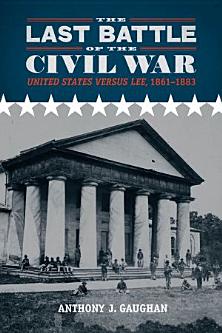
LastbattlebookYou know how we’re always saying that the provisions in the Takings Clause are “self-executing,” that even in the absence of a waiver of sovereign immunity, the Tucker Act, and section 1983, property owners would still be able to maintain a claim for compensation? Well here’s an article that explains that how that rule was first articulated, and not in a dry academic way, but with a fascinating historical story.

It’s the tale of United States v. Lee, 106 U.S. 196 (1882). We knew the land that is now Arlington National Cemetery was once owned by Robert E. Lee, but we can’t say that we gave much thought to how it became public property. We always assumed that it had simply been seized as war booty from Lee during the Civil War, and that was that.

In The Arlington Cemetery Case: A Court and a Nation Divided, 37

Continue Reading Arlington National Cemetery And The Takings Clause

There have been five amicus briefs filed supporting the Water Management District’s arguments in Koontz v. St Johns River Water Mgmt Dist., No. 11-1447 (cert. granted Oct. 5, 2012). That’s the case in which the Supreme Court is considering whether the “essential nexus” and “rough proportionality” standards of Nollan and Dolan are applicable only to exactions for land, or whether they are generally-applicable tests for all exactions.

The property owner’s brief on the merits is available here. The Water Management District’s merits brief is posted here.

The amicus briefs just filed focus on the argument that a government demand for money is not an “exaction” that even triggers takings analysis, and if it is, the multifactor Penn Central test governs, not the NollanDolan test.


Continue Reading Gov’t Amicus Briefs In Koontz: A Demand For Money Is Not An Exaction (And Even If It Is, Penn Central Is The Test)

Confirming yet again that the shopping mall is the focus of California culture, the California Supreme Court in Ralphs Grocery Co. v. United Food and Commerical Workers Union Local 8, No. S185544 (Dec. 27, 2012), held that a privately-owned walkway fronting a warehouse-type grocery store is a venue for the airing of grievances, even though it is not a “public forum” for speech under the California Constitution’s free speech provision. Thus, a labor union’s members have no constitutional rights to picket there. However, the court also held that the Moscone Act — a state statute prohibiting courts from issuing injunctions in labor disputes except in limited circumstances — protected union members’ (and no one else’s) rights to picket on this private property.

In other words, the grocery store owner has a right to exclude others from this property, but that right is trumped by the Moscone Act.

If

Continue Reading Cal Supremes Revisit Pruneyard, But Ignore The Takings Problem

LgoIt’s time for the annual ALI-CLE (fka ALI-ABA) eminent domain conferences, to be held January 24-26, 2013 in Miami Beach, Florida.

In the “advanced” course, Eminent Domain and Land Valuation Litigation, we’ll be covering topics such as “Condemning Underwater Mortgages,” “An Engineer’s Role in Damage,” “How To Develop and Implement a Business Plan for an Eminent Domain Practice,” and “Condemnor Beware: What Activities Will Make You Liable for Pre-Condemnation Damages.” Along with Pacific Legal Foundation’s Jim Burling and Cornell lawprof Robert Hockett, I’ll be speaking on the panel about underwater mortgages. More details on the agenda and the faculty here.

The companion course, Condemnation 101: How to Prepare an Eminent Domain Case, covers the basics of eminent domain law, and although designed as an overview of condemnation law for the beginner or general practitioner, it’s a great refresher course for the seasoned eminent domain lawyer. More

Continue Reading Upcoming ALI-CLE Eminent Domain Conferences