More good takings news, hot off the press.

Before Cedar Point came down last week, we were all set to let you know about the Eleventh Circuit’s opinion in South Grande View Dev. Co., Inc. v City of Alabaster, No. 18-14044 (June 21, 2021), in which the court affirmed a jury verdict that the city’s reduction in the developable density on residential-zoned parcel (from R-7 and R-4) to R-2) was a Penn Central regulatory taking. 

The city appealed on an evidentiary issue, arguing that the jury should not have heard evidence of its reasons for downzoning the property, which were not relevant to the takings question and only went to whether the government acted arbitrarily and capriciously (a due process inquiry). The city also raised a ripeness question: the owner had not sought a variance from application of the new zoning, and indeed had never asked the city
Continue Reading 11th Circuit Affirms Penn Central Jury Verdict For Rezoning Resulting In 86% Loss Of Value

Screenshot 2021-06-23 at 14-25-38 Takings and Eminent Domain After Cedar Point What Practitioners Need to Know

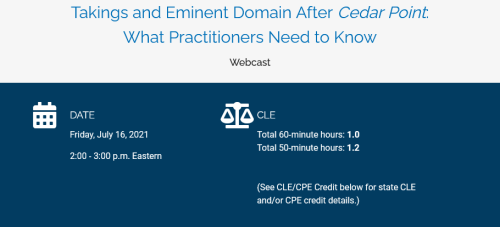
The ink’s not quite yet dry on the U.S. Supreme Court’s landmark decision in Cedar Point Nursery v. Hassid, No. 20-107 (June 23, 2021), but we’re already ready to roll with a program about what this decision means for you and your clients, and for takings law.

Find out from the experts in a one-hour webcast, “Takings and Eminent Domain After Cedar Point: What Practitioners Need to Know” from ALI-CLE. Registration and more information here.

In Cedar Point, a 6-3 majority affirmed a bright-line rule that physical invasions of whatever duration are takings, and held that “[w]henever a regulation results in a physical appropriation of property, a per se taking has occurred, and Penn Central has no place.” Questions about duration of the invasion “bears only on the amount of compensation.”

Our highly respected faculty will discuss the effect of this fascinating case on takings

Continue Reading Join Us Friday, July 16, 2-3pm ET: ALI-CLE’s “Takings and Eminent Domain After Cedar Point: What Practitioners Need to Know”

In this post — the first in a series of deeper dives that we’ll be posting about over the next few days about yesterday’s U.S. Supreme Court opinion in Cedar Point Nursery v. Hassid, No. 20-107 (June 23, 2021) — we’ll be covering the background of the case, and the heart of the majority opinion.

Here are all of the posts in our Cedar Point series:

And in case you missed the live webcast on Friday, July 16, 2021 that featured expert analysis of the case, please don’t miss listening to the recording of ALI-CLE’s “Takings and Eminent Domain After

Continue Reading Cedar Point Part I: SCOTUS’s Strawberry Letter 23 To Property Rights

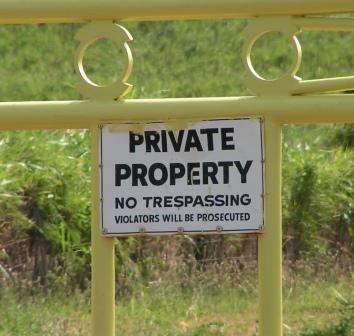
Keep out

We haven’t had time to read it in detail yet, but here’s the slip opinion in a case we have been following for a long time, Cedar Point Nursery v. Hassid, No. 20-107 (June 23, 2021).

Writing for a six-Justice majority (no one went wobbly!), Chief Justice Roberts concluded that California’s labor regulations, which require that an owner of agricultural property allow union labor organizers to enter the property to access potential union members, is a per se taking.

Robustly reaffirming the rule that a physical invasion is a categorical taking, the majority concluded:

The upshot of this line of precedent is that government-authorized invasions of property—whether by plane, boat, cable, or beachcomber—are physical takings requiring just compensation. As in those cases, the government here has appropriated a right of access to the growers’ property, allowing union organizers to traverse it at will for three hours a day, 120

Continue Reading Well, You Really Can Say “Keep Out” In California (Cedar Point – A Per Se Taking)

Here’s the latest in a case we’ve been following.

In Jim Olive Photography v. Univ. of Houston, No. 19-0605 (June 18, 2021), the Texas Supreme Court affirmed the court of appeals, concluding that a public university’s unauthorized use of a photograph on its website was merely copyright infringement, and not a taking. 

The opinion is short, and mostly mirrors the rationale of the court of appeals, so if you just want to read our summary of the court of appeals’ opinion, you may stop here. But if not, read on.

The facts: Jim Olive took a photograph that the University of Houston used on its website after stripping off all attribution. When Olive discovered the unauthorized use, he demanded the University take it down. It did, but it refused to pay for its use. Olive sued in a Texas state court for taking his intellectual property

Continue Reading Texas: Makin’ Copies Of A Photograph Is Copyright Infringement, Not A Taking

The facts that compelled the U.S. Court of Appeal to conclude as it did in Yawn v. Dorchester County, No. 20-1584 (June 11, 2011) are pretty straightforward.

In response to a threatened public health viral crisis (no, not COVID, but Zika [remember that one?]), the county decided to spray insecticide. Some areas could not be reached by truck, so it was decided that aerial delivery was the way to go. The county put out press releases, and called local beekeepers to allow them to cover their hives (the insecticide, you see, doesn’t discriminate between mosquitos and bees, and is equally fatal to the latter unless the hive is covered). The pilot even testified that he had a map of the location of beehives, and that he turned off the sprayers as he approached those areas.

But Yawn, a beekeeper, did not get the warnings. The result: lots

Continue Reading CA4: No Taking When Aerial Pesticide Spray Killed Bees … But Not Why You Think

PXL_20210402_173956850
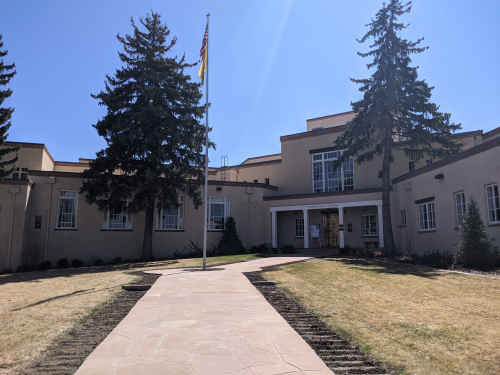
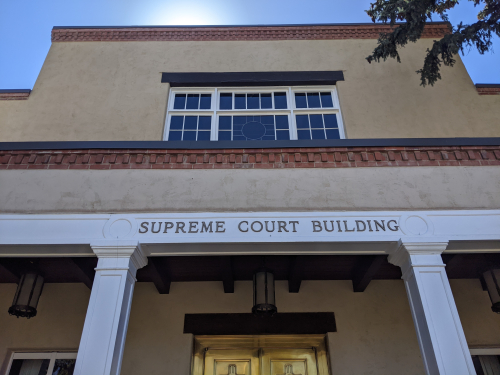
The New Mexico Supreme Court

In what amounts to an advisory opinion, in State of New Mexico v. Wilson, No. S-1-SC-3850 (June 7, 2021), the New Mexico Supreme Court (courthouse pictured above) concluded that the State’s public health orders that impose “restrictions on business operations regarding occupancy limits and closures cannot support a claim for a regulatory taking requiring compensation[,]” either under the New Mexico Constitution or under New Mexico’s statutes.

We just published an article in the William and Mary Bill of Rights Journal about the subject of “coronavirus takings,” so naturally we’re intrigued by what the New Mexico court has to say. If you are also interested, read on.

PXL_20210402_173846557

This case is in the Supreme Court as a result of the State’s petition, asking the court to weigh in after 14 separate lawsuits were filed by business owners and others challenging the state’s orders that “restricted mass

Continue Reading NM Supreme Court’s Advisory Opinion: COVID Orders “cannot support a claim for a regulatory taking” – Health Measures Are “Background Principles”

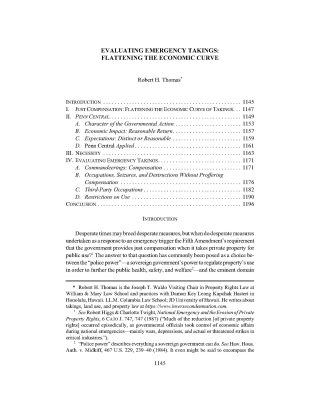
Title page

Wondering about so-called “covid takings” such as business lockdowns, seizures, commandeerings, eviction moratoria, and whether these might be takings?

If so, check out our latest article, Evaluating Emergency Takings: Flattening the Economic Curve, just published in the latest issue of the William and Mary Bill of Rights Journal.

Here’s the Intro to the article:

Desperate times may breed desperate measures, but when do desperate measures undertaken as a response to an emergency trigger the Fifth Amendment’s requirement that the government provide just compensation when it takes private property for public use? The answer to that question has commonly been posed as a choice between the “police power”—a sovereign government’s power to regulate property’s use in order to further the public health, safety, and welfare —and the eminent domain power, the authority to seize private property for public use with the corresponding requirement to pay compensation. But that should not be the question. After all, emergencies do not increase government power, nor do they necessarily alter constitutional rights, and an invocation of police power by itself does not solve the compensation question, but is merely the predicate issue: all government actions must be for the public health, safety, or welfare, in the same way that an exercise of eminent domain power must be for a public use.

This Article provides a roadmap for analyzing these questions, hoping that it will result in a more consistent approach for resolving claims for compensation that arise out of claims of emergencies. This Article analyzes the potential takings claims stemming from emergency measures, mostly under current takings doctrine. Which types of claims are likely to succeed or fail? In “normal” times, it is very difficult to win a regulatory takings claim for compensation. In the midst of emergencies—real or perceived—the courts are even more reluctant to provide a remedy, even when they should, and emergencies are a good time to make bad law, especially in takings law. Can a better case be made analytically for compensation?

Part I summarizes the economic “flattening the curve” principle that motivates takings claims for compensation. Part II sets out the prevailing three-factor Penn Central standard for how courts evaluate claims that a health, safety, or welfare measure “goes too far” and requires compensation as a taking, examining the character of the government action, the impact of the action on the owner, and the extent of the owner’s property rights. Deep criticism of the Penn Central standard is beyond the scope of this Article, and here, I accept it as the default takings test. But I argue that the government’s motivation and reason for its actions—generally reviewed under the “rational basis” standard—should not be a major question in takings claims. Rather, as this Article argues in Part III, the government’s emergency justifications should be considered as part of a necessity defense, not subject to the low bar of rational basis, but a more fact and evidence driven standard of “actual necessity.” Part IV attempts to apply these standards and examines the various ways that emergency actions can take property for public use: commandeerings, occupations of property, and restrictions on use. I do not conclude that the approach will result in more (or less) successful claims for compensation, merely a more straightforward method of evaluating emergency takings claims than the current disjointed analytical methods.

In sum, this article argues there is no blanket immunity from the requirement to provide just compensation when property is taken simply because the government claims to be acting in response to an emergency, even though its actions and reasons may satisfy the rational basis test. Instead, claims that the taking is not compensable because of the exigency of an emergency should only win the day if the government successfully shows that the measure was actually needed to avoid imminent danger posed by the property owner’s use and that the restriction on use was narrowly tailored to further that end.

One final word: the editors at the Bill of Rights Journal have been fantastic to work with to get this piece publication ready. Offering helpful comments, gently suggesting that certain parts are not working (but never insisting, and giving the author a lot of discretion), and getting the citations squared away: I could not have asked for more helpful editing. Congratulations on the publication of your latest issue. 

Thomas, Evaluating Emergency Takings: Flattening the Economic Curve, 29 Wm. & Mary Bill of Rights J. 1145 (2021)

Continue Reading New Law Review Article (Ours) – “Evaluating Emergency Takings: Flattening the Economic Curve,” 29 Wm. & Mary Bill of Rights J. 1145 (2021)

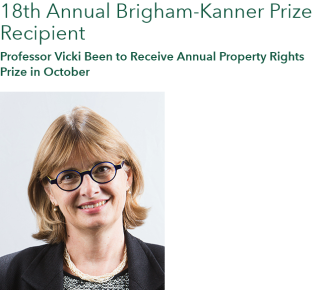
Screenshot_2021-05-15 18th Annual Brigham-Kanner Prize Recipient

Mark your calendars for September 30 – October 1, 2021, and join us at the William and Mary Law School in Williamsburg, Virginia for the 18th Annual Brigham-Kanner Property Rights Conference. It’s planned to be in-person, so when we mean “join us” we really mean join us.

This year the Conference will recognize the lifetime work of Professor Vicki Been (NYU Law) with the Brigham–Kanner Property Rights Prize. As noted in the Law School’s press release:

The Brigham-Kanner Property Rights Prize is named in honor of the lifetime contributions to property rights of Toby Prince Brigham, founding partner of Brigham Moore, LLP, and Gideon Kanner, professor of law emeritus at Loyola Law School in Los Angeles. Brigham died earlier this month in Miami. A true legend in the law, he was esteemed by colleagues for the invaluable counsel, knowledge and skills he possessed and shared so generously. The prize

Continue Reading Mark Your Calendars: 2021 Brigham-Kanner Property Rights Conference, Williamsburg, Virginia, Sept 30-Oct 1 (in-person)

In this recent decision, the North Carolina Court of Appeals held that when a condemnation is invalidated a court — but the condemnor has, by quick-take, already built the project for which it (wrongly) took the property — the owner is not limited to an inverse condemnation remedy (compensation), but may also bring a claim for plain-old trespass (ejectment).

On the same day the court issued that ruling, it produced a second opinion in related litigation stemming from the same facts: Town of Apex v. Rubin, No. COA20-305 (Mary 4, 2021).

As in that case, this one involved the sewer line the Town wrongly installed on Rubin’s land. After the court invalidated the taking of the land, the Town still claimed the sewer line belonged to it, and in addition to raising that argument in the (now failed) eminent domain case, it brought a separate action (this second

Continue Reading How “Res Judicata” Is A Failed Condemnation?