We’ve posted a lot of complaints lately (the lawsuit kind, not the “can I see the manager” kind), mostly coronavirus-related. All involving in one way or another a takings claim. See here, here, here, here, here, here, here, here, here, here, here, here and here, for a sampling.

This latest complaint does not challenge a government’s response to COVID, but instead might be even more “ripped from the headlines.” Read on!

As you may be aware, a neighborhood in Seattle, Washington has been blocked off and declared a no-go zone for certain folks. Most recently labeled “CHOP” (Capitol Hill Occupying Protest) after the first naming action went badly and someone realized that the acronym for “Capitol Hill Autonomous Zone” was CHAZ, “[p]eople can now freely walk in the area, which has been covered

Continue Reading Complaint: City’s Abandonment Of CHOP/CHAZ Neighborhood Is A Taking
A long opinion, but a short post. In Stanford Vina Ranch Irrigation Co. v. California, No. C085762 (June 18, 2020), the California Court of Appeal held that water rights are not really property rights.

That’s a bit of an overstatement, of course. But not a huge one.

In an inverse condemnation case, the court held that the owner of riparian rights did not have a protectable property interest in any amount of water, because riparian use, by definition, must always be reasonable. And the state gets to define what use is “reasonable.” Thus, the logic goes, because the State Water Resources Control Board determined by emergency regulation that any uses which might jeopardize the flow of water into a creek (to protect fish) were unreasonable, there’s no takings claim for an owner who claimed a vested right to the water. No property, no taking:

We have already explained the

Continue Reading Cal App Backs Into The Question: Riparian Rights Are Limited To Reasonable Use, So No Property Right In What Agency Deems Unreasonable Use

A new, must-add-to-your-reading-list article from takings and expropriations law scholar Professor Shai Stern.

In “Pandemic Takings: Compensating for Public Health Emergency Regulation,” Professor Stern dives into a question a lot of us have been pondering lately, namely whether the pandemic-related shutdown orders might trigger the Just Compensation imperative in the Fifth Amendment’s Takings Clause.

Takings arguments have been raised in may of the legal challenges to coronavirus shut-down orders that have been filed nationwide (see here, here, here, here, here, here, here, here, here, here, here, here and here, for a sampling). But do these claims have any chance of succeeding? Read the article and find out. (Our thoughts on the takings aspects of the shutdowns orders: Evaluating Emergency Takings: Flattening The Economic Curve.) 

Here’s the Abstract:

The COVID-19 pandemic led all states

Continue Reading New Must-Read Article: “Pandemic Takings: Compensating for Public Health Emergency Regulation” (Prof. Shai Stern)

It’s been a long week, and it’s Friday with a filing coming up. So we’re not going to spend a lot of time digesting the Federal Circuit’s opinion in Alford v. United States, No 19-1678 (June 19, 2020). Plus, it is a short one (11 pages) that makes one major point.

Short story: after an unusual amount of rain, to save a levee from a predicted 95% chance of breach, the Corps of Engineers decided to raise the normal levels of Eagle Lake, causing damage to the plaintiffs’ lakefront properties. Their land was flooded for three months. The CFC agreed this was a taking, and awarded $168,000 in just compensation.

The Federal Circuit reversed (opinion by Judge Dyk, are you that surprised?). The court held that on the whole, the property owners should be grateful that the Corps flooded their lands, because the “relative benefits” doctrine. If the government

Continue Reading Federal Circuit: Be Grateful Your Property Was Flooded (It Could Have Been Worse)

104481738_2170057539806372_2938554143515873721_nphoto: Patricia Salkin

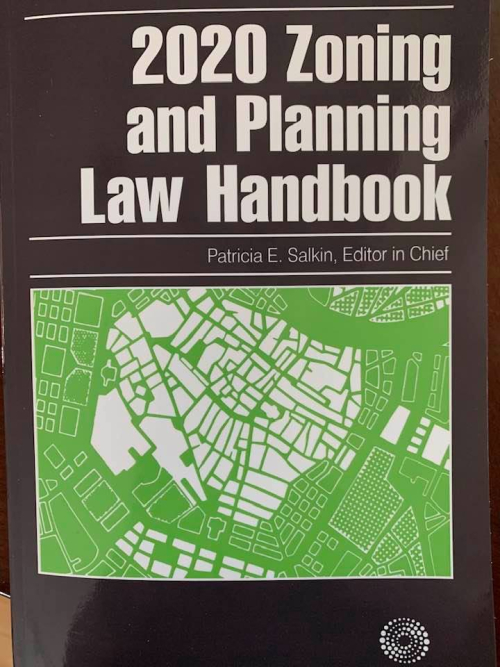
Just published: the 2020 Zoning and Planning Law Handbook (Green Book). The first section of the Summary of Contents is about Takings, and includes as the lead piece Professor Gideon Kanner and Michael Berger’s tour-de-force article, “The Nasty, Brutish, and Short Life of Agins v. City of Tiburon.” It also includes my articles on Murr, “Restatement (SCOTUS) of Property: What Happened to Use in Murr v. Wisconsin?”

Check it out. The Green Book is a one-stop shop for the best articles on land use in a given year, and this edition includes chapters on housing, agriculture, cell tower placement, RLUIPA, and (of course) zoning.

Our thanks to Dean Patty Salkin who edited the volume for including us.

Summary of Contents, 2020 Zoning and Planing Law Handbook (Green Book)

Continue Reading Available Now: 2020 Zoning and Planning Law Handbook (Green Book)

One more to add to your reading queue. The latest complaint alleges, among other claims, that the Illinois governor’s coronavirus shut down orders for businesses deemed “non-essential” result in takings. 

The list of similar challenges keeps growing. See here, here, here, here, here, here, here, here, here, here, here, here and here, for example. The longer this thing goes on, the more like this we’re going to see.

join us later today, Wednesday, June 16, 2020 at 5:30pm Hawaii Time, when we’ll be speaking about this question in a program for the King Kamehameha V Judiciary History Center (open to the public, more details here). Our thoughts on the takings aspects of the shutdowns orders: Evaluating Emergency Takings: Flattening The Economic Curve.

Complaint at Law, Nowlin v. Pritzker, No. 1:20-cv-01229-MMM-JEH (C.D. Continue Reading The Hits Keep Coming: New Complaint Alleges Illinois’ Lockdown Order Is A Taking

MVIMG_20191108_125325

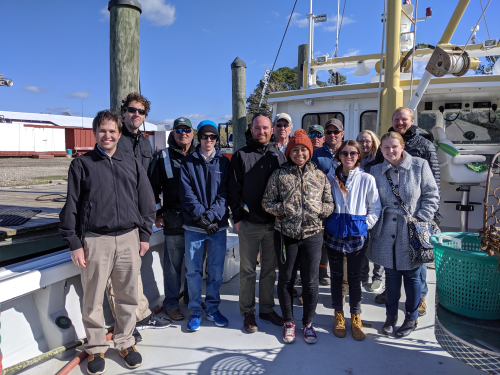
Here’s the latest in a case we’ve been following (we visited the site last November with our William and Mary class), the property owners’ Opening Brief in  a case being considered by the Virginia Supreme Court.

This is a case at the intersection of property and takings law, and environmental protection. Several Nansemond River oystermen own a lease from the state for the riverbed, which among other things, allows them to harvest some of the oysters that Virginia is so well known for. But they were forced to bring an inverse condemnation claim in state court, asserting that the City’s dumping of wastewater in the river — and prohibiting the harvesting of oysters during those times — was a taking under the Virginia Constitution’s taking or damaging clause (article I, § 11).

The trial court sustained the City’s demurrer, accepting the City’s argument that it has the right to

Continue Reading Property Owners’ Brief In Virginia Supreme Court “Oyster Takings” Case

Here’s the latest complaint challenging coronavirus-related orders (in this case, the City of Los Angeles’ rent payment and eviction moratoria) as a taking.

More here from the LA Times: “Landlord group sues city of L.A. over coronavirus anti-eviction protections.”

You should probably read the entire document, as it is drafted well. But it is long (48 pages – it even has a Table of Contents and a Table of Authorities), so here are the key parts of the Introduction in case you don’t have time to digest the whole complaint:

1. In the wake of the novel coronavirus, Defendants City of Los Angeles, City Council of the City of Los Angeles, and Mayor Eric Garcetti (collectively “City” or “Defendants”) hastily instituted a series of ordinances which prohibit lessors and landlords, such as Plaintiff’s members, from exercising their contractual remedies where tenants refuse to pay rent on the

Continue Reading New Fed Ct Complaint: Coronavirus Rent Freeze And Eviction Moratorium Is A Taking

0fcc0c09-ff44-4f8c-bb01-c2455719ae6d

Next Wednesday, June 17, 2020, at 5:30pm Hawaii Time, we’ll be speaking for the King Kamehameha V Judiciary History Center about “Constitutional Law and States of Emergency: Lessons from the COVID-19 Pandemic.”

This is a one-hour program, open to the public, where we will take a dive into Hawaii’s emergency preparedness and response laws, how Hawaii’s courts have treated emergencies, plagues, pandemics, and quarantines in the past (we have a long history there), and respond to (moderated) audience questions.

Space limited to 100 attendees, although it will be recorded and posted on the Center’s YouTube channel. Here’s the program description:

The King Kamehameha V Judiciary History Center invites you to join our live webinar with attorney Robert H. Thomas as he shares his expertise about constitutional rights and civil liberties during the COVID-19 pandemic. He will share lessons from Hawaiʻi’s history of public health laws during

Continue Reading Upcoming Judiciary History Center Program: “Constitutional Law and States of Emergency: Lessons from the COVID-19 Pandemic” – Wed., June 17, 2020, 5:30pm HST

On one hand, the Colorado Supreme Court’s opinion in Forest View Co. v. Town of Monument, No.18SC793 (June 8, 2020), concluding that a restrictive covenant is not a property interest that the government needs to pay for conflicts with the decisions on similar facts from other jurisdictions (Kansas, for example). On the other, the ruling is nothing new under Colorado law, because the court didn’t announce a new rule, but simply refused to overrule a prior case holding the same thing, Smith v. Clifton Sanitation Dist., 300 P.2d 548 (Colo. 1956).

Town wants to build a water tower. Seems like a reasonable goal. It purchased property, another reasonable thing. The property it bought, however, was subject to a covenant, running in favor of the neighboring property owners, that the owner couldn’t use the property for anything other than single-family homes. Last time we checked, single-family homes

Continue Reading Negative Easements Such As Restrictive Covenants Still Are Not Property In Colorado. tl;dr: We Can’t Afford To Consider These Things Property