Do we really need to tell you how a rent control regulatory takings claim fared in the Ninth Circuit? We didn’t think so.

In Colony Cove Properties, LLC v. City of Carson, No. 16-562655 (Apr. 23, 2018), a three-judge panel reversed a district court jury verdict which concluded that the City was liable for a Penn Central regulatory taking for the mobilehome Rent Board’s setting of a rent increase artificially low. The total award to the park owner, including damages for lost rental income, attorneys’ fees, and interest, was over $9 million. 

As we wrote in this post, the city and its amici predictably went ballistic and argued that the upholding the verdict threatened the very existence of mobilehome rent control. The court concluded that as a matter of law, the owner failed each of the three Penn Central factors.

First, the owner did not prove that the
Continue Reading 9th Cir: City Rent Board Determining Owner “Made Enough” Profit Isn’t A Penn Central Taking

MRGO

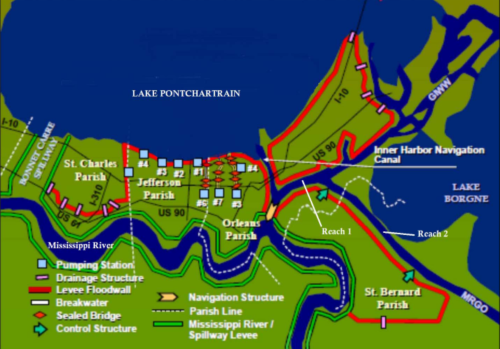
When you a federal takings plaintiff in the Federal Circuit and you pull Judge Timothy Dyk on your panel, your heart sinks. More so when he aggressively questions you in oral argument. And when you see he has written the opinion, you know it’s game over at this level.

Because we can’t remember a single case in which he’s ever held for a property owner in a regulatory takings or inverse case. He just doesn’t like property owners and their takings claims, apparently. His last big decision on flood takings, Arkansas Game and Fish, adopted a per se rule that any flooding which the owner could not prove was “permanent” is categorically immune from takings liability. His opinion for the Federal Circuit was reversed unanimously by the Supreme Court, in an opinion by Justice Ginsburg, which alone should tell you something. 

Well, Judge Dyk is at it again

Continue Reading MR-GO, Katrina Flooding: Inverse Condemnation And Schlimmbesserung At The Federal Circuit

Here are the cases and materials I either discussed, or planned to discuss (but ran out of time), in this morning’s session at the 32nd Annual Land Use Institute:


Continue Reading Land Use Institute – Cases And Links From Today’s Session On Federal Laws And Local Land Use Decision Making: Water

20180419_150416_HDR

We’re in Detroit the rest of the week at the Mercy Law School for the venerable Land Use Institute, now in its 32nd iteration.

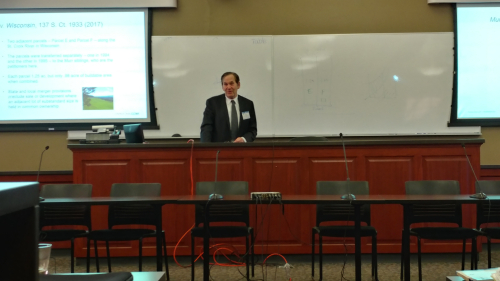
Planning Chair Frank Schnidman has assembled a great faculty including out Detroit colleague Alan Ackerman (above, talking about takings liability for flooding), and we’ll be spending the time talking inverse condemnation, public trust, planning law, homelessness, autonomous vehicles, affordable housing, RULIPA, and similar topics. We’ll be presenting on “Eminent Domain, Vested Rights, and Regulatory Takings,” “Client Representation: Developer, Government, and Citizens Groups,” and “Federal Laws Affecting Local Land Use Decision Making.” 

If you are here with us in Detroit, stop by and say hello. If you aren’t here, shame on you! This is one of the best and most affordable tuition deals in CLE.

But all kidding aside, if you are not in Detroit now, be sure to calendar these

Continue Reading Land Use Institute – Detroit

Today’s case is one of what we call “regionally classic” cases that we come across from time to time. You know, cases that just fit into all your preconceived notions about a place. Beach cases from Hawaii. Gator law opinions from Southern states. Vermont = snow law, California, land and wineries. Here’s another one of those from our Southern courts — Florida’s District Court of Appeals, to be precise — that we think fits the bill.

In Florida Fish and Wildlife Conservation Comm’n v. Daws, No. 1D16-4839 (Apr. 10, 2018), the First District Court of Appeals held that owners whose properties were physically invaded by “deer dog hunters and their dogs during the forty-four days of the year when deer dog hunting is authorized” by the Commission, have not suffered a taking because these invasions were only temporary, and “do not rise to the level of permanent

Continue Reading Fla App: That Takings Dawg* Don’t Hunt: Sporadic Trespass By Deer Dog Hunters (And Their Dogs) Isn’t A Permanent Physical Occupation

Sterk_475

The William and Mary Law School has announced the recipient of the 2018 Brigham-Kanner Property Rights Prize, Cardozo School of Law Professor Stewart E. Sterk.

He will receive the prize at the 15th Annual B-K Conference in Williamsburg, October 4-5, 2018

Sterk’s publications span a wide variety of areas, ranging from property and land use regulation to trusts and estates, copyright, and the conflict of laws. A member of the American Law Institute, he served as an advisor in the preparation of the Restatement (Third) of Property (Servitudes). He has co–authored casebooks on Trusts and Estates and on Land Use, and he also edits the New York Real Estate Law Reporter, a monthly newsletter published with the assistance of Cardozo students.

He joins an impressive list of legal scholars and practitioners as prizewinners, including Frank Michelman, Richard Epstein, James Ely, Carol Rose, Michael Berger, and David

Continue Reading 2018 Brigham-Kanner Prize Announced: Professor Stewart E. Sterk, Cardozo Law

Space is filling up, but there’s still time to join us later this month in Detroit for the 32nd Annual Land Use Institute (April-19-20). 

We’ll let program Planning Chair Frank Schnidman explain all the reasons why, and we’ll add only these points: (1) it’s a very good program that won’t take much of your time (fly in for the Thursday afternoon program, stay a night, fly home on Friday evening); (2) Detroit is the place to be these days; and (3) it’s one of the best deals in CLE credits, with tuition as low as $400.

2018 Land Use Institute Brochure Detroit 5 2018

Continue Reading There’s Still Time To Join Us In Detroit: 32d Annual Land Use Institute

Here’s what we’re reading this Thursday:

Cert(s) Denied

California Wildfires and Inverse Condemnation


Continue Reading Thursday Round Up: Cert(s) Denied, Cal Wildfires, City-to-City Takings, Other Stuff

Verdictform

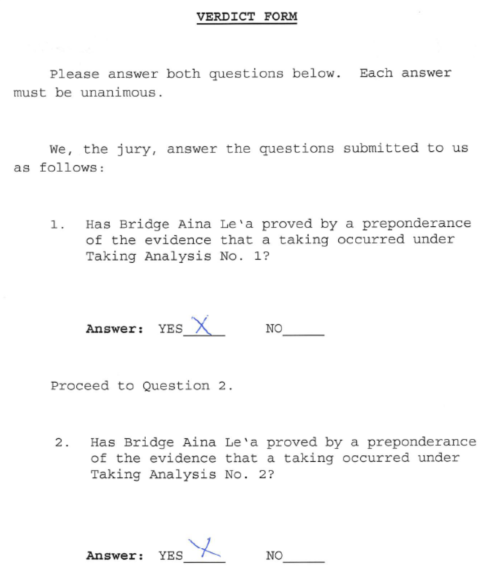
As we reported here, the U.S. District Court for the District of Hawaii just finished a jury trial in a regulatory takings case (removed by the defendant State of Hawaii from Hawaii courts) involving a stalled development on the Big Island.

The jury has returned a verdict after 8 days of trial, concluding the State is liable under both Lucas and Penn Central theories, after only 15 minutes of deliberation after their lunch break. 

But there’s more to this story, because here’s the buried lede. The court yesterday made this entry in the docket: 

EO: The court proposes to enter an order awarding nominal damages of $1 to the plaintiff and then to enter judgment in this case. This will start the running of the clock not only for appeal but also for requests for fees and costs under Local Rule 54.3. If the parties have concerns about this

Continue Reading Lunch And 15 Minutes: Federal Jury Finds State Land Use Commission Liable For Lucas And Penn Central Taking